
Ask a tradesperson how they pick a retailer and most will talk about price. Ask one who has had a cutting disc come apart at 11,000 rpm and they will talk about markings.
This guide is built from published safety standards, manufacturer warranty terms and retail practice. It is not a review of specific sellers, and we have not test-purchased from every kind of retailer described here.
Why you can trust us. Tools Soko earns a commission when you buy through links on this page. It never changes what we recommend, and it never changes the price you pay. As an Amazon Associate we earn from qualifying purchases.
Choosing a retailer feels like a question about price and delivery. It is really a question about what happens when something goes wrong, and about whether the thing in the box is what the label says it is.
Those two problems are not equally distributed. The tools are usually fine. It is the accessories that will hurt you.
The retailer question is mostly a counterfeit question
A fake cordless drill is a difficult product to sell. It costs real money to make something that looks like a DeWalt, the buyer notices within a week, and the serial number gives it away the moment it reaches a service centre.
A fake cutting disc is trivially easy to sell. It costs almost nothing, it looks identical, it carries no serial number, the buyer has no way to test it, and by the time it fails the packaging is in a bin three months ago.
That asymmetry is the whole reason retailer choice matters. Counterfeiting concentrates where unit prices are low, repeat purchase is high, verification is impossible and failure gets blamed on the user. That describes discs, blades, bits and batteries almost perfectly — and it means a retailer you trust for a drill is not automatically a retailer you should trust for what goes in it.
Five signals that separate a dealer from a drop-shipper
None of these require insider knowledge. All of them can be checked before you spend anything.
1. A business identity you can verify independently
A registered company name, a physical address, a landline, a tax number. Not a WhatsApp number and a logo. The test is not whether these appear on the site; it is whether they check out somewhere the seller does not control.
2. A named service path
Ask one question: if this fails in month seven, who repairs it and where? A real dealer answers with a name and an address. A drop-shipper answers with a returns policy, which is a different thing entirely and expires in thirty days.
3. Depth in the boring stock
This is the most reliable signal and almost nobody uses it. Anyone can list the headline tools. Carrying carbon brushes, replacement chucks, the right blade arbors, gaskets and the unglamorous consumables means a real relationship with a distributor and a stockroom that exists.
A seller with fifty tools and no spares is a shop window. A seller with twenty tools and four hundred consumables is a supplier.
4. Model numbers written out in full
Listings that say “Makita 18V Cordless Drill” rather than the full model code are either careless or deliberately vague, and both should cost them the sale. The suffix carries the kit contents, the battery count and often the motor type. Vagueness there is where the price gap usually hides.
5. A returns policy that survives contact
Published, specific, and stating who pays return shipping. Ask one clarifying question by email or message before buying. The answer, and how long it takes, tells you more than any review score.
Accessories are where the risk actually sits
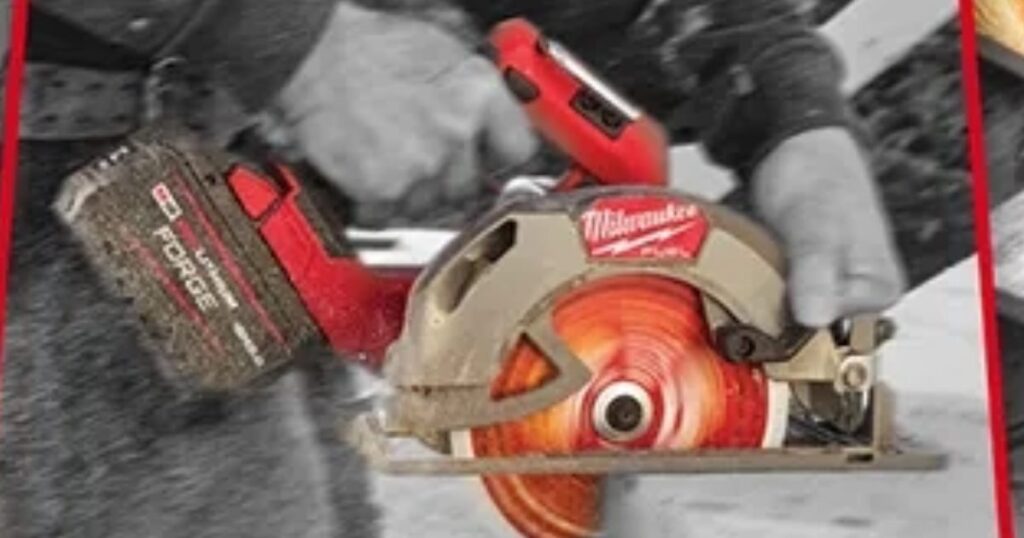
Abrasive discs: read the disc, not the box
A cutting or grinding disc spinning in a 115 mm grinder is travelling at roughly eighty metres a second at the rim. If it comes apart, the fragments leave at that speed, and the guard catches some of them.
Three things should be printed on the disc itself, not just the packaging:
- A maximum operating speed, in rpm and usually in m/s. This must be equal to or higher than your tool’s no-load speed. A disc rated below the grinder that spins it is the single most common way people get hurt with an angle grinder.
- A safety standard reference. In Europe that is EN 12413; in North America, ANSI B7.1. Many reputable discs also carry the oSa mark, issued by the Organisation for the Safety of Abrasives, whose members are audited. An unmarked disc has told you everything you need to know.
- An expiry date. Resin-bonded discs age whether or not they are used, and reinforced discs conventionally carry a use-by date around three years from manufacture. Deep discounts on abrasives are sometimes just old stock being moved before the date shows.
A retailer that stocks discs with all three markings clearly visible is telling you which supply chain it buys through. One selling unbranded discs in a plain sleeve at a third of the price is telling you the same thing, in the other direction. If you are choosing a grinder to go with them, our cordless angle grinder roundup covers the tool side, and jobsite PPE that people actually wear covers the part that matters when a disc lets go.
Batteries: the expensive counterfeit
A battery pack is a box of lithium cells with a management board deciding when to stop. Counterfeit packs cut cost on both: mismatched or recycled cells, and protection circuitry that is simplified or absent.
The failure mode is not a pack that runs down early. It is a pack that overheats while charging unattended. Buy packs from the brand’s own channel or a named dealer, and treat a battery priced far below the others as the warning it is. What you can control after purchase is covered in battery care that actually doubles pack life.
Blades and bits: where you notice, but late
Counterfeit circular saw blades use softer carbide that rounds off quickly, and the teeth can be thrown. Fake drill bits are usually the wrong steel, so they dull in a few holes. Neither is as dangerous as a bad disc, but both are a false economy that reveals itself about a fortnight after the return window shuts.
Verify the markings before you trust the brand
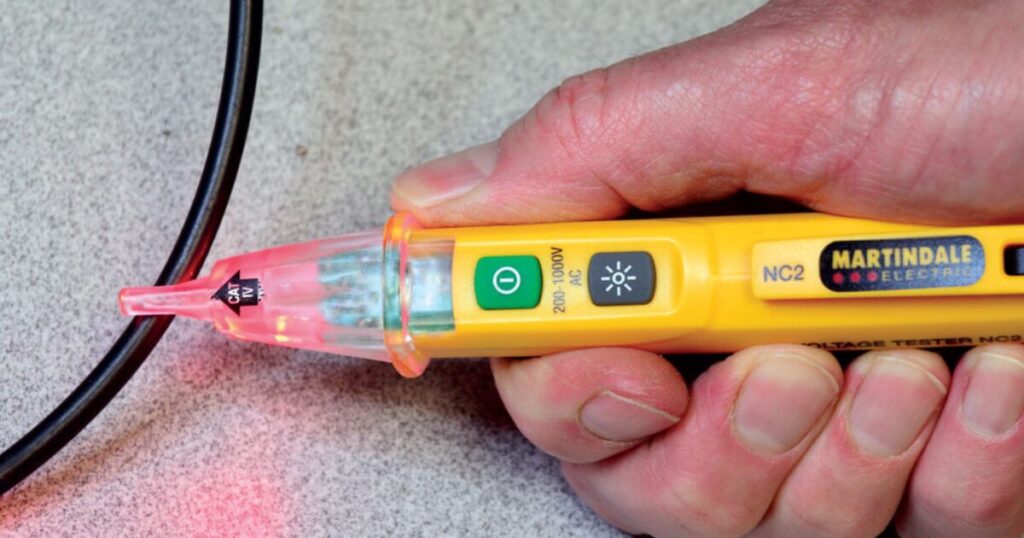
Safety ratings belong on the product. A CAT rating on a test meter, a voltage class on insulated hand tools, a speed rating on a disc, a certification mark on PPE — all of these should be moulded, etched or printed on the item, not only on the carton it came in.
This is a useful thing to check on arrival, because it is the point where a retailer’s supply chain becomes visible. A seller that ships you a product whose markings do not match the listing has answered your original question for you.
Test a retailer cheaply before you trust it with a big purchase
The most under-used tactic in tool buying: before spending on a machine, spend a small amount on consumables from the same seller.
A pack of discs, a set of bits, a blade. It costs little and it tests everything that matters — whether stated stock is real stock, how fast it actually ships, whether packaging is genuine, whether the markings match, and how they respond to a question. A seller who handles a small order well will usually handle a large one well. One who cannot get a blade to you in the promised week should not be trusted with a machine you need on site.
Red flags worth walking away from
- A price far below every other listing for the same model. The remaining explanations are a counterfeit, a grey import with no local warranty, an older revision, or a specification that quietly differs.
- Stock photos only, with no photograph of actual stock. Especially where the listing claims immediate availability.
- Reviews that arrive in clusters and mention delivery rather than the tool. Genuine tool reviews complain about specifics. Fake ones praise the courier.
- Pressure to pay by direct bank transfer or mobile money outside the platform. A discount for paying outside buyer protection is not a discount, it is the price of your recourse.
- No warranty terms, or warranty described only as “manufacturer warranty” with no named service agent.
The short version
| Buying… | Prioritise… |
|---|---|
| A machine you bill work against | Named service agent and warranty path |
| Abrasive discs | Markings on the disc: speed, standard, expiry |
| Battery packs | Brand channel or named dealer only |
| Blades and bits | Depth of range, which signals a real distributor |
| An unfamiliar seller | A small consumables order first |
A reliable retailer is not a brand you recognise. It is one that publishes who it is, names who fixes things, stocks the boring items, writes model numbers out in full, and answers a question before it has your money.
Buying in Kenya specifically? The channels, the warranty realities and the landed-cost maths on imports are set out in which online stores are best for professional power tools in Kenya, with more on local buying in our Nairobi guide.
Prime Day woodworking tool deals applies these checks to deal season, which is when they matter most.
Frequently asked questions
How can I tell if a power tool retailer is legitimate?
Check four things before spending: a verifiable business identity, a named service agent for warranty repairs, real depth in spares and consumables rather than only headline tools, and full model numbers in listings. Then ask one question by message and judge the answer. A seller that cannot say who repairs the tool has answered the question.
Are counterfeit power tool accessories actually dangerous?
Abrasive discs and battery packs genuinely are. A disc rated below the speed of the tool spinning it can burst, and the rim of a 115 mm disc is moving at roughly eighty metres per second. Counterfeit batteries cut cost on cell quality and protection circuitry, and the risk appears during charging. Fake blades and bits are mostly a waste of money rather than a hazard.
What markings should be on a genuine cutting disc?
A maximum operating speed in rpm and m/s, a safety standard reference such as EN 12413 or ANSI B7.1, and an expiry date, since resin-bonded discs age in storage. Many reputable discs also carry the oSa mark. All of it should be on the disc itself, not only on the packaging.
Is it safe to buy power tools from online marketplaces?
For consumables and accessories where price competition is the benefit, usually yes, provided you check the markings on arrival. For a machine you depend on, the weakness is accountability: the platform is not the seller, and buyer protection covers items not as described rather than a motor that fails months later. Use marketplaces to find the market price, then decide separately where to buy.
Should I buy tools and accessories from the same retailer?
Not necessarily, and the reasoning differs for each. Tools reward a retailer with a warranty path and a service agent. Accessories reward one with range and turnover, because deep stock signals a genuine distributor relationship and fresh stock matters on anything with an expiry date. A seller can be excellent at one and thin at the other.
What is the safest way to pay an unfamiliar tool seller?
Whatever keeps recourse available: a card or a platform’s own checkout, so a dispute is possible. Treat a discount for paying by direct bank transfer or mobile money outside the platform as what it is — the seller buying your protection off you cheaply.