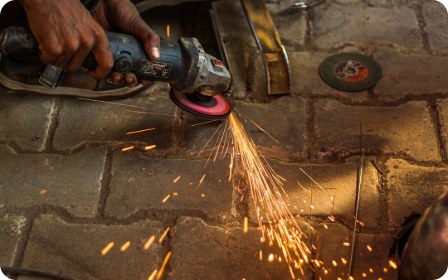

The angle grinder injures more tradespeople than any other power tool, and the cordless generation has made the problem worse by removing the cable that used to limit how casually the tool got used.
What this is based on. What this comparison is based on. Published manufacturer specifications and safety documentation. We have not put these grinders through a comparison, so nothing here is scored. See how we work.
So this comparison weighs safety first and speed second, working from published specifications and from which safety features each manufacturer actually fits.
On published specification the difference is not subtle. One grinder here has a genuine safety advantage over the rest, and it is worth the price difference.
Why you can trust us. Tools Soko earns a commission when you buy through links on this page. It never changes what we recommend, and it never changes the price you pay.
At a Glance
| Best for | Tool |
|---|---|
| Safety features | Bosch GWS 18V-10 Angle Grinder |
| Weight and sealing | Makita DGA504 Brushless Angle Grinder |
Our Picks in Detail
Best Overall: Bosch GWS 18V-10 Angle Grinder
The only grinder here with electronic kickback detection, and one of the few in the class with a wheel brake fitted as standard.
- KickBack Control, which Bosch says cuts the motor when it senses a bind
- Wheel brake fitted as standard
- Runs on Bosch’s 18V Professional battery system
Best Value: Makita DGA504 Brushless Angle Grinder
Among the lightest in the class and close to the Bosch on published output, provided you can live without kickback detection.
- Among the lightest 125 mm cordless grinders at 2.1 kg bare
- Electric brake included at this price
- Huge LXT battery ecosystem
What to Consider Before Buying
Kickback control is the feature that matters
A binding disc can twist a grinder out of your hands in under 100 milliseconds — faster than human reaction time. Electronic kickback detection is the only thing that reliably intervenes at that speed. If you cut unsupported stock or work overhead, treat it as essential.
Check the brake, and check the measured time
A wheel spinning down for eight seconds after you release the switch is eight seconds of exposed hazard. Most manufacturers now fit brakes, but stop times vary from under two seconds to over four. Very few publish the figure.
125 mm is the right size for almost everyone
115 mm saves little weight and costs real cut depth. 230 mm is a two-handed tool for a specific job. For general site work, 125 mm cuts 40 mm box section in one pass and still fits between studs.
Paddle switches beat slide switches
A paddle switch requires deliberate, continuous grip and releases the moment you let go. A slide switch stays on if the tool leaves your hand. In most jurisdictions the paddle is now the standard for professional use, for good reason.
Full write-ups of both picks: the Bosch GWS 18V-10 and the Makita DGA504.
Frequently Asked Questions
Is cordless powerful enough to replace a corded grinder?
For cutting and light grinding, yes — a modern 18V brushless grinder matches a 750 W corded tool. For sustained surface grinding or continuous work over an hour, corded is still the sensible choice on runtime grounds alone.
How many cuts should I expect from a charge?
Manufacturers rarely publish cuts per charge, and the figure swings enormously with stock thickness and with whether you are cutting or grinding. Treat any single number quoted at you with suspicion.
Can I use any brand of disc?
Any disc rated at or above the grinder’s no-load speed and matching the arbor. Never fit a disc rated below the tool’s rpm, and never remove the guard to fit a larger disc.