
Five new DeWalt carpentry tools land in 2026, and three of the five lead on the same specification. Not power. Vibration.
This article is built from published manufacturer specifications, technical documentation and the reported experience of people who own the equipment. Nothing here has been tested by Tools Soko and nothing carries a score. See how we work.
This is a news report, not a review. Tools Soko has not handled any of these tools. The specifications and prices below come from DeWalt’s announcement as reported by Pro Tool Reviews, whose writer did get hands-on time at DeWalt’s launch event. Where a figure is DeWalt’s own claim rather than an independent measurement, we say so.
Why you can trust us. Tools Soko earns a commission when you buy through links on this page. It never changes what we recommend, and it never changes the price you pay. As an Amazon Associate we earn from qualifying purchases. None of the five tools below is on sale yet, so every link here goes to DeWalt’s current range rather than to the new models.
Tool launches are usually announced on output. More torque, more RPM, more cuts per charge. This set is different, and the difference is worth more attention than the individual products.
The five tools
All five run on 20V Max XR. Prices are the US bare-tool figures DeWalt gave in its announcement, unless a kit is noted, checked 31 August 2026; availability is stated only as 2026. Street prices will differ from announcement figures.
DCS525 plunge track saw, $429 bare
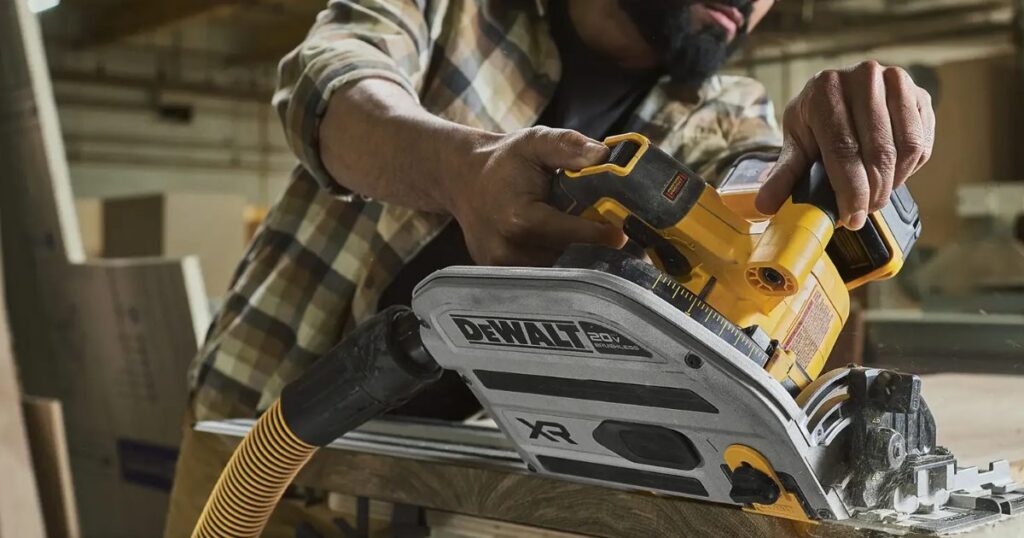
A 6½-inch cordless plunge saw running 2,500 to 5,400 rpm across five speed settings, cutting 2⅛ inches at 90 degrees. DeWalt claims straight-cut accuracy within 1/32 inch, a redesigned plunge action, and stiffer rails intended to reduce flex.
The detail that matters most to existing owners: DeWalt says the older rails remain compatible. Track saw systems are expensive to be locked out of, and a brand that orphans its rails is asking customers to rebuy the part they already own.
A kit at $749 adds a battery, charger and two 30-inch tracks. Dust collection is claimed at up to 94% with a vacuum attached, which is a meaningful figure indoors and a marketing figure without the vacuum.
DCW211 5-inch orbital sander, $199 bare
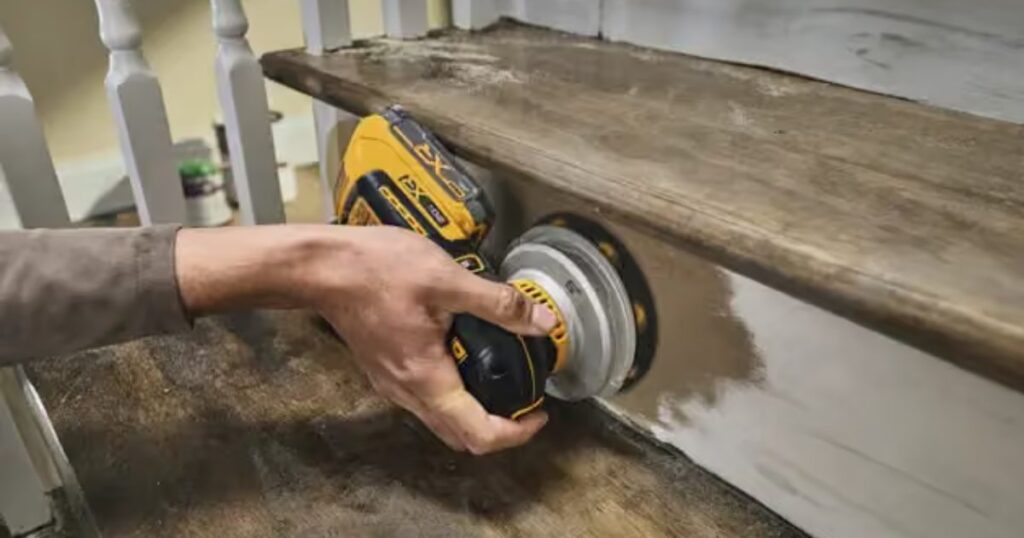
8,000 to 12,000 orbits per minute over five settings, with DeWalt quoting up to 50 square feet of coverage on a 5.0Ah pack and up to 95% dust collection. It carries Wireless Tool Control and Tool Connect.
DeWalt’s headline claim is up to 40% less vibration than the DCW210 it follows. That is a manufacturer comparison against its own previous model, measured by a method DeWalt has not published.
DCW230 6-inch orbital sander, $249 bare
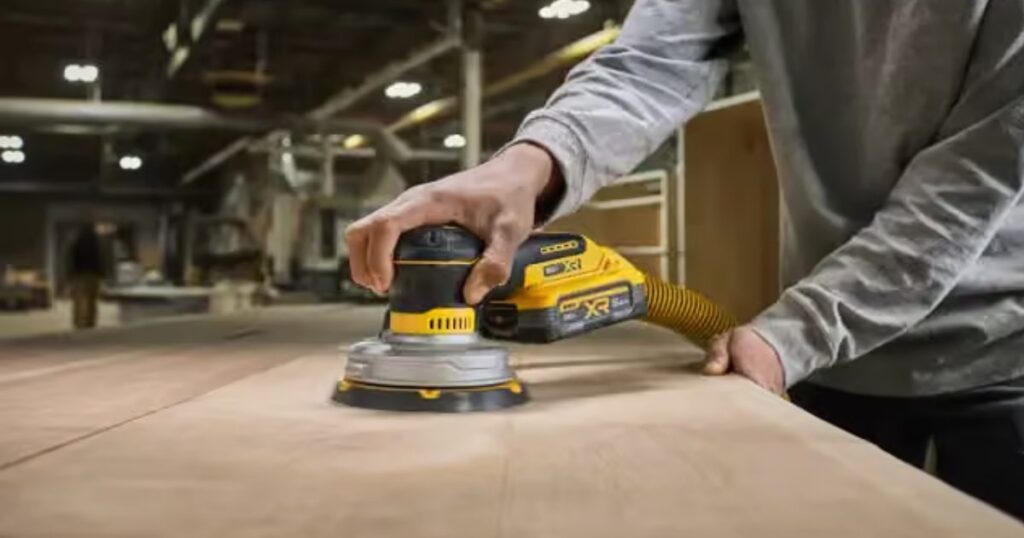
DeWalt describes this as the first 6-inch cordless orbital sander, running 6,000 to 10,000 opm and quoting up to 200 square feet on an 8.0Ah pack.
The larger pad is the point. A 6-inch disc covers roughly 44% more area per pass than a 5-inch, which on a run of doors or a deck is the difference between an afternoon and a day. The lower speed range reads as a deliberate trade for control on large flat work rather than a power limitation.
DCS359 oscillating multi-tool, $249 bare
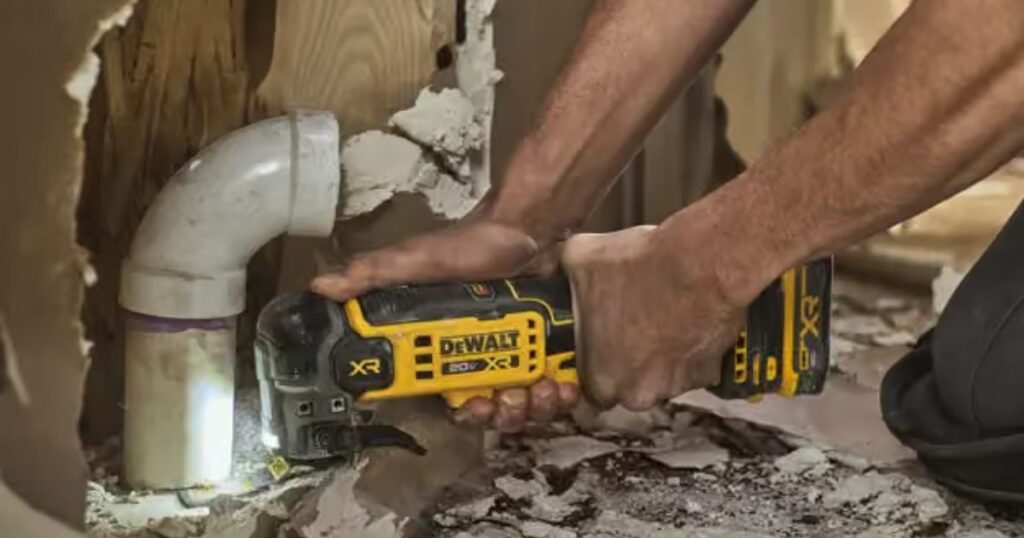
8,000 to 20,000 opm across four speed modes, 2.88 lb, 11.7 inches long, with a speed lock and variable-speed trigger. The oscillating angle goes to 4.2 degrees, which DeWalt puts at one degree more than its previous models.
A wider angle removes material faster and is harder to control on a fine cut, which is why the four speed modes matter more here than on most tools. DeWalt also claims 43% lower vibration than a leading competitor, without naming the competitor or the test.
DCN220 16-gauge straight finish nailer, $399 bare
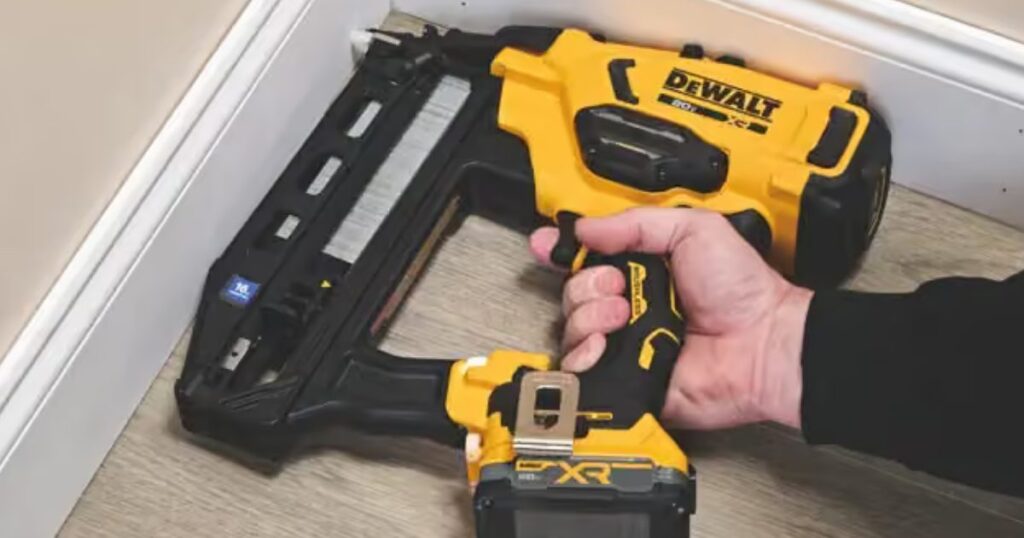
Up to five nails a second, a 110-nail magazine, fasteners to 2.5 inches, and a 3.1-inch body width that DeWalt says makes it the most compact 20V Max 16-gauge straight finish nailer. Tool-free jam and stall release, tool-free depth adjustment, and a low-nail lockout with an LED.
Width is the specification that earns its place on a finish nailer. Trim work happens in corners, against jambs and inside cabinets, and 3.1 inches decides whether the tool reaches the fastener or you reach for a hammer.
The pattern: DeWalt is competing on vibration
Both sanders and the multi-tool lead their announcements with vibration reduction rather than output. That is a shift, and it is not a marketing accident.
Hand-arm vibration syndrome is a permanent, progressive injury caused by exactly the tools in this announcement: sanders, multi-tools, anything with a high-frequency oscillation held for hours. It damages nerves and circulation in the fingers, and the damage does not reverse. In much of Europe, employers carry a legal duty to assess and limit daily vibration exposure, which means vibration figures increasingly decide which tools go on a commercial order.
So a manufacturer leading on a 40% vibration reduction is speaking to a purchasing officer with a compliance obligation, not to a hobbyist comparing RPM. Expect more of it.
What DeWalt has not published
Three gaps are worth holding onto until independent figures exist.
- No m/s² vibration values. Percentages are comparisons; the number that goes on a risk assessment is an absolute figure in metres per second squared. Until DeWalt publishes one, the 40% and 43% claims cannot be checked or used.
- No test method for the competitor comparison. A 43% advantage over an unnamed rival, measured in an unstated way, is an advertising claim rather than data.
- No release dates. Availability is stated only as 2026, and no pricing has been confirmed outside the US.
Where this leaves the platform
The most consequential fact in the whole announcement is the least exciting one. All five tools are 20V Max XR, and the track saw keeps the existing rails.
DeWalt is deepening a platform rather than starting one. For anyone already holding a shelf of 20V packs, five new tools arrive without a battery purchase attached. For anyone still choosing a system, that record of not orphaning what it sold you is worth more than any single specification here, because the platform is the decision you cannot cheaply reverse. We covered how that choice compounds in impact driver vs drill driver vs hammer drill.
None of these five has a release date, so nothing here can be bought yet. The links above go to DeWalt’s current line, which is what you would actually be choosing from today. When the new tools land, the questions worth asking a seller are in our guide to choosing a reliable retailer for power tools and accessories. If you are comparing DeWalt against the field in the meantime, DeWalt DCS334 alternatives and the most powerful corded hammer drill both put DeWalt tools against their rivals on published figures.
Hilti’s Nuron circular saw upgrade covers a similar move at the premium end of the market.
Frequently asked questions
When are the new DeWalt carpentry tools released?
DeWalt has stated 2026 without giving specific dates for any of the five. Pricing announced so far is US only, and no regional availability has been confirmed.
Will the DCS525 track saw work with my existing DeWalt rails?
DeWalt says yes, older rails remain compatible with the new saw. That is the manufacturer’s statement rather than something independently confirmed, and it is worth verifying against your specific rail before buying.
Do the new tools need new batteries?
No. All five are 20V Max XR and run on existing DeWalt 20V packs. The coverage figures DeWalt quotes assume specific pack sizes, 5.0Ah for the DCW211 and 8.0Ah for the DCW230, so runtime on smaller packs will be lower.
Is the 6-inch sander worth the extra over the 5-inch?
It depends entirely on surface area. A 6-inch pad covers roughly 44% more per pass, which pays off on doors, decks and panels and is wasted on furniture and detail work. The 6-inch also runs a lower speed range, which suits large flat surfaces rather than fine finishing.
Are DeWalt’s vibration claims independently verified?
Not at this stage. The 40% and 43% figures are DeWalt’s own comparisons, and the company has not published absolute vibration values in m/s² or described the test method. A percentage against an unnamed competitor cannot be used in a workplace risk assessment.
Specifications, pricing and hands-on impressions of these tools were first reported by Pro Tool Reviews from DeWalt’s launch event. The analysis and commentary here are our own.