
Three of the four serious 9-inch cordless cut-off saws spin at exactly the same speed and weigh within 150 grams of each other, which means the specification sheet will not choose for you. Something else has to.
This comparison is built from published manufacturer specifications and retailer listings, cross-checked against each brand’s own documentation. None of these machines has been on the Tools Soko bench, so no tool carries a score and nothing here is a teardown.
Why you can trust us. Tools Soko earns a commission when you buy through links on this page. It never changes what we recommend, and it never changes the price you pay. As an Amazon Associate we earn from qualifying purchases.
Cordless cut-off saws have reached the point where the argument for a two-stroke petrol cutter on a Kenyan site is getting harder to make. Not because battery machines have overtaken petrol on raw output, but because the things that made petrol tolerable, cheap fuel and simple mechanics, have both got worse. Fuel costs money every day. A carburettor that has sat through a rainy season costs a morning.
What follows compares the four machines worth shortlisting. Read the specification table first, because it explains why the rest of this article is about water systems and battery platforms rather than power.
The specifications, corrected
| Milwaukee 2786-20 | DeWalt DCS690B | Makita GEC03Z | FLEX FX2481 | |
|---|---|---|---|---|
| Platform | M18 High Output | 60V MAX FlexVolt | 40V max XGT | 24V Stacked Lithium |
| No-load speed | 6,600 RPM | 6,500 or 6,600 RPM, see note | 6,600 RPM | 6,600 RPM |
| Max cut depth | 3.4 in / 86 mm | 3-1/4 or 3-3/4 in, see note | 3-1/2 in / 88 mm | 3-3/8 in / 86 mm |
| Weight, bare | 10.6 lb / 4.81 kg | 10.85 lb / 4.92 kg | Not published in comparable form | Not published in comparable form |
| Dust control | Quick-connect water | Dual-sided water feed | Integrated water line | Onboard water connection |
| Safety system | RAPIDSTOP blade brake | Electronic clutch | AFT kickback sensor | Spindle Stop shaft lock |
A note on the DeWalt figures. Sources disagree. DeWalt’s own listing and most specialist retailers give 6,600 RPM and a 3-1/4 inch cut. The Amazon listing for the same part number gives 6,500 RPM and 3-3/4 inches. We are not going to quietly pick the flattering one. Confirm against the plate on the machine before you buy on cut depth.
Read across that table and the marketing collapses. Three of the four are identical on rotational speed. The spread on cut depth is eight millimetres across the whole field. Milwaukee and DeWalt, the two whose bare weights are published on the same basis, are 110 grams apart, which is less than a full water bottle.
So the honest framing is not which saw cuts hardest. It is which battery platform you already own, and which water system suits the work.
1. Milwaukee M18 FUEL 9-inch, model 2786-20
The obvious buy if your crews already run M18, which on a mixed fit-out site is a genuine argument rather than brand loyalty. Every drill, grinder and light on the van shares a charger.
Milwaukee publish 6,600 RPM, a 3.4 inch cut and 10.6 lb bare, plus a quick-connect water fitting, a RAPIDSTOP blade brake and ONE-KEY tool tracking. That last one matters more in Nairobi than the brochure suggests: a tool that can be disabled remotely is a different theft proposition from one that cannot.
The real limitation is not weight, it is voltage. Running a 9-inch wheel through reinforced slab on an 18V platform draws hard, and you will move through High Output packs faster than a 40V or 60V machine moves through its own. Budget for more batteries, not a different saw.
2. DeWalt FlexVolt 60V MAX, model DCS690B
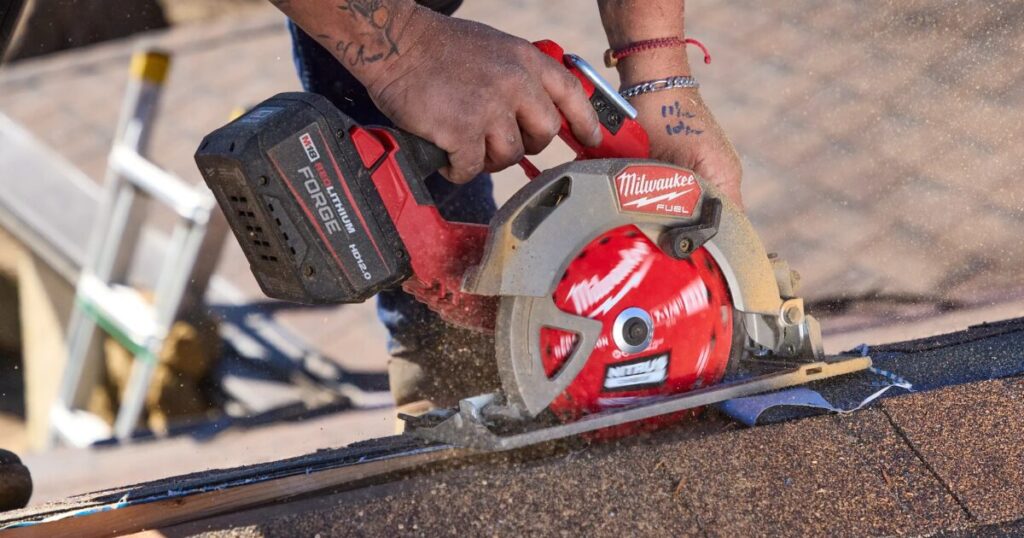
The one with the most convincing dust story. Its dual-sided water delivery wets both faces of the wheel, and DeWalt describe the arrangement as an OSHA Table 1 compliant solution for silica when cutting concrete and masonry. That is a named, checkable standard rather than a vague claim about compliance, which is why it is worth repeating.
Mechanically the interesting part is the beltless all-metal drivetrain. No belt to tension, replace or lose on a Saturday. On a machine that lives in dust, deleting a wear part is worth more than a headline figure.
One correction worth making plainly, because it circulates widely: this saw is not meaningfully heavier than the Milwaukee. Published bare weights are 10.85 lb against 10.6 lb. Anyone telling you the DeWalt causes faster operator fatigue on that basis is describing 110 grams.
3. Makita 40V max XGT, model GEC03Z
Be careful which Makita you are actually looking at, because two very different machines get written up as though they are one.
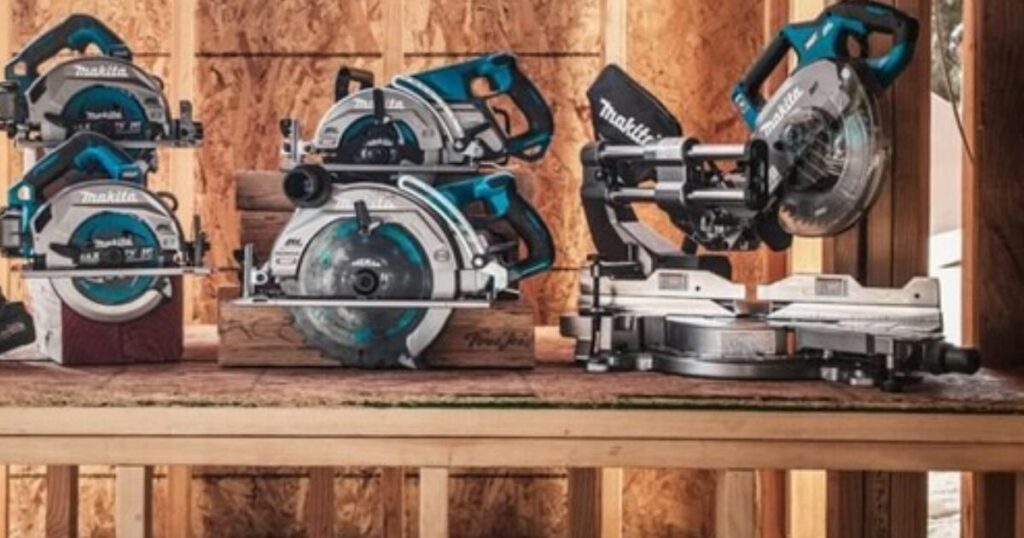
The GEC03Z, bare, or GEC03T as a kit, is the single-battery 40V max XGT power cutter: 6,600 RPM and a 3-1/2 inch cut, the deepest here. The CE001G is a different tool, a twin-battery 80V max machine running 5,300 RPM with a 127 mm capacity and a net weight in the region of 12 to 14 kg. If you have read that the Makita is slow, that figure came from the big twin, not from this saw.
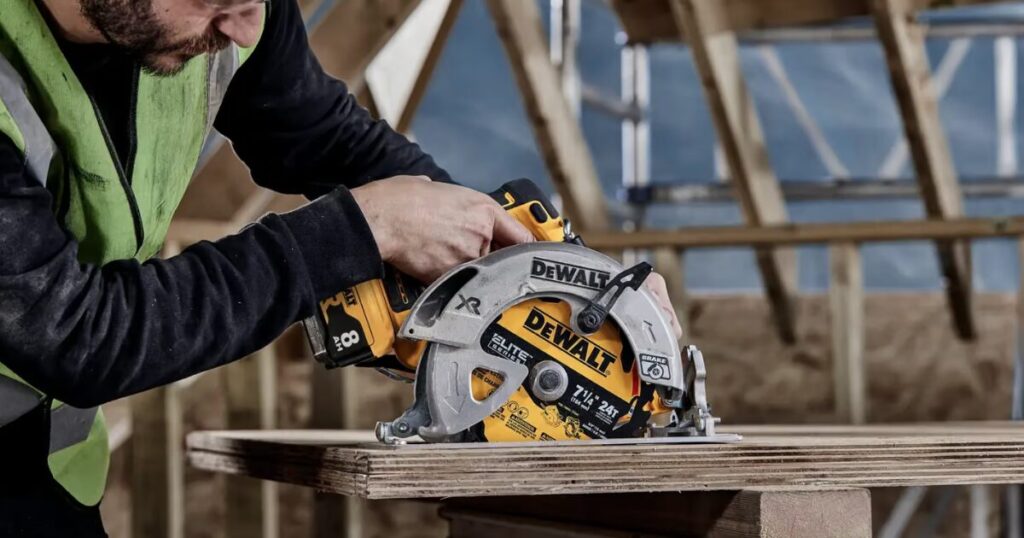
What genuinely separates the GEC03 is Active Feedback-sensing Technology, which cuts the motor when the wheel is forced to stop abruptly. On a 9-inch wheel buried in rebar, a kickback is the event that ends careers, and an electronic sensor that reacts faster than a wrist is not a marketing feature. Makita also claim substantially reduced vibration and a brake that stops the wheel in two seconds or less.
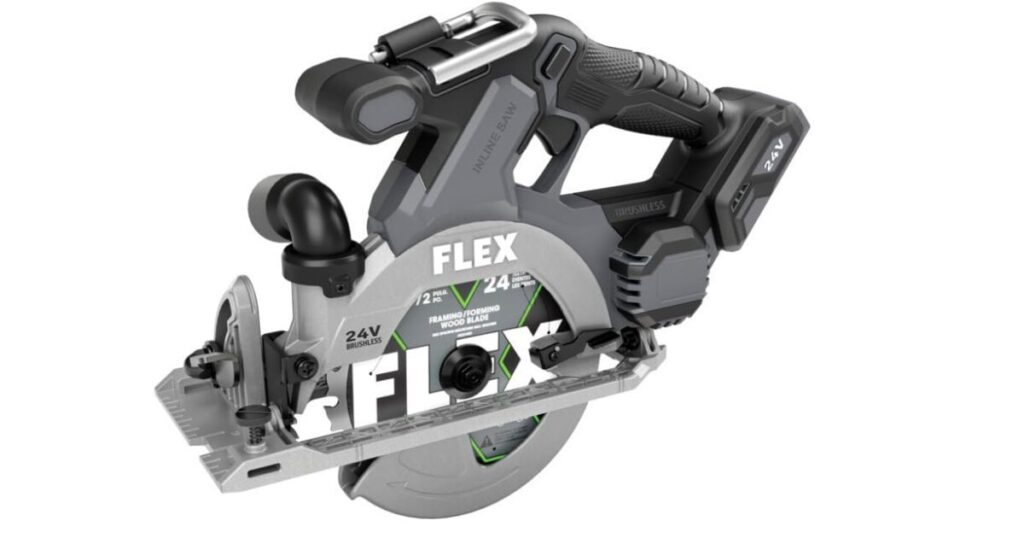
4. FLEX 9-inch, model FX2481
FLEX runs a 24V Stacked Lithium platform, not the 24V/56V hybrid arrangement sometimes reported. The kit, FX2481-2J, ships with two 10.0Ah packs and a 550W fast charger, which tells you where FLEX puts its engineering: charge time and pack density rather than nominal voltage.
It matches the field at 6,600 RPM with a 3-3/8 inch cut, and carries a Spindle Stop shaft lock for blade changes that also prevents inadvertent start-up. FLEX position it for rebar, strut, black pipe and steel studs as much as masonry, which is a slightly different emphasis from the concrete-first framing of the other three.
The limitation is not the tool. It is the dealer network. FLEX has far less presence across East African retail than DeWalt or Makita, and on a machine you expect to run for years, a platform you cannot buy a replacement pack for locally is a real cost.
What changes the answer in Kenya
Water, not vacuum. Every one of these saws suppresses dust with water rather than extraction, which suits local conditions because it needs a pressurised bottle rather than a HEPA vacuum and a power supply. It also means you need a water plan on every job, and a saw run dry indoors is a silica exposure, not a shortcut.
Charging is a 240V problem. Chargers sold into the US market are 120V. Confirm you are buying the 240V/50Hz charger for the region, or budget for a transformer that will slow every charge cycle you run.
The platform outlives the saw. Batteries fail before motors do. Ask a supplier what a replacement pack costs and whether they stock one today, because that number, multiplied over five years, dwarfs the difference between any two of these machines.
Rainy season and storage. A petrol cutter left through the long rains needs a carburettor stripped. A battery machine needs packs stored charged and dry. The second problem is cheaper, which is most of the case for going cordless in the first place.
Tools Soko verdict
Buy the platform, not the saw. If your site already runs M18, the 2786-20 is the correct answer and the extra batteries you will need still cost less than a second charger ecosystem. If you are starting fresh and the work is structural, the DeWalt earns it on the beltless drivetrain and the named silica standard.
Choose the Makita GEC03Z if crews are cutting reinforced foundations or rebar frames where a bind is likely, because AFT is the only feature here that addresses the injury rather than the dust. Choose the FLEX only if you have confirmed a local source of packs, in which case its charger and battery density are genuinely ahead.
What should not decide it is rotational speed. Three of these four are identical on that number, and anyone selling you one on the strength of it has not read the same specification sheets we have.
No score accompanies this comparison. We have not run these saws, and published figures do not support a number.
Where to buy
For the Milwaukee and the Makita, buy through an authorised dealer who can supply batteries and service locally. On a tool this size the dealer relationship is part of what you are buying.
Site work needs light as well as cutting, and the Makita ML014G tower light runs off either Makita platform. For smaller cutting jobs the Makita DGA504 angle grinder is the sensible companion, and Hilti’s Nuron circular saw upgrade shows where the premium end is heading.
Frequently asked questions
Can a cordless cut-off saw replace a petrol power cutter?
For most site cutting, yes, provided you buy enough batteries. Where it wins outright is indoors and in enclosed spaces, because there is no exhaust. Where petrol still holds on is all-day continuous cutting far from any charger.
Which of these four cuts deepest?
The Makita GEC03Z, at 3-1/2 inches. The whole field sits within about eight millimetres of each other, so cut depth is rarely the deciding factor unless you are working to a specific slab thickness.
Do I need the water attachment?
For concrete and masonry, treat it as mandatory rather than optional. Dry cutting silica-bearing material releases respirable dust that no dust mask alone is designed to handle over a working day.
Is the Makita CE001G the same saw as the GEC03?
No, and the two get confused constantly. The CE001G is a twin-battery 80V max machine at 5,300 RPM weighing roughly 12 to 14 kg. The GEC03Z is the single 40V max saw at 6,600 RPM. Check the model number, not the description.