
The seven tools for a pro electrician below are all test and measurement gear, and the one specification that decides whether any of them is safe to own is the one the marketing never leads with.
What this is based on. What this guide is based on. Published manufacturer specifications and the safety standards named in the text. We have not tested these instruments. See how we work.
This guide is written from published manufacturer specifications and from established electrical practice. Nothing here has been on the Tools Soko bench, so no product carries a score, and we have not surveyed anyone.
Why you can trust us. Tools Soko earns a commission when you buy through links on this page. It never changes what we recommend, and it never changes the price you pay. As an Amazon Associate we earn from qualifying purchases.
Be clear about what this list is before you spend against it. These are the instruments an electrician uses to find out what a circuit is doing. They are not a complete tool bag, and a list of seven test instruments with no wire strippers, no fish tape and no torch in it would be a strange thing to hand an apprentice. We come back to that at the end.
Fluke appears repeatedly here because the brand genuinely does dominate professional test equipment, and their published specifications are detailed enough to quote. That is not the same as saying you should buy only Fluke, and further down we say plainly where the money stops being worth it.
1. Non-contact voltage tester
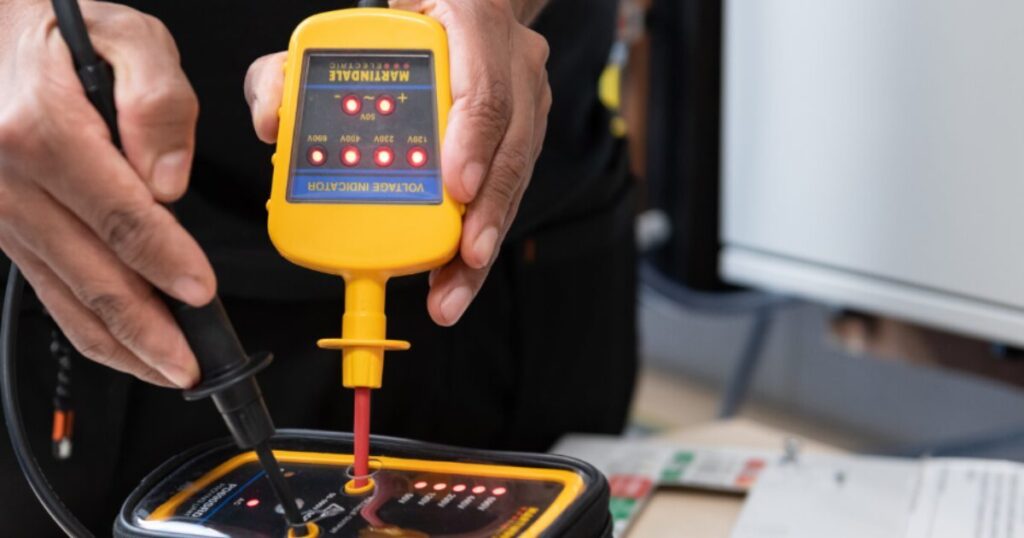
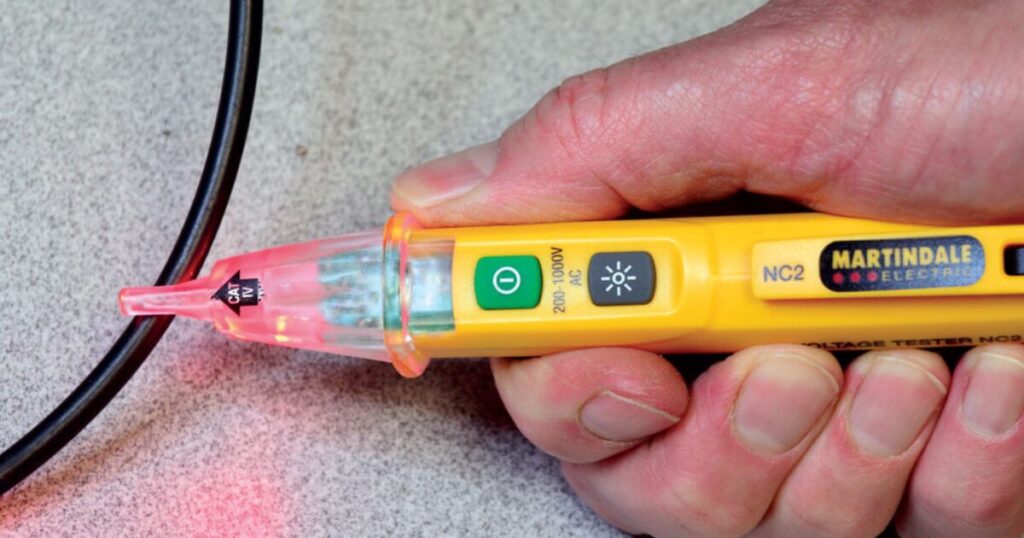
The first thing you reach for and the last thing you should trust on its own. A non-contact tester tells you a conductor is probably live without you touching it, which makes it a screening tool rather than a proving tool.
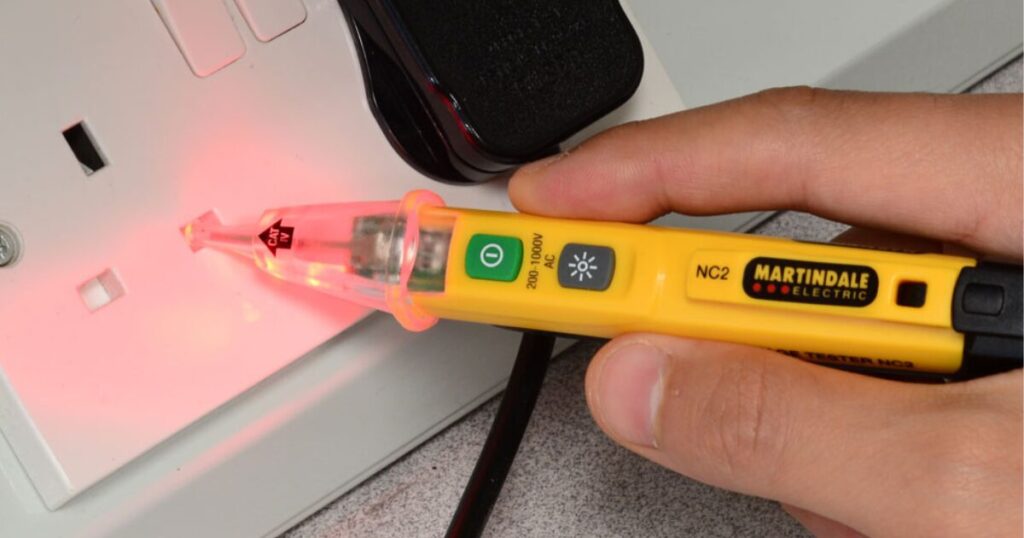
Fluke position the T6-1000 as a step past the basic pen tester. Their FieldSense technology is claimed to read up to 1000 V AC and 200 A AC through an open fork slid over the conductor, with no test leads in the circuit. On a busy distribution board that saves real time.
The habit that matters more than the tool: prove the tester on a known live source, test your conductor, then prove the tester again. A pen tester with a flat battery reads exactly like a dead circuit.
2. Insulated hand tools
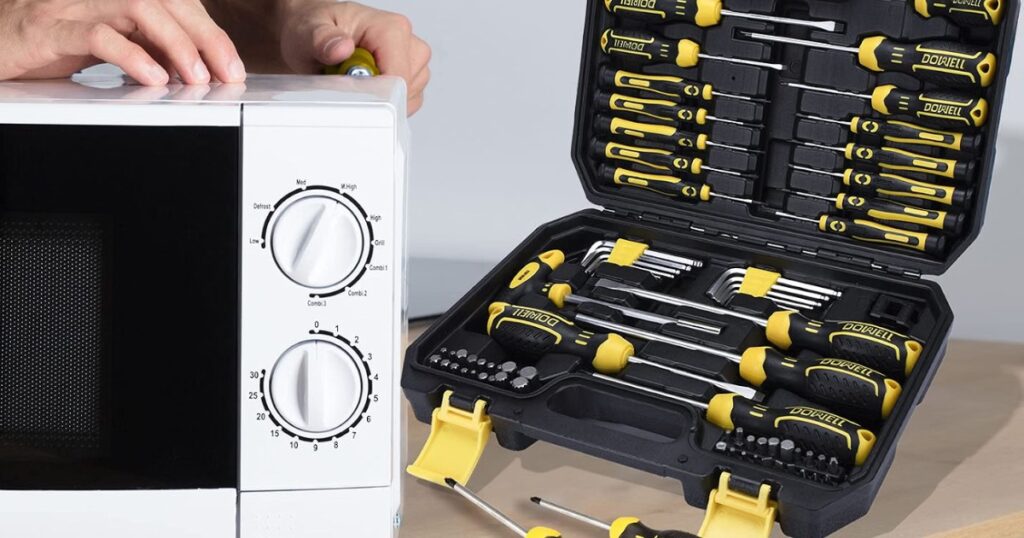
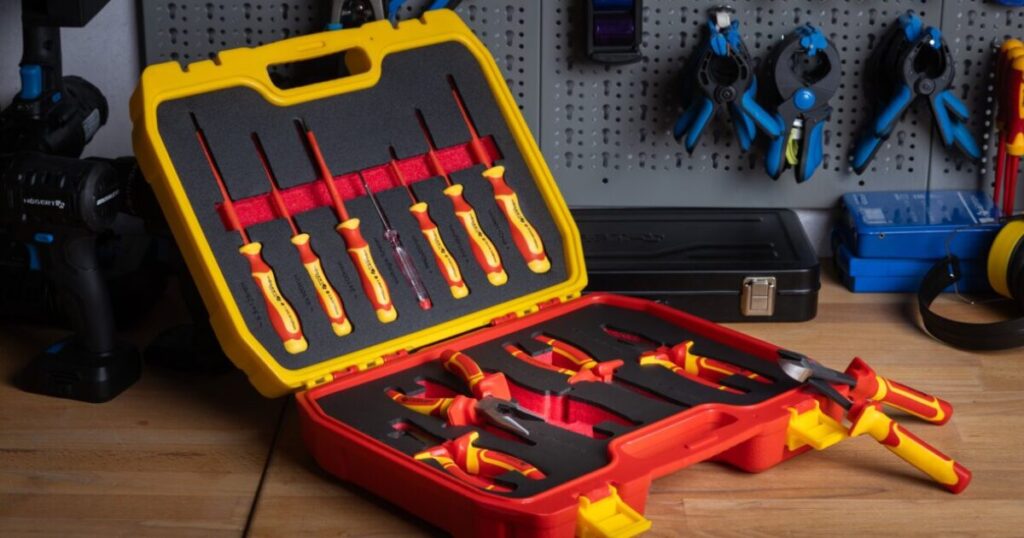
Insulated screwdrivers and pliers are the cheapest genuine safety buy on this list, and the one most often fudged with a pair of ordinary pliers and some tape.
What you are buying is a certification, not a plastic handle. Look for tools individually tested to the VDE standard and marked 1000 V AC. Fluke describe their insulated range as machined from German CMV steel and certified to 1000 V AC and 1500 V DC, which is the specification to hold any brand to. Knipex, Wiha and Klein sell to the same standard, often for less.
Two practical notes. Insulation that is nicked, burnt or crushed is scrap, not a tool, and the double-layer handles that show a bright underlayer when the outer skin is damaged exist precisely so you can see that at a glance. And insulated tools are for working near live parts, not a licence to work on them.
3. Clamp meter
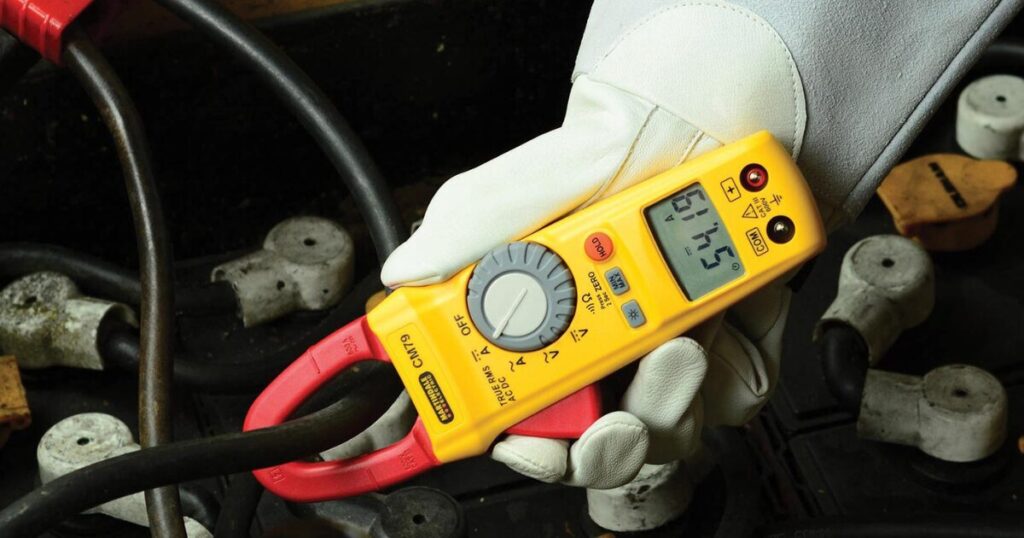
The instrument that answers what a circuit is actually drawing, without breaking it. You clamp the jaw around a single conductor and read the current from the magnetic field around it.
Fluke rate the 376 FC at up to 1000 A AC and DC, with wireless logging to a phone. The logging is the part worth paying for. An intermittent fault that trips a breaker once a fortnight is close to impossible to catch by standing in front of a meter, and trivial to catch by leaving one recording.
If you are commissioning fit-out work rather than chasing faults, a basic 400 A clamp costs a fraction of that and reads load current perfectly well. Buy the logging when you have a fault worth logging.
4. Multimeter
The tool an electrician reaches for more than any other, and the one place on this list where paying properly is easy to justify.
The Fluke 117 is built around three features that matter in a working day. Integrated non-contact voltage detection means one less instrument on the belt. AutoVolts selects AC or DC for you, which sounds trivial until you have taken a reading in the wrong mode at height. LoZ applies a low input impedance that collapses ghost voltages, the phantom readings induced on a disconnected conductor running alongside a live one, and which have sent more than one electrician looking for a fault that was never there.
It is a 600 V CAT III instrument. That rating, not the feature list, is the reason to buy it, and the next section explains why.
5. Insulation resistance tester
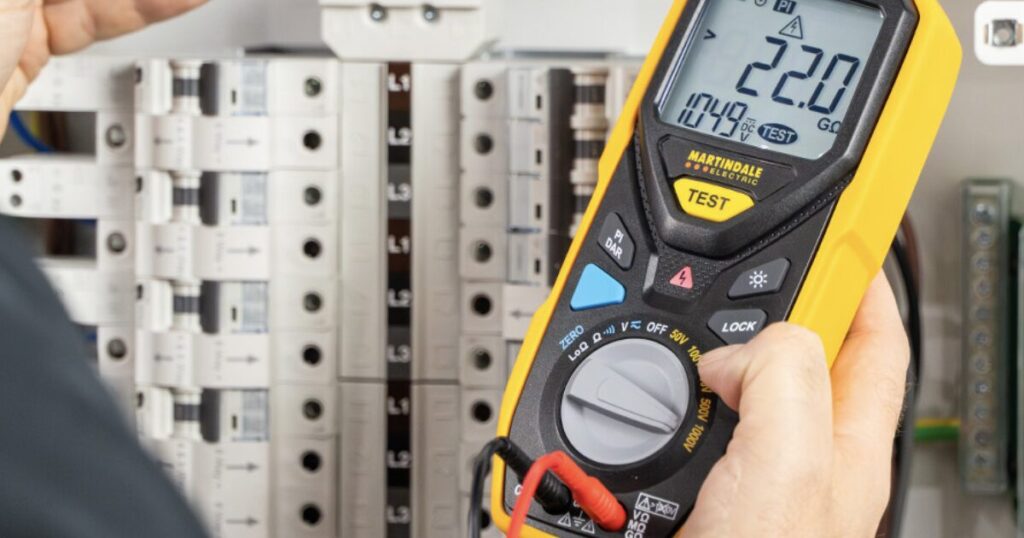
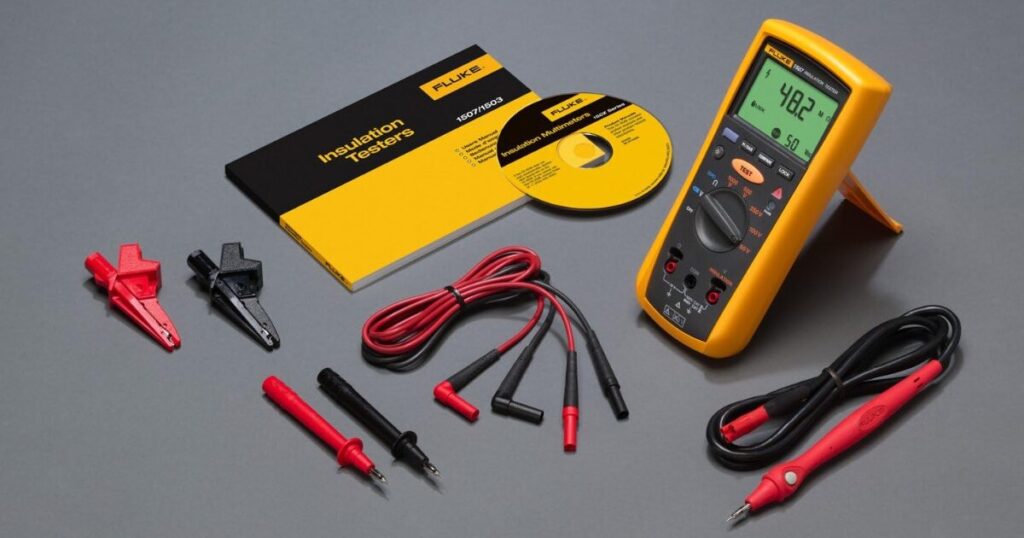
A megger applies a high DC test voltage, typically 250, 500 or 1000 V, and measures how much current leaks through insulation that is supposed to be passing none. It is how you find a cable that is damp, damaged or degraded before it becomes a fault.
Fluke combine the function with a true-RMS multimeter in the 1587 FC and add wireless result sharing. For anyone certifying installations the combination saves carrying two instruments, and saved results are worth more than they sound when a client queries a certificate months later.
This is a tool you need if you sign off installations and can reasonably hire if you do not. Insulation testers spend most of their life in the case.
6. Fluorescent light tester, with a caveat
The Fluke 1000FLT runs lamp, ballast, non-contact voltage, pin continuity and ballast-type checks from one handheld unit, which turns a ladder-and-guesswork job into a sequence of tests.
Here is the caveat the original brief did not carry. Fluorescent lighting is being retired. LED retrofit is now the default on refurbishment work, and an LED tube has no ballast to test. If your work is maintaining existing fluorescent installations in schools, hospitals or older commercial stock, this earns its place quickly. If your work is new fit-out, it is a tool for a shrinking problem, and it would not make our seven.
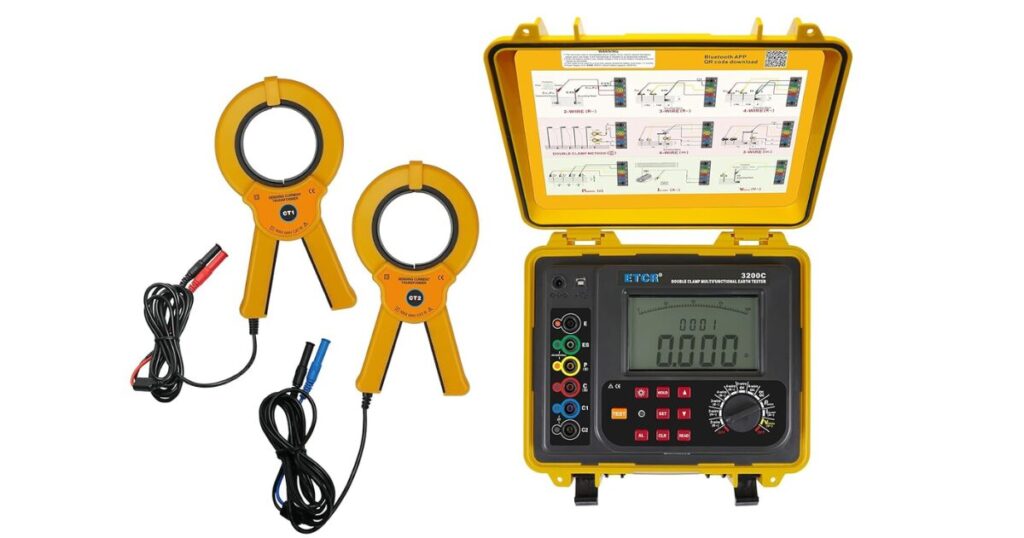
7. Earth ground tester
Everything protective in an installation assumes the earth is doing its job. Measuring earth resistance is how you find out whether it is.
The traditional method drives test stakes into the ground some distance apart, which is awkward on a finished site and impossible on a concrete one. Fluke’s 1630-2 FC takes a stakeless measurement by clamping around the earth conductor, with results shared to a phone.
Worth knowing locally: the stakeless method needs a parallel return path through other earthed points, so it works on a bonded urban installation and not on a single isolated rod. On the red lateritic soils common across much of Kenya, earth resistance also swings hard between the long rains and the dry season, so a reading taken in April is not the reading you will get in September. Test at the worst time of year, not the most convenient.
CAT ratings: the specification that actually matters
Nothing above matters as much as this, and the original list did not mention it once.
Every meter carries a measurement category and a voltage: CAT II, CAT III or CAT IV. The category describes how much transient energy the instrument can survive, and transients are the danger. Mains at 240 V is not what injures people. A voltage spike arriving down that mains, into a meter that cannot contain it, is what turns an instrument into an arc flash across your hands.
| Category | Where it applies |
|---|---|
| CAT II | Appliances and socket outlets, at the end of a branch circuit |
| CAT III | Distribution boards, fixed installation wiring, busbars |
| CAT IV | The origin of the installation, service head, supply meter, outdoor lines |
Buy for the highest category you will ever work at, not the one you work at most. A CAT III 600 V meter is the sensible floor for anyone opening a distribution board. The number pairs with the category, and a higher voltage at a lower category is not an upgrade.
Check the fuses too. A properly rated meter uses high rupture capacity fuses, and they cost real money. That cost is exactly what a counterfeit leaves out.
Counterfeits, and what to check in Nairobi
Fluke is among the most counterfeited instrument brands in the world, for the obvious reason that the name carries a price premium. A fake clones the case, the screen and the printed CAT rating. What it cannot clone economically is the internal protection: the spacing on the board, the transient suppression and the high rupture capacity fuses. So the one thing the counterfeit gets wrong is the one thing the rating exists to promise.
Practical checks before you pay. Buy from an authorised distributor and ask them to say so in writing on the invoice, since a genuine distributor will not hesitate. Treat a heavy discount on current Fluke stock as the warning it is. Open the battery and fuse compartment and look at the fuses, because ceramic HRC fuses with a proper part number are expensive and fakes usually carry glass. And check that the calibration certificate, where one is offered, traces to a named laboratory rather than a logo.
For anyone certifying work in Kenya, buying through a distributor who can arrange recalibration locally matters more than the purchase price. An instrument you cannot get recalibrated is one you cannot rely on in a dispute.
What the list of seven leaves out
An electrician who owned only the seven instruments above could diagnose a fault and fix none of it. The unglamorous tools that do the actual work: a good pair of wire strippers matched to the cable sizes you run, side cutters, a cable knife, fish tape or draw rods, a torch that clips to your head rather than occupying a hand, a conduit bender if you run steel, and a decent set of VDE screwdrivers already covered above.
None of that costs what a 1587 FC costs, and all of it gets used more often.
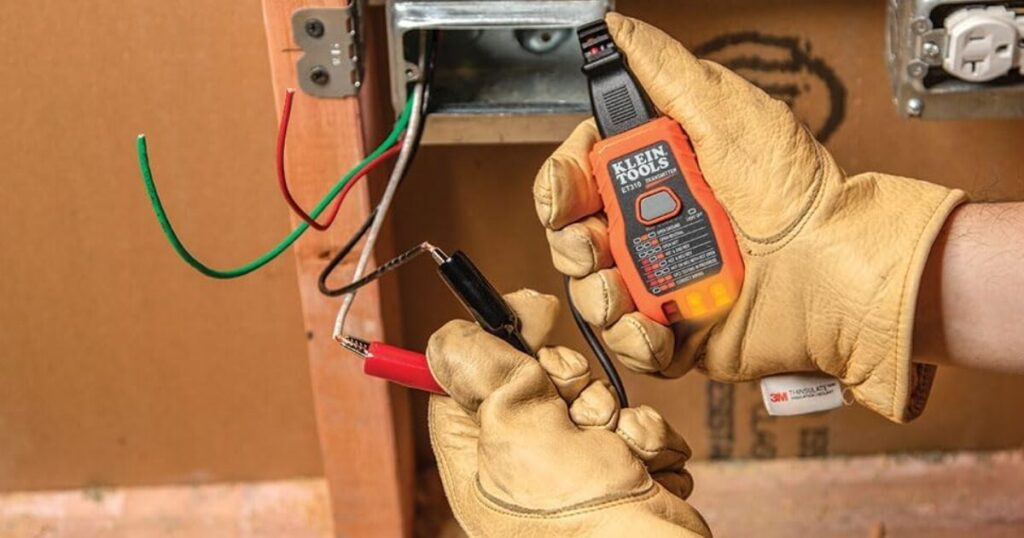
If you are a homeowner rather than an electrician, most of this list is more than you need. A non-contact voltage pen and a plug-in outlet tester cover household checks, and both are in our guide to the 20 tools every homeowner should own, along with the live-dead-live habit that makes them trustworthy.
Is Fluke the best brand for electricians?
Fluke earned its position on safety engineering and on the fact that its instruments hold calibration, and for anything you are going to sign your name against, that reputation is worth paying for.
It does not follow that every instrument in the bag should carry the badge. Megger, Kyoritsu, UNI-T and Klein all make properly rated equipment, and for a second meter that lives in the van, or a basic clamp for load checks, the difference is money rather than safety, provided the CAT rating is genuine. Spend the Fluke premium on the instrument you use to prove a circuit is dead. Be more relaxed about the one you use to check whether a socket is loaded.
Tools Soko verdict
Buy in this order: insulated hand tools, a CAT III multimeter you trust, a basic clamp meter, then a non-contact tester as a screening aid rather than a proving instrument. That covers most working days for a fraction of what the full seven cost.
The insulation tester and the earth ground tester follow when you start certifying installations rather than assisting on them, and both are sensible hire items until then. The fluorescent tester belongs on a maintenance contractor’s list and nobody else’s in 2026.
Above everything, check the CAT rating and buy from someone who will put their name to the instrument’s provenance. A counterfeit meter is not a cheap meter. It is a meter that lies to you about the one thing you bought it for.
No score accompanies this guide. We have not tested these instruments, and published figures do not support a number.
Where to buy
For the remaining instruments, buy through an authorised Fluke distributor rather than a marketplace listing. On test equipment the provenance is part of the specification.
Working in unlit risers and plant rooms, the Makita ML014G tower light runs on either Makita battery platform. On hand protection, our look at impact-rated work gloves covers what an EN 388 rating does and does not tell you, and a 45-piece hand tool kit covers the non-electrical basics.
For a worked example of using a clamp meter to diagnose a real fault, see why an air compressor keeps tripping the breaker.
Frequently asked questions
What tool do electricians use most?
The multimeter, by a wide margin, because it answers voltage, continuity and resistance questions with one instrument. The Fluke 117 is the common professional choice, though the CAT rating matters more than the model number.
What CAT rating do I need in a domestic installation?
CAT III 600 V is the sensible minimum for anyone opening a consumer unit or distribution board. CAT II is for appliance and socket work only, and it is not enough at the board.
Can a non-contact voltage tester prove a circuit is dead?
No. It screens for the presence of voltage and it can fail silently, most commonly on a flat battery. Prove dead with a two-pole tester or a meter, and prove the instrument itself on a known live source before and after.
How do I spot a counterfeit Fluke meter?
Check the fuses, since genuine instruments use ceramic high rupture capacity fuses with legible part numbers and fakes commonly fit glass. Buy from an authorised distributor who will state that on the invoice, and be suspicious of a large discount on current stock.
Do I need an insulation tester as a self-employed electrician?
Only if you certify installations. If you are assisting or doing maintenance, hire one for the jobs that need it and spend the money on better hand tools instead.