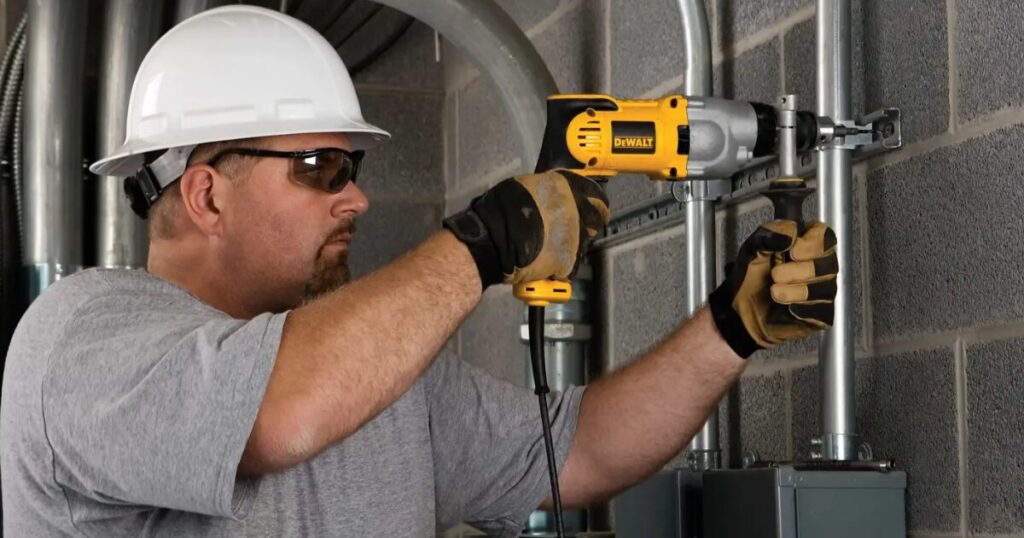

The most powerful corded hammer drill here draws 10 amps. Two of the six brands you would expect do not make one at all, and the reasons matter more than the amp figures.
This comparison is built from published manufacturer specifications and retailer listings. None of these drills has been on the Tools Soko bench, so no tool carries a score, and where a figure is not published we leave the cell empty rather than fill it.
Why you can trust us. Tools Soko earns a commission when you buy through links on this page. It never changes what we recommend, and it never changes the price you pay. As an Amazon Associate we earn from qualifying purchases.
Cordless took most of the drilling work on a modern site. A corded hammer drill still earns its place for one reason: it does not run out. On a day of drilling fixings into block, the machine holding full output from the first hole to the last is the one plugged into the wall.
First, a hammer drill is not a rotary hammer
Everything below is a percussion hammer drill: a standard drill with a ratcheting hammer action and an ordinary three-jaw chuck. Switch the hammer off and you have a drill driver back.
A rotary hammer drives the bit with a piston and takes SDS bits, and it will out-drill every tool on this page in concrete. We drew that line in detail in our guide to impact drivers, drill drivers and hammer drills. The short version: small anchor holes are hammer drill work, anything much above 10 mm in concrete is not.
The six at a glance
| Brand | Model | Motor | Chuck | Speed | Class |
|---|---|---|---|---|---|
| DeWalt | DWD520 | 10.0 A | 1/2 in | 0–1,200 / 0–3,500 rpm | Comparable |
| Bosch | HD18-2 | 8.5 A | 1/2 in | Two speed | Comparable |
| Craftsman | CMED741 | 7.0 A | 1/2 in | Variable | Comparable |
| Makita | HP2050 | 6.6 A | 1/2 in | Variable | Comparable |
| Ryobi | D620H | 6.2 A | 5/8 in | 0–2,700 rpm | Heavier chuck class |
| FLEX | None corded | — | — | — | Cordless only |
The four marked comparable share a chuck size and a duty class, so their figures can be read against each other. Ryobi and FLEX cannot, and both are covered in full below rather than quietly dropped.
1. DeWalt DWD520: the most powerful of the group
DeWalt build the DWD520 as a pistol-grip machine aimed squarely at repeated masonry work, and on published figures it out-specifies everything else here.
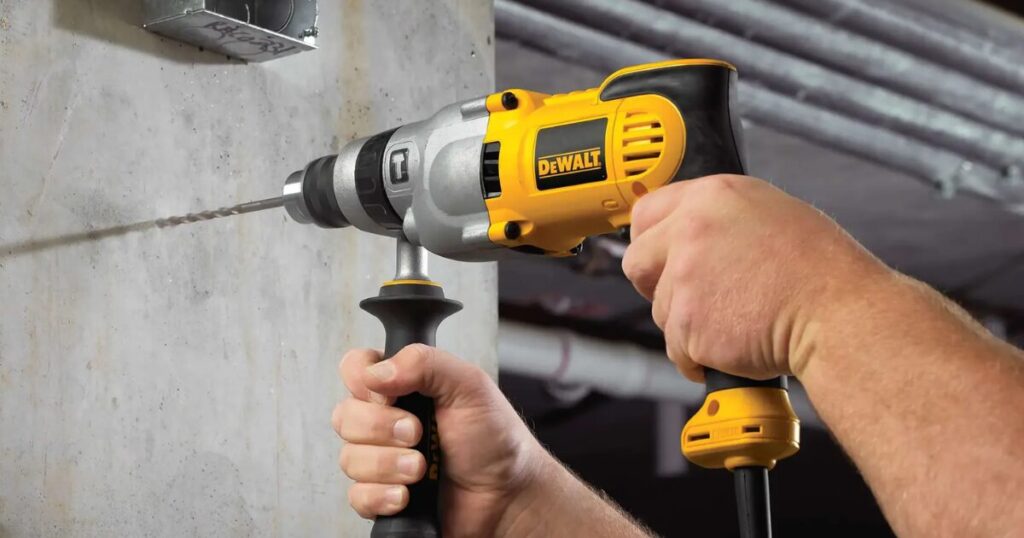
| Specification | Figure |
|---|---|
| Motor | 10.0 A |
| Chuck | 1/2 in |
| Speed ranges | 0–1,200 and 0–3,500 rpm, two speed |
| Impact rate | 0–56,000 bpm |
| Capacity, steel | 1/2 in |
| Capacity, wood | 1-1/2 in |
| Modes | Rotary drilling and hammer drilling |
| Supply | 120V |
What stands out. Not the ten amps, the gearbox. The low range tops out at 1,200 rpm and exists for torque, which is what you want behind a spade bit or a large hole saw. The high range runs to 3,500 rpm, and because a percussion mechanism takes its blow count from chuck rotation, that top speed is exactly where the 56,000 bpm comes from. It is a single design decision producing both headline numbers.
DeWalt also fit a two-finger trigger and a soft grip, which sounds like marketing until you have held a 10 amp drill through a bind.
Who it suits. Anyone drilling block and concrete fixings as a routine part of the week. This is the machine in this comparison built for sustained masonry.
Who should look elsewhere. Occasional users. Ten amps of drill that lives in a cupboard is money spent on capability you will not reach, and the Craftsman below does domestic fixing work perfectly well.
2. Bosch HD18-2: the better all-rounder
Bosch give up 1.5 amps to the DeWalt and get most of it back through gearing and handling. This is the machine to buy if your drilling is mixed rather than mostly masonry.
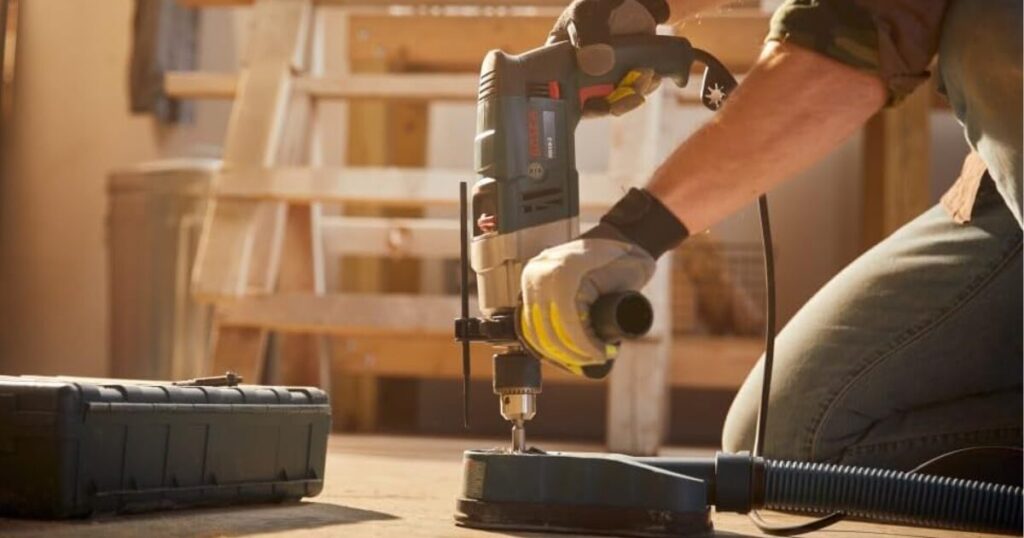
| Specification | Figure |
|---|---|
| Motor | 8.5 A |
| Chuck | 1/2 in |
| Gearbox | Two speed |
| Impact rate | Up to 51,000 bpm |
| Capacity, masonry | 3/4 in |
| Capacity, wood | 1-1/2 in |
| Handle | 360° locking auxiliary, quick-release depth gauge |
| Supply | 120V |
What stands out. The auxiliary handle, which is the best specified of the four. It locks anywhere through 360 degrees and carries a quick-release depth gauge, so setting a repeatable fixing depth takes a second rather than a pencil mark. On a job of forty identical holes that is a real saving.
The dual-mode selector converts between rotation-only and hammer drilling, and Bosch publish a 3/4 inch masonry capacity against 1-1/2 inch in wood, which tells you honestly where the machine is happiest.
Who it suits. Mixed second-fix work: timber, steel and occasional masonry, where the two-speed gearbox matters more than the missing amps.
Who should look elsewhere. If eighty per cent of your holes are in concrete, the DeWalt’s extra speed and impact rate will finish the day sooner.
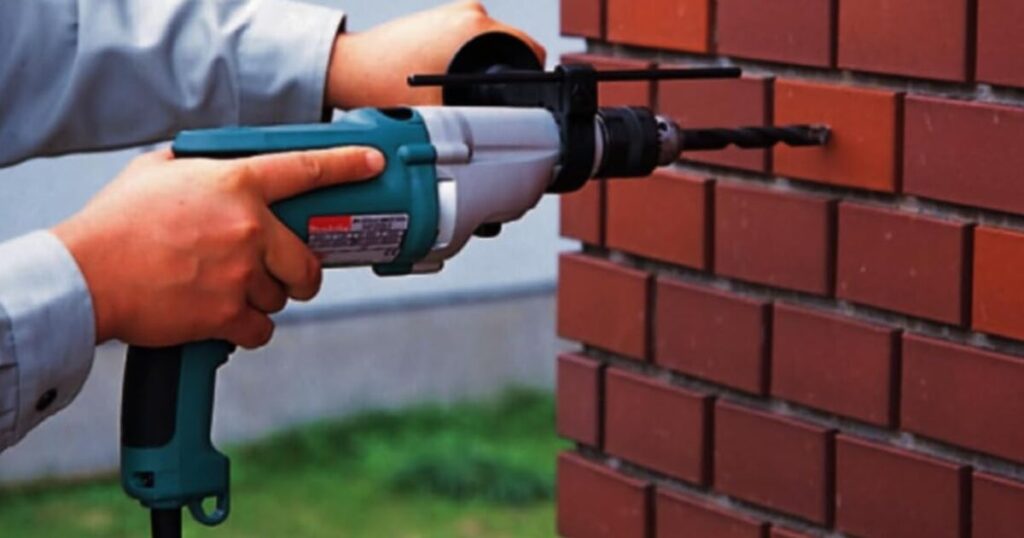
3. Makita HP2050: the safest in a bind
Lowest amperage in the comparable four, and the only one with a mechanical clutch. That trade is deliberate and it is the reason to consider it.
| Specification | Figure |
|---|---|
| Motor | 6.6 A |
| Chuck | 1/2 in |
| Speed | Variable |
| Clutch | Torque limiter, disengages automatically if the bit binds |
| Mode selector | Positive stop, resists accidental mode change |
| Weight | 5.6 lb / 2.54 kg |
| Supplied with | Side handle, depth gauge, chuck key, hard case |
| Supply | 120V |
Flag on the figures. Retailers describe this machine inconsistently. Some list it as a 1/2 inch hammer drill, others as a 3/4 inch. Both are right about different things: 1/2 inch is the chuck, 3/4 inch is the masonry drilling capacity. Check which number a listing means before you compare it with anything else.
What stands out. The torque limiter. A corded drill at full load will try to rotate around a jammed bit, and it does not care which way your wrist bends. A mechanical clutch that lets go first is the only feature in this entire comparison that addresses injury rather than productivity. At 5.6 lb it is also the lightest here by a clear margin.
Who it suits. Drilling into walls with unknown services behind them, overhead work, and anyone who has already had a drill kick.
Who should look elsewhere. Production masonry drilling. Six and a half amps will do it and will take longer.
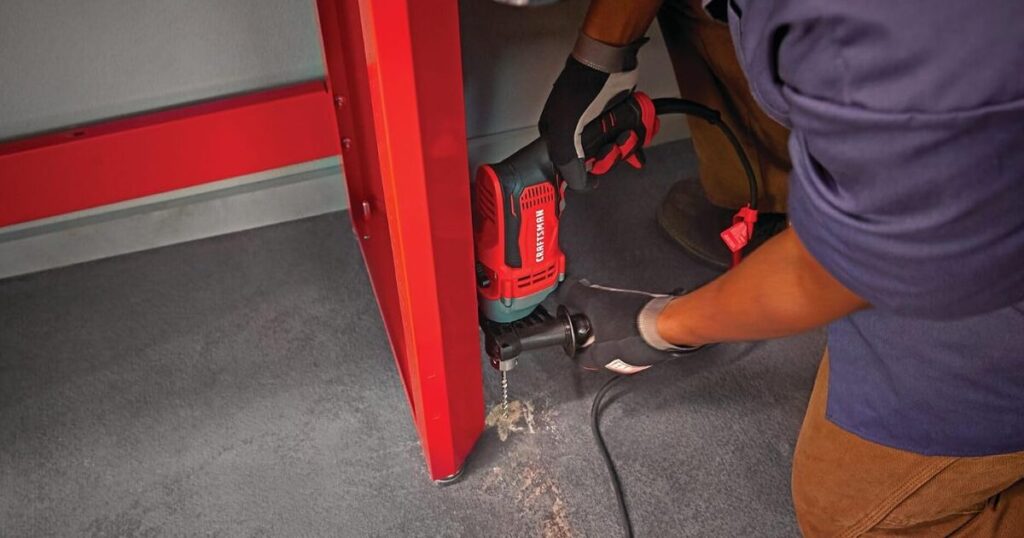
4. Craftsman CMED741: enough drill for most houses
The budget entry, and we are going to defend it rather than dismiss it.
| Specification | Figure |
|---|---|
| Motor | 7.0 A |
| Chuck | 1/2 in |
| Speed | Variable |
| Impact rate | Not published |
| Capacities | Not published |
| Supply | 120V |
What stands out. Seven amps and a 1/2 inch chuck is a genuine mid-range specification, not a toy. It out-rates the Makita on paper and sits within one amp of the Bosch. What you are giving up is the two-speed gearbox, the published capacities and the refinements: no torque limiter, no 360 degree handle, no depth gauge worth the name.
Craftsman publish very little about this drill beyond amperage and chuck size, which is itself informative. Brands publish impact rates when the number flatters them.
Who it suits. Homeowners and light trades fixing into block a few times a month. For that work the money saved is better spent on decent masonry bits, which affect hole quality far more than the last two amps do.
Who should look elsewhere. Anyone drilling daily. The missing gearbox shows up first on large holes in timber.
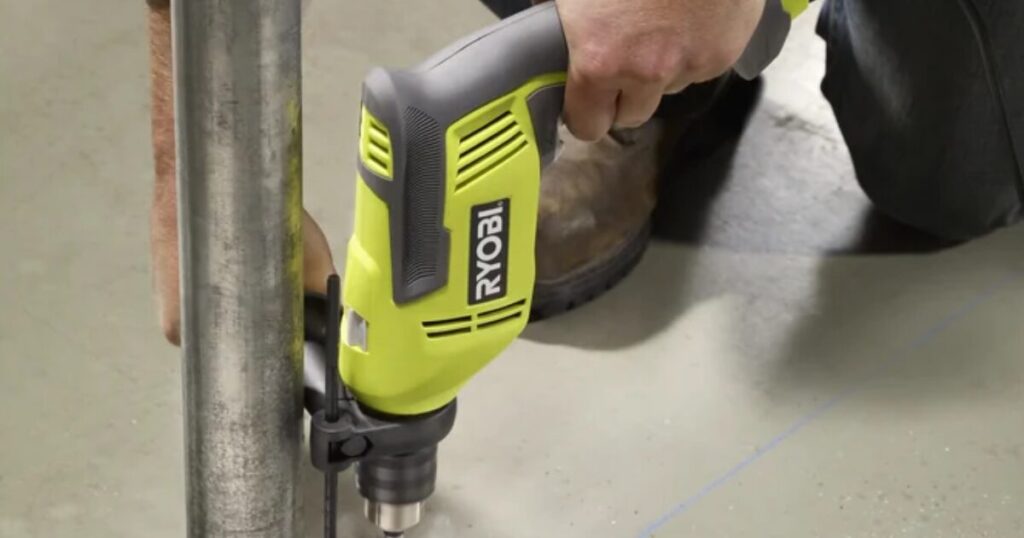
5. Ryobi D620H: a heavier class than the rest
Ryobi has moved almost entirely to cordless. Their 18V ONE+ hammer drill and 18V SDS-plus rotary hammer are both discontinued. What survives corded is the D620H, and it is not a like-for-like alternative to the four above.
| Specification | Figure |
|---|---|
| Motor | 6.2 A |
| Chuck | 5/8 in |
| Speed | 0–2,700 rpm, variable, reversible |
| Supplied with | Depth stop rod, onboard chuck key storage |
| Supply | 120V |
What stands out. The 5/8 inch chuck. That takes larger shank bits than any other drill here, which sounds like an upgrade and is really a different job. Bigger bits at 6.2 amps and 2,700 rpm means the motor is working nearer its limit than the numbers suggest, because a wider chuck invites you to fit bits the motor was not sized for.
The onboard chuck key storage deserves a mention purely because losing the key is how most keyed drills die.
Who it suits. Someone who specifically needs 5/8 inch shank capacity in a corded machine, or an existing Ryobi owner who wants to stay with the brand.
Who should look elsewhere. Almost everyone comparing on this page. If you want a 1/2 inch corded hammer drill, buy one of the four above rather than a larger chuck on a smaller motor.
6. FLEX: no corded hammer drill exists
We are including FLEX because you will find it on other comparison lists, and it should not be there.
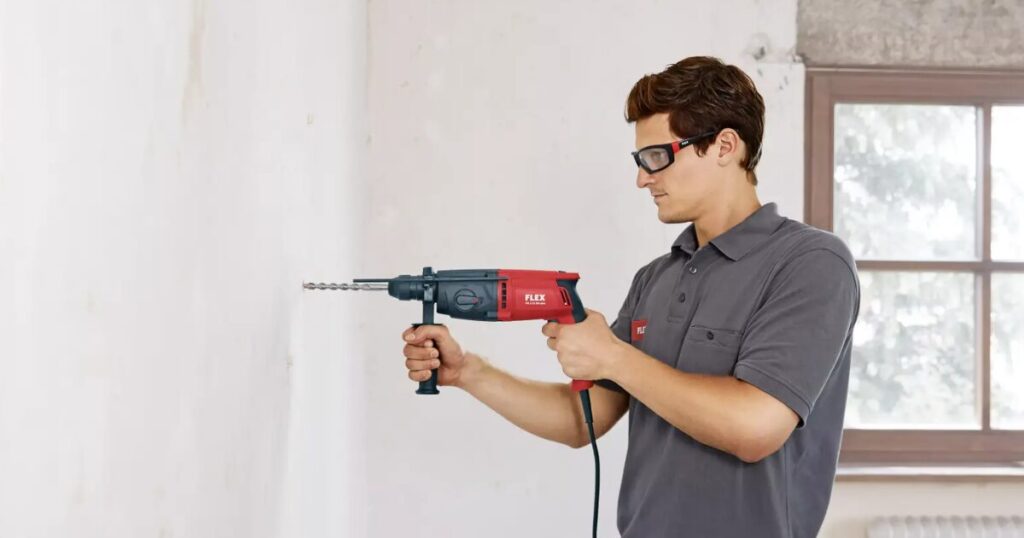
FLEX as sold through US retail makes no corded hammer drill at all. Their hammer drills are 24V cordless. There is a corded Flex FHE SDS, but that is the original German Flex-Elektrowerkzeuge company rather than the same product line, it is an SDS rotary hammer rather than a percussion drill, and it is a 230V European machine. Three separate reasons it does not belong in this table.
If you want the brand, the honest option is their cordless. The FX1271T is a 24V brushless 1/2 inch hammer drill rated at 1,400 in-lbs of torque with a two-speed gearbox and a turbo mode. It is a good tool. It is not a corded tool, and it will not hold output the way anything else on this page does.
Why amperage is the wrong headline
Amps measure what the motor draws, not what the chuck delivers. A 10 amp motor geared badly drills slower than an 8.5 amp motor geared well. Three things decide more.
The two-speed gearbox. The single most useful feature on this page, and the reason DeWalt and Bosch separate themselves from Craftsman and Makita. Low range for torque, high range for masonry. A single-speed drill compromises both.
Impact rate, read with speed. Percussion blows come from chuck rotation, so bpm and rpm are locked together. The DeWalt’s 56,000 bpm is the consequence of its 3,500 rpm top speed, not a separate hammer mechanism.
What holds the tool when it binds. A side handle on all of them, a torque limiter on one. That difference is worth more than any amp figure the day it matters.
The 240V problem, and why corded suffers worst
Every drill on this page is a 120V machine built for North America. Kenya runs 240V at 50Hz.
With a cordless tool you can work around that, because only the charger cares. With a corded tool there is no workaround. A 10 amp drill at 120V draws roughly 1,200 watts, and a step-up transformer rated to carry that continuously, with the surge a hammer drill throws at start-up and in a bind, is neither cheap nor portable.
Buy the 240V/50Hz variant instead. Bosch, Makita and DeWalt all sell corded hammer drills into 230 to 240V markets and the model numbers differ from the US ones above. Use this comparison to settle what specification you want, then ask a local supplier for the equivalent on the correct supply. Read the amperage figures as an indication of class, not numbers to match, because a 240V motor of the same output draws about half the current.
Check the plate on the tool rather than the invoice, and confirm carbon brushes are available locally. Brushes are a consumable on a corded drill, and a machine you cannot rebrush has an expiry date.
Tools Soko verdict
On published figures the DeWalt DWD520 is the most capable corded hammer drill of the six, and the two-speed gearbox rather than the ten amps is what earns it that. The Bosch HD18-2 is the better all-rounder and the one we would buy for mixed work. The Makita HP2050 is the safest tool here and the right answer for awkward drilling. The Craftsman CMED741 is enough drill for most households, and saying so is more useful than pretending everyone needs ten amps.
Ryobi’s D620H is a different size of machine. FLEX does not compete in this category at all.
None of them replaces an SDS rotary hammer once holes get large or concrete gets hard. And for anyone buying in Kenya, the supply question outranks every specification above: a 240V machine with a lower rating will out-work a 120V machine on a transformer every day of the week.
No score accompanies this comparison. We have not run these drills, and published figures do not support a number.
If the torque figures on the box are the confusing part, drill torque explained translates them. Corded vs cordless power tools takes the power-source question further, and DeWalt’s five new carpentry tools for 2026 covers what is arriving next.
Frequently asked questions
What is the most powerful corded hammer drill here?
The DeWalt DWD520 at 10.0 amps, with a two-speed gearbox running to 3,500 rpm and 56,000 bpm. Treat amperage as an indication of class rather than a measure of drilling performance, because gearing decides how much reaches the bit.
Is corded still worth buying over cordless?
For sustained drilling where mains power is available, yes. A corded drill holds full output indefinitely, costs less for the same capability and has no battery to replace. Cordless wins on everything else.
Does Ryobi or FLEX make a corded hammer drill?
Ryobi does, the D620H, but with a 5/8 inch chuck it is a heavier class than the 1/2 inch machines here. FLEX sold through US retail makes cordless hammer drills only. The corded Flex FHE SDS is a 230V SDS rotary hammer from the German Flex company and a different type of tool entirely.
Can I run a 120V hammer drill in Kenya?
Only through a step-up transformer sized for roughly 1,200 watts continuous plus start-up surge, which is expensive and awkward to move. Buy the 240V/50Hz version instead. The model number will differ from the US one.
How many amps do I actually need?
For fixings into block and occasional masonry, 7 amps is sufficient. For daily concrete work, 8.5 amps upward with a two-speed gearbox. Above that you are into rotary hammer territory and should change class rather than chase amperage.
Why does the Makita show as both 1/2 inch and 3/4 inch?
Different measurements. 1/2 inch is the chuck capacity, 3/4 inch is the maximum masonry hole. Listings quote whichever suits them, so check which number is meant before comparing across brands.