
Impact driver vs drill driver vs hammer drill: none of the three does every job, and the one most people assume is the all-rounder is the one that disappoints hardest.
This explainer is built from published manufacturer specifications and from how these three mechanisms work. It is not a bench test, and no tool here carries a Tools Soko score.
Why you can trust us. Tools Soko earns a commission when you buy through links on this page. It never changes what we recommend, and it never changes the price you pay. As an Amazon Associate we earn from qualifying purchases.
The impact driver vs drill driver vs hammer drill question gets asked in every tool forum, and it usually ends in an argument. Not because the answer is complicated, but because two people can say “hammer drill” and mean completely different machines. One is picturing a 2 kg cordless drill with a switch on the collar. The other is picturing a corded machine with side handles and a cable as thick as a roll of coins. They talk past each other for twenty replies.
That confusion costs people money. Someone buys a hammer drill expecting it to open up a concrete lintel, gets a hole 15 mm deep and a hot motor, and concludes the tool is rubbish. The tool is fine. It was never the tool for that hole.
What each of the three actually does
Drill driver
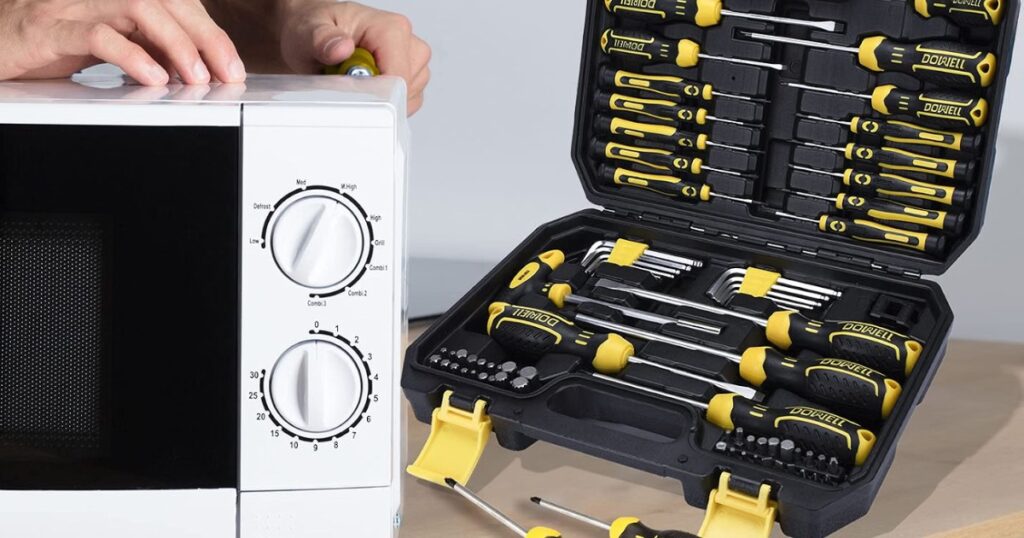
A motor, a gearbox, a keyless chuck and a clutch. It spins a bit and it stops spinning when the clutch reaches the torque you dialled in. That clutch is the point of the tool: it is what stops you burying a screw head through 12 mm plywood or snapping the head off a brass fastener.
Rotation only. Nothing hits anything.

Impact driver
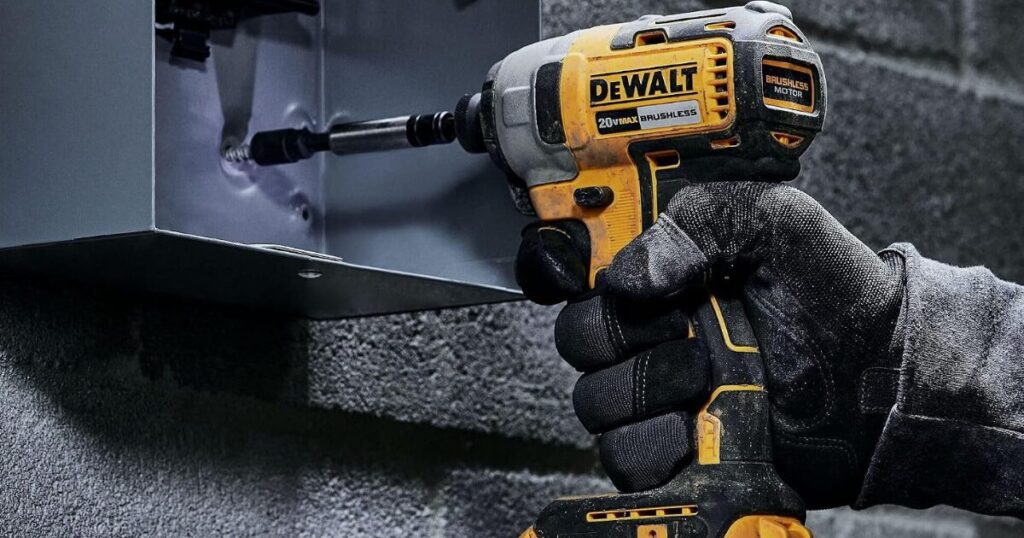
Different mechanism entirely. Inside is a hammer and anvil that strike rotationally, in the direction of turn. When the fastener stops moving easily, the hammer starts delivering short bursts of rotational force rather than asking your wrist to absorb the reaction.
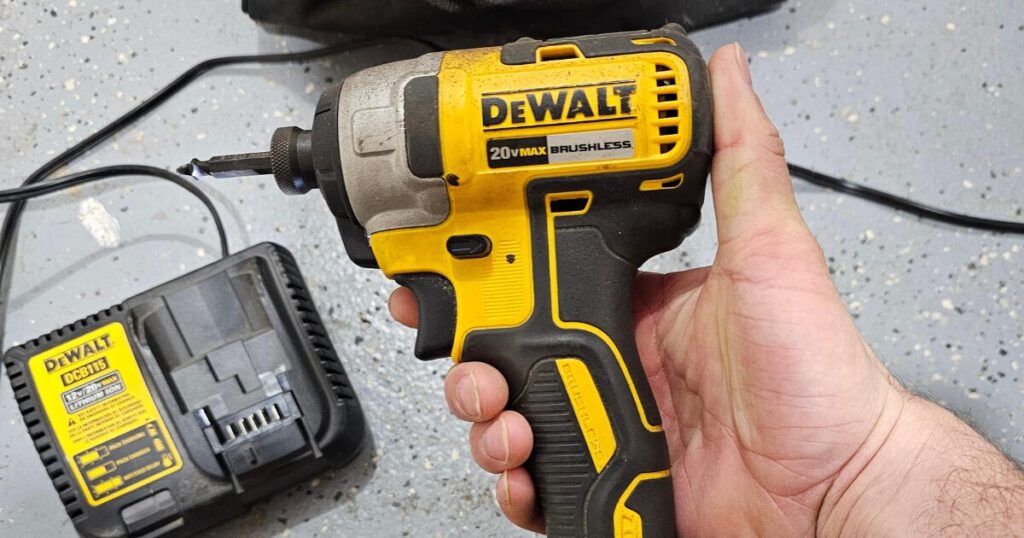
That is why an impact driver will run a 150 mm structural screw into a joist while a drill driver of the same voltage tries to twist itself out of your hands. It is also why nearly every tradesperson who owns one reaches for it more than anything else on the van. The trade-offs are real, though: it takes 1/4 in hex bits rather than a round-shank drill bit, it has no clutch, and it is loud in a way that gets old inside a small room.
Hammer drill
A drill driver with one addition: a percussive action along the axis of the bit. Two ridged plates ratchet against each other as the chuck turns, so the bit is hammered forward thousands of times a minute while it spins.
Switch the hammer off and you have a drill driver back. That is the whole basis for the claim that the drill driver is the redundant one, and on paper the claim holds. A hammer drill is a drill driver plus a mode, bought at the cost of some length and some weight.
The terminology trap behind most bad purchases
In English, and in American English especially, “hammer drill” almost always means the machine described above: a normal drill with a percussion setting and a standard three-jaw chuck. Other languages are more precise about it. Finnish, for instance, separates the percussion drill from the drill hammer, and those translate to two genuinely different classes of tool.
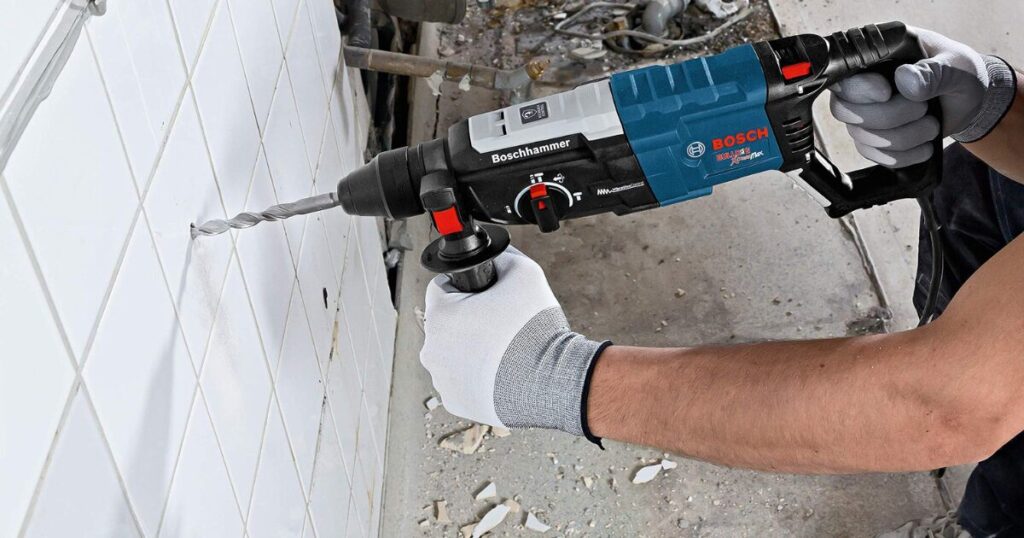
The second class is what English-speaking trades call a rotary hammer, or refer to by its chuck standard, SDS. It does not ratchet plates together. It drives the bit with a piston, usually pneumatic, and the bit itself slides in an SDS chuck so the hammer blow travels into the bit rather than into the chuck and your wrists. The difference in delivered energy is not incremental. It is a different category of machine.
So the argument that never resolves online is usually two people who are both right, describing two different tools with one name.
Where a hammer drill runs out
Hole diameter decides this, more than material hardness does.
Tradespeople consistently report that a decent corded hammer drill will put anchor-sized holes into genuinely hard old concrete, the kind poured fifty years ago that has kept curing ever since. Small diameters, 5 mm to 8 mm, for concrete screws and light fixings. Slower than an SDS machine, but it gets there.
Ask the same tool for a 12 mm hole and the picture changes completely. The percussion mechanism has a fixed amount of energy per blow, and that energy now has to clear several times the volume of material. The bit polishes rather than cuts, the motor heats, and you lean on it harder, which achieves nothing except wearing out the plates. That is the job a rotary hammer exists for.
There is also a large gap within the hammer drill category, and it is visible before you buy. A light cordless drill whose hammer function is a moulded ring with graduated ridges will manage a plug hole in block work and little more. A heavier machine built around a metal gearbox housing, with threaded holes on several faces for a side handle, is a substantially different proposition. If a manufacturer expects you to brace the tool with a second hand, that tells you what they think it can do.
So which one does the most jobs?
| Drill driver | Impact driver | Hammer drill | Rotary hammer (SDS) | |
|---|---|---|---|---|
| Action | Rotation | Rotational impact | Rotation + axial percussion | Piston-driven percussion |
| Bit fitting | Keyless chuck | 1/4 in hex | Keyless chuck | SDS |
| Clutch | Yes | No | Yes | No |
| Driving long fasteners | Poor | Best in class | Poor | Not its job |
| Holes in wood and metal | Good | Awkward | Good | Poor |
| Small holes in masonry | No | No | Workable | Easy |
| Holes over 12 mm in concrete | No | No | Struggles badly | Straightforward |
| Delicate fastening | Best in class | Poor, no clutch | Best in class | No |
Read across the table and the honest answer falls out. The hammer drill covers the widest range of tasks of the three, which is what makes it look like the do-everything buy. The impact driver covers fewer tasks but owns the one that comes up most often on a working day. And the drill driver, judged purely on capability, is the one that gets fully absorbed by a hammer drill.
Widest range is not the same as best buy, though. A hammer drill on its own leaves you driving screws with a clutch that slips and a wrist that takes the reaction. That is why the standard kit sold to trades is not one tool. It is two.
What most people should actually buy
A hammer drill and an impact driver on one battery platform answers close to everything a homeowner or a general trades hand meets in a year. Bought as a pair, they are usually cheaper than the two bought separately, and you get two batteries instead of one.
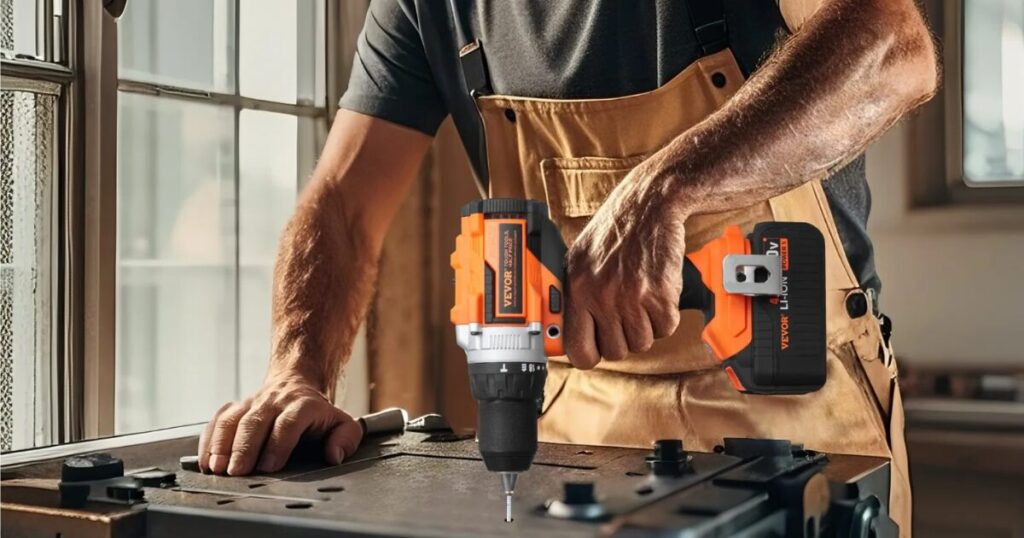
VEVOR’s 20V Max two-tool kit is a reasonable illustration of what that pairing looks like at the affordable end. The figures below are the manufacturer’s published specifications, not our measurements.
| Specification | Detail |
|---|---|
| Kit contents | 1/2 in impact drill, 1/4 in impact driver, 2 × 4.0 Ah batteries, charger, screws, cloth bag |
| Platform | 20V Max, brushless motors |
| Drill max torque | 100 N·m (VEVOR figure) |
| Drill speeds | 0–400 and 0–1800 RPM, two ranges |
| Drill clutch | 18 + 1 + 1 settings |
| Driver max torque | 220 N·m (VEVOR figure) |
| Driver speeds | 0–1300 / 2000 / 2900 RPM |
| Driver impact rate | 1690 / 2600 / 3770 bpm |
| Listed price | $169.90, VEVOR list price checked 20 August 2026 |
Two things in that table are worth reading properly. The 18+1+1 clutch means eighteen torque steps plus a drill position plus a hammer position, so the drill genuinely replaces a separate drill driver. And the two-range gearbox matters more than the headline torque figure: the low range is where masonry work happens, and a single-speed drill will disappoint you there regardless of what its torque rating says.
What the available information does not tell us is how these hold up over a few years of daily use, or what parts support looks like in East Africa. VEVOR is a direct-to-consumer brand rather than one with a service network here, and that is a real consideration rather than a technicality.
When you need the proper tool instead
If your work regularly involves holes above 10 mm in concrete, anchors for steelwork, or breaking out tile beds, no combo kit will serve you. You want an SDS-plus rotary hammer, and buying one early is cheaper than buying two hammer drills and wearing both out.
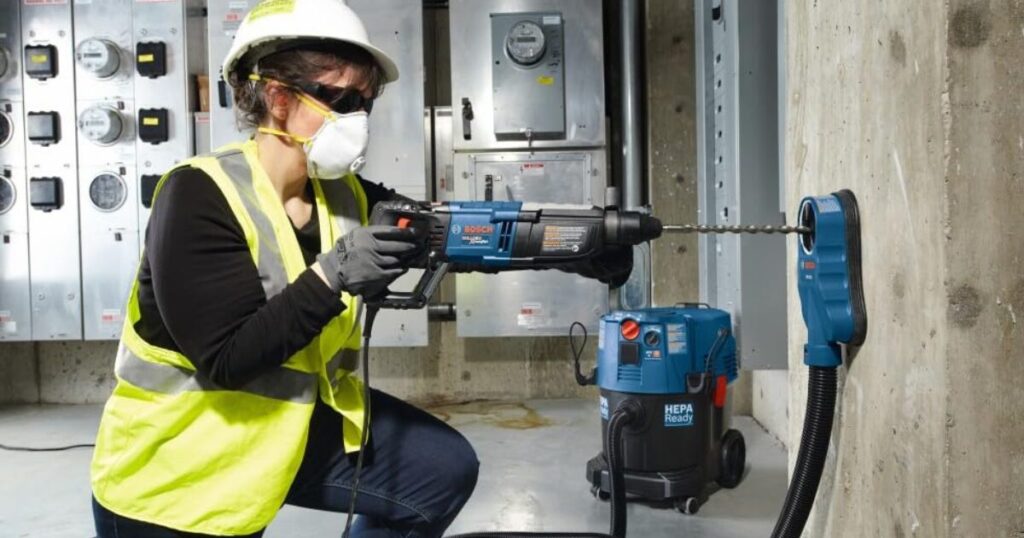
Bosch’s GBH2-28L Bulldog Xtreme is the model most often pointed to in this class. It is an SDS-plus machine, which means the bit locks into the chuck with a sliding fit and the piston drives energy straight down it. Bosch has kept the Bulldog line going for years, which in practice means SDS-plus bits and spares are easy to find, including in Nairobi.
Do not buy one if you drill four holes a year. A rotary hammer is heavier, it costs more, and it is clumsy for the wood and metal work a hammer drill handles without complaint. Plenty of people would be better served hiring one for the weekend it is needed and spending the difference on a better combo kit.
What changes in Kenya and the region
Three things shift the calculation locally.
Corded hammer drills sold here run on 240V, and a corded machine sidesteps the battery question entirely, which still matters on sites where power is available but charging time is not. Counterfeit cordless tools and, more often, counterfeit batteries circulate widely, and a fake pack will destroy a good tool. Buy the battery from the same source as the tool. And parts availability decides the real cost of ownership. A brand with a service agent in Industrial Area is worth paying more for than a brand that is cheaper on the invoice and unrepairable eighteen months later.
SDS-plus bits are the exception to the parts worry. That standard is common enough that consumables are easy to source regardless of which machine you own.
What to weigh before buying
The battery platform outlives the tool. You are choosing a battery family you will still be buying into in five years, not just two tools in a bag.
Check what the hammer mechanism is made of. If the specification will not say, and there is no provision for a side handle, treat the hammer setting as a convenience for wall plugs rather than a masonry capability.
If you already own a drill driver, skip to the impact driver. Adding rotational impact to what you have changes more about your working day than replacing a functioning drill with a slightly better one.
Tools Soko verdict
The tool that technically does the most different jobs is the hammer drill, and the tool you will actually pick up most days is the impact driver. Neither observation should send you out to buy one tool, because the two cover different halves of the same job and cost less bought together.
The mistake worth avoiding is expecting the hammer setting to do rotary hammer work. It will manage small anchor holes in hard concrete and it will disappoint you at 12 mm, and no amount of leaning on it changes the physics. Buy the pair for the ninety per cent, and reach for an SDS machine, hired or owned, for the rest.
No score accompanies this article. Tools Soko has not handled these tools, and a specification sheet does not support a number.
Where to buy
Drill torque explained translates the numbers printed on the box, and DeWalt’s five new carpentry tools covers what is arriving on that platform in 2026.
Frequently asked questions
Can I use an impact driver to drill holes?
For rough holes in timber, yes, with hex-shank bits. It is not accurate and it is unpleasantly loud, and in metal the impacting tends to chatter the bit rather than cut cleanly. Treat it as something the tool tolerates rather than something it is for.
Is a hammer drill the same as a rotary hammer?
No, and this is the confusion that costs people money. A hammer drill is a standard drill with a ratcheting percussion action and an ordinary chuck. A rotary hammer uses a piston and an SDS chuck, and delivers far more energy per blow. Some languages give them clearly different names; English does not.
If I can only buy one tool, which should it be?
A hammer drill, because with the hammer switched off it is still a full drill driver, so you lose nothing except a little weight in the hand. Buy the impact driver second, and expect it to become the one you reach for first.
Will a cordless hammer drill go through concrete?
At small diameters, generally yes, if you accept it will be slow and you keep the bit clear of dust. Above roughly 10 mm you are working against the mechanism. Hire an SDS machine for that afternoon instead.