
Air compressors and pneumatic tools in Kenya are usually bought in the wrong order, and the component that decides whether the whole system works is the one nobody photographs.
This guide is built from published manufacturer specifications and from established sizing practice. Nothing here has been on the Tools Soko bench, so no product carries a score.
Why you can trust us. Tools Soko earns a commission when you buy through links on this page. It never changes what we recommend, and it never changes the price you pay. As an Amazon Associate we earn from qualifying purchases.
It goes wrong in a predictable way. A contractor prices the tools first, picks a compressor to suit the budget that is left, and discovers on the second day that the spray gun empties the tank faster than the pump can fill it. The tools were never the problem. The sizing was.
Air is worth the trouble on a fit-out or a workshop floor for three practical reasons. The tools are lighter in the hand because the motor is not in them, which matters across an eight-hour day of overhead nailing. There is no motor to burn out, so dust and heat that would kill a cheap electric tool do very little to a die grinder. And one compressor drives a spray gun, a nailer and an impact wrench in turn, so the marginal cost of the next tool is small.
None of that helps if the compressor is undersized. Start there.
Sizing a compressor: CFM, PSI and tank
CFM is the number that decides the purchase. Cubic feet per minute is the volume of air the pump can actually deliver, and it is quoted at a pressure, usually 90 PSI. A figure without a pressure attached tells you nothing. Match the compressor to the most demanding tool you own that runs continuously, not to the average of everything in the van.
PSI is usually the easy part. Most hand-held pneumatic tools want 90 PSI at the tool, and almost any compressor sold today reaches it. Pressure only becomes the deciding factor for specialist work. The trap is confusing maximum tank pressure, which manufacturers print large, with delivered pressure under continuous draw, which they print small.
The tank buys you time, not capacity. A receiver tank lets you exceed the pump’s output in short bursts and smooths the pressure the tool sees. A nailer firing intermittently barely notices tank size. A sander running for ten minutes without pause will drain any portable tank and then run at whatever the pump alone can produce, which is the number you should have been reading all along.
Typical air demand by tool
These are indicative continuous-draw figures at 90 PSI, offered for sizing rather than as any manufacturer’s specification. Check the plate on the tool you actually intend to buy.
| Tool | Typical CFM at 90 PSI | Duty pattern |
|---|---|---|
| Brad nailer / finish nailer | 0.3 to 1 | Intermittent |
| Framing nailer | 2 to 3 | Intermittent |
| Tyre inflation, blow gun | 1 to 3 | Short bursts |
| 1/2 in impact wrench | 4 to 5 | Short bursts |
| HVLP spray gun | 6 to 12 | Continuous |
| Air die grinder | 4 to 8 | Continuous |
| Orbital sander | 6 to 10 | Continuous |
| Needle scaler | 4 to 8 | Continuous |
Read the right-hand column before the middle one. Everything marked continuous is a compressor decision. Everything marked intermittent is not, which is why a small pancake unit runs a finish nailer all day and stalls within a minute of a sander.
The 240V trap nobody mentions
Kenya runs 240V at 50Hz. Most compressors marketed heavily online are built for the North American market at 120V and 60Hz, and that is a genuine incompatibility rather than a plug adapter problem. The VEVOR pancake unit below is listed at AC 120V / 60Hz. The DeWalt equivalent is a 120V machine too.
A step-up transformer handles the voltage but not the frequency, and an induction motor run at 50Hz instead of 60Hz turns roughly seventeen per cent slower, which drops the CFM you sized the machine on. For a compressor, which is the one component you are buying for its output figure, that is the wrong corner to cut.
So buy the compressor locally, specified at 240V / 50Hz. Use the models below as a yardstick for what a given tank size and CFM rating should cost and deliver, and hold a local supplier to those numbers.
The pneumatic tools are a different matter entirely. They run on air, so voltage and frequency are irrelevant to them, and importing a spray gun or an impact wrench carries none of this risk.
Compressor classes, and what each is honestly for
Portable and pancake, roughly 3 to 6 gallons
Finish work. Trim, skirting, second-fix carpentry, tyre inflation, occasional blow-down. Two units are worth using as reference points because both publish their figures clearly.
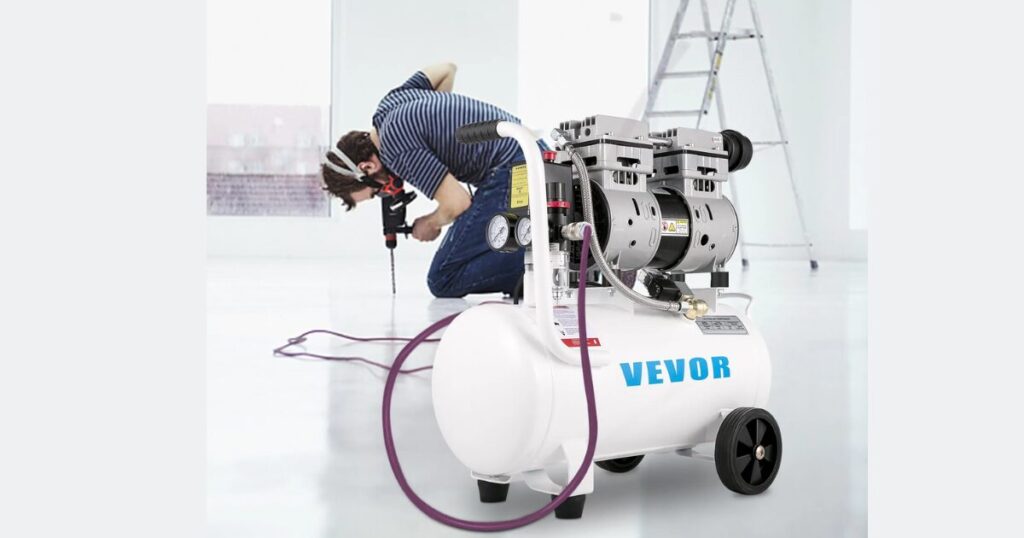
| Specification | VEVOR C822A | DeWalt DWFP55126 |
|---|---|---|
| Tank | 6 gallons | 6 gallons |
| Motor | 1.7 HP | Oil-free, maintenance-free pump |
| Delivered air | 2.3 CFM at 90 PSI, 1.94 CFM at 120 PSI | 2.6 SCFM at 90 PSI |
| Max working pressure | 150 PSI | 165 PSI |
| Supply | AC 120V / 60Hz | 120V |
| Noise | 97 dB or below | Not published in the same terms |
| Weight | 14.16 kg | Not published in the same terms |
| In the box | 12-piece kit, 25 ft hose | Compressor only |
| Listed price | $175.90 | Varies |
Both figures come from the manufacturers, not from us. Note what the table shows: at 2.3 and 2.6 CFM neither machine will run a spray gun or a sander, and no tank size changes that. They are nailer and inflation compressors, correctly sized for exactly that, and the accessory kit is the real difference between them for a buyer starting from nothing.
The 97 dB rating deserves a second look. That is loud enough to require hearing protection for anyone working near it, which is worth planning for in an occupied building during a fit-out.
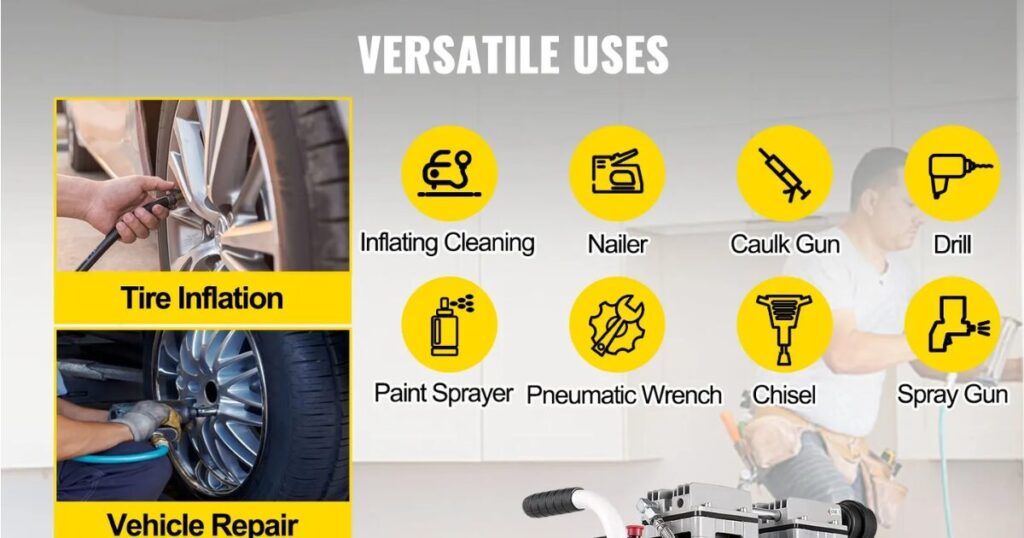
Vertical and stationary, 50 litres and up
Anything involving a spray gun, a sander or a die grinder for more than a few minutes at a time. This is a workshop purchase, sized on continuous CFM with headroom, and the footprint is vertical because floor space costs more than steel. Belt-driven cast-iron pumps are rebuildable in a way that oil-free direct-drive units are not, which changes the ten-year cost even when it looks worse on day one.
Petrol and diesel
For sites without reliable mains, which in practice means most early-stage work outside established industrial areas. The engine adds servicing you would not otherwise have, and it rules out enclosed spaces entirely because of exhaust. Worth it when the alternative is a generator running a compressor, which wastes a conversion step.
The pneumatic tools worth owning first
Since air tools are indifferent to voltage, these travel well and are the sensible place to spend on imports.
HVLP spray gun. The clearest quality gap between an air setup and any electric alternative, and the reason most fit-out workshops buy a compressor at all. High volume, low pressure means less overspray and less material wasted, which shows up in the paint bill on a large job. VEVOR list a gravity-feed gun with 1.3, 1.4 and 1.7 mm nozzles and a 600 ml cup, the nozzle range covering primer through top coat. Remember the 6 to 12 CFM figure from the table before you commit.
Air impact wrench. Plant maintenance, vehicle work, steel fixing. VEVOR list a stubby 1/2 in drive rated up to 738 ft-lbs across four speed settings, which covers most of what a fit-out contractor meets without stepping up to the 1 in machines built for truck work. The short body matters more than the torque figure in the places these actually get used.
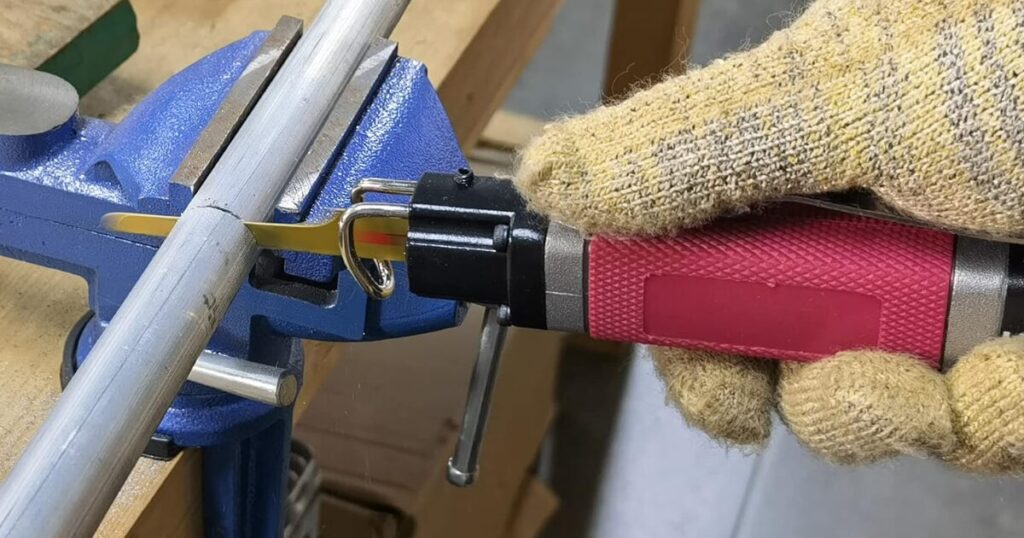
Die grinder and orbital sander. Both continuous-draw tools, so treat them as compressor decisions rather than tool decisions. If your compressor delivers under 6 CFM, buying either is buying frustration.
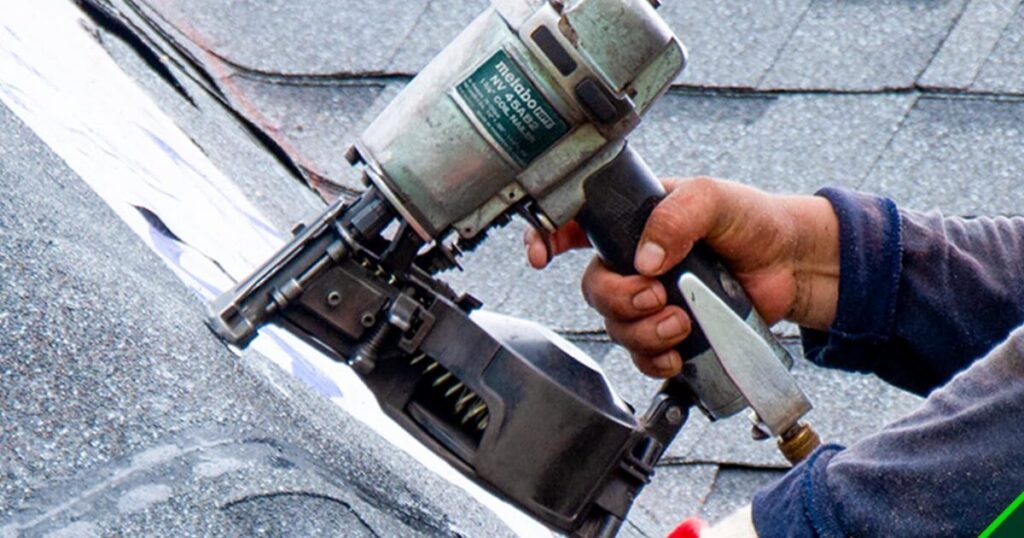
Nailers. The cheapest genuine productivity gain on this list, and the least demanding on air. A finish nailer will run happily on the pancake units above.
Where electric still wins
A guide that only argued one side would not be much use. Cordless has closed most of the gap for intermittent work, and for a contractor doing second-fix in occupied buildings the absence of a compressor, a hose across the floor and 97 dB of noise is worth real money.
Air wins decisively for continuous-duty work: spraying, sanding, grinding, scaling. It wins on tool weight over a long day. It wins on tool lifespan in dust and heat. It loses on setup time, on noise, on hose management, and on the capital tied up in a machine that does nothing on its own.
If your work is nailing and driving, cordless is probably the better buy. If it involves finish spraying, the argument is settled before it starts.
Maintenance that actually matters
Drain the tank daily. Compressing air condenses the water in it, and that water sits in the bottom of the receiver rusting it from the inside. In humid coastal conditions this is not a monthly job. A tank that fails does so under pressure, which is the reason this sits at the top of every maintenance list rather than the bottom.
Water reaches the tool as well as the tank. Moisture in the line ruins a spray finish and corrodes tool internals. An inline filter and water trap costs little against the price of the spray gun it protects, and during the long rains it is the difference between a usable finish and a reworked one.
Oil the tools, not just the pump. Most air tools want a few drops of pneumatic tool oil at the inlet daily. Skipping it is the most common reason a cheap air tool dies early and gets blamed on the brand.
Hearing protection is not optional at 97 dB. Neither is ventilation if the unit is petrol or diesel driven.
Sourcing in Nairobi
We are not going to publish a list of dealers we have not verified. What is worth saying is what to establish before you pay, because the compressor is the one purchase here where after-sales matters more than the sticker.
Confirm the supply specification on the plate reads 240V / 50Hz rather than on the invoice. Ask who rebuilds the pump and where, because a belt-driven unit is worth owning only if someone can service it. Establish whether the warranty is honoured locally or requires shipping the machine abroad, which for a 60 kg vertical unit means no warranty at all in practice. And buy consumables, filters and fittings from a supplier who stocks them, since a compressor waiting on a coupler is not cheaper than a better one.
Tools Soko verdict
Size the compressor on the continuous-draw tool you own, buy it locally at 240V / 50Hz, and import the air tools if the price justifies it. That order matters. A good spray gun on an undersized compressor performs worse than a mediocre gun on a correctly sized one, and no amount of tank capacity fixes a pump that cannot keep up.
For most fit-out contractors the honest answer is two purchases rather than one. A pancake unit handles second-fix nailing from the first week. The vertical machine follows when spraying volume justifies it, by which point you will know your real CFM demand instead of guessing at it.
No score accompanies this guide. We have not run these machines, and published figures do not support a number.
Where to buy
Frequently asked questions
What size compressor do I need for a spray gun?
Read the gun’s CFM requirement at 90 PSI and buy a compressor that delivers more than that continuously, not one whose tank is merely large. Most HVLP guns want somewhere between 6 and 12 CFM, which puts you into stationary territory rather than portable.
Can I run a 120V compressor in Kenya with a transformer?
A step-up transformer converts the voltage but not the 50Hz frequency, so the motor runs slower than rated and delivers less air than the specification promises. For a machine bought specifically for its output figure, buy the 240V / 50Hz version instead.
Is a bigger tank the same as a bigger compressor?
No. The tank buys you a longer burst before the pump has to keep up. Once it empties, you are running on pump output alone, so CFM is the number that sets what the machine can sustain.
Are pneumatic tools worth it for a small contractor?
For finish spraying, yes, and the quality gap is not subtle. For nailing and driving alone, a cordless platform is usually the better buy once you count setup time and hose management.
How often should I drain the tank?
At the end of every day of use, and more often in humid conditions or during the long rains. Condensate left standing rusts the receiver from the inside, and a corroded tank is a pressure vessel failure rather than an inconvenience.