
A homeowner buying a grinder is spending money. A contractor buying a grinder is buying uptime, and the two decisions have almost nothing in common.
This article is built from published manufacturer specifications, technical documentation and the reported experience of people who own the equipment. Nothing here has been tested by Tools Soko and nothing carries a score. See how we work.
This guide is built from trade supply practice, manufacturer warranty structures and published account terms. It is not a review of specific suppliers, and we have not held trade accounts with every type of seller described here.
Why you can trust us. Tools Soko earns a commission when you buy through links on this page. It never changes what we recommend, and it never changes the price you pay. As an Amazon Associate we earn from qualifying purchases. You will notice below that we tell you not to run your trade account through Amazon.
Most advice about buying tools online is written for someone buying one tool for themselves. Almost none of it survives contact with a crew of six, a programme with a completion date, and a client who does not care why the first fix slipped.
The supplier question changes completely at that point. You are no longer shopping. You are procuring, and the thing you are procuring is not tools.
The arithmetic that should decide this
Work out what an idle crew costs you per hour. Labour, plant on hire, the preliminaries ticking over, and the tail end of the programme if the slip is not recoverable.
Now multiply that by the hours a dead tool takes out of the day: the diagnosis, the drive, the argument at the counter, the wait. Compare that number to the price difference you were chasing between suppliers.
For most contractors the comparison is not close. A four-person crew standing around for half a day costs multiples of the tool that stopped them, and it costs it again every time it happens. Which is why the cheapest supplier is very often the most expensive one, and why the specification you should be buying against is turnaround, not price.
What a contractor needs that a homeowner does not
A loan tool while yours is in repair
This is the single most valuable thing a trade supplier offers, and the one contractors least often ask about before opening an account.
A warranty that repairs your breaker in three weeks is not a warranty, it is a three-week hole in your programme. A supplier who hands you an equivalent tool over the counter while yours is away has converted a project risk into an errand. Ask whether loan stock exists, what it covers, and whether it is a policy or a favour.
Repair turnaround quoted in days, in writing
Any supplier will tell you they handle repairs. Ask for the number: what is the typical turnaround in working days, and is the repair done in country or shipped out?
A supplier who answers with a figure has a process. A supplier who answers with reassurance has a courier account and hope. The difference shows up on your programme, not theirs.
Credit terms, which are financing rather than discount
Contractors are paid late and buy early. That gap is the whole cashflow problem of the trade, and a supplier offering thirty or sixty day terms is closing it for you.
Run the comparison properly. A supplier five per cent dearer with sixty day terms may be cheaper in practice than a marketplace demanding payment today, because the terms are working capital you did not have to borrow. Ask about the limit, the terms, and what happens to both when you are three weeks late once.
Stock depth, and lead times you can plan against
Consumables are what actually stop a job. Nobody loses a day for want of a second breaker; they lose it for want of the right diamond blade on the morning it is needed.
So test the boring end of the catalogue before you commit. Carbon brushes, chucks, guards, the correct arbor, the abrasive you get through fastest. A supplier who stocks depth has a distributor relationship and a stockroom. One who lists headline tools and orders everything else in is a shop window with your programme behind it.
Proper invoicing, because your accountant is a stakeholder
If you are VAT registered, an invoice that lets you recover input tax is worth more than most discounts on offer, and it is worth exactly nothing if the seller cannot issue one. Marketplace sellers frequently cannot.
Beyond the tax, ask for consolidated monthly invoicing and purchase order references. Forty separate receipts to reconcile is a real administrative cost that never appears in any price comparison, and it is paid by whoever does your books.
Help standardising the crew on one platform
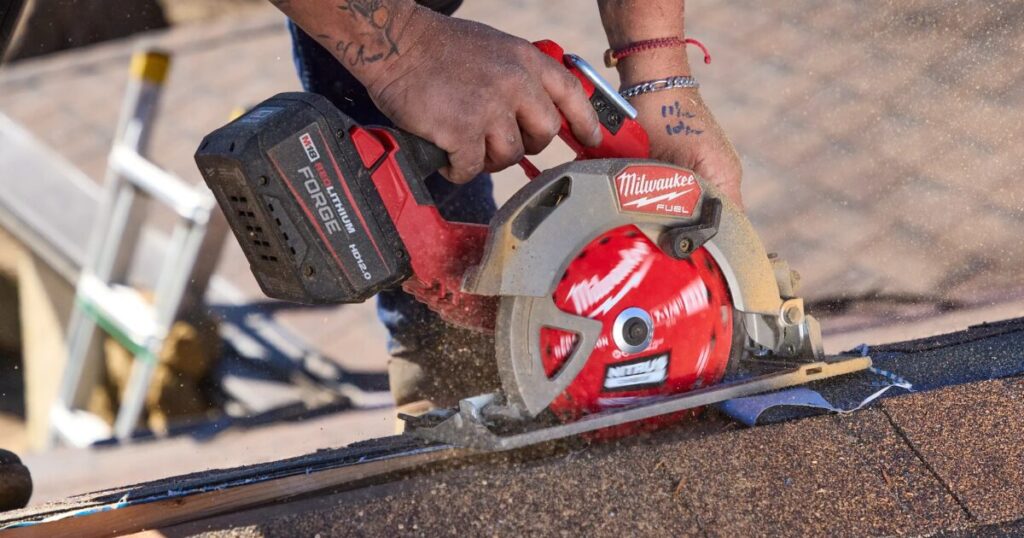
A crew running three battery platforms is a crew where a flat pack means a dead tool, because the charger on the van fits somebody else’s kit. Standardise and every pack fits every tool, spares become pooled rather than personal, and the van carries one charger instead of three.
A supplier worth having will help you plan that migration rather than sell you whatever is discounted this month. If you are still choosing which tools the crew actually needs first, we worked through the overlap in impact driver vs drill driver vs hammer drill.
Warranty administration, at the scale you actually operate
Bosch and DeWalt both extend a one-year warranty to three if the tool is registered within four weeks of purchase, at no cost. That is straightforward for one drill and an administrative certainty to forget across forty purchases a year.
Some trade suppliers register on your behalf, or at least send the reminder. Ask. Over a fleet, that single clerical habit is worth more than any of the discounts you are negotiating over.
Where Amazon fits, and where it does not
Worth saying plainly, on a page that carries affiliate links: a marketplace should not be your primary trade supplier. There is no loan stock, no repair path, no credit terms, no account manager, and buyer protection that covers a mis-described item rather than a motor that fails in month five.
Where it does earn its place is the gap. The blade you need tomorrow that your supplier has to order in. Spare batteries at a price a trade counter will not match. Accessories and consumables where price competition is the whole benefit and the stakes are low.
Run both. Use the trade account for anything with a warranty claim attached and anything the programme depends on, and the marketplace for consumables and gap-filling.
Seven questions before you open an account
- Do you provide a loan tool while mine is in repair, and on which categories?
- What is your typical repair turnaround in working days, and is it done in country?
- What credit terms and limit would you offer an account like mine?
- Can you issue a VAT invoice and consolidate to one invoice a month against purchase orders?
- Do you stock spares and consumables for the brands you sell, or order them in?
- Do you deliver to site, and what is the cut-off for next-day?
- Who is my named contact when something goes wrong on a Friday afternoon?
Ask all seven before spending anything. How quickly and how specifically they come back is itself the answer, and it costs you one email to find out.
Red flags specific to trade buying
- No trade account offering at all. A supplier without account infrastructure is a retailer, whatever the site says.
- Lead times that will not be put in writing. Verbal availability is not availability.
- A returns policy standing in for a repair path. Thirty days of returns does not help in month seven.
- Discounts that deepen as the order grows but terms that never improve. A supplier chasing volume without offering terms wants your cash, not your account.
- Deep discounting on a brand they are not authorised to carry. Grey stock carries no local warranty, which puts the whole repair conversation back on you.
The short version
| What you are buying | Buy it from | Because |
|---|---|---|
| Anything the programme depends on | Trade account, authorised | Loan stock and a repair path |
| Fleet standardisation | Trade account | Migration planning and terms |
| Consumables and abrasives | Either, on price | Low stakes, high competition |
| The blade needed tomorrow | Marketplace | Speed beats everything else |
| Spare batteries | Marketplace, brand channel only | Price, but never a counterfeit pack |
The supplier worth keeping is not the one with the best price on the day you compare. It is the one who answers the phone on the afternoon the breaker dies, and has another one on the counter before you have finished explaining.
Prime Day woodworking tool deals covers telling a real discount from a decorated one, which is the same judgement applied to a different moment in the year.
Frequently asked questions
What should a contractor look for in an online power tools supplier?
Loan stock while a tool is in repair, a repair turnaround quoted in working days, credit terms, VAT and consolidated invoicing, genuine depth in spares and consumables, and a named contact. Price matters least of the seven, because an idle crew costs multiples of the tool that stopped them.
Is a trade account actually worth opening?
If tools are how you earn, yes, and the reason is usually terms rather than discount. Thirty or sixty day payment terms are working capital you did not have to borrow, which for a business paid in arrears is often worth more than the few per cent a marketplace saves you.
Should contractors buy tools on Amazon?
For consumables, accessories, spare batteries from the brand’s own channel, and anything needed tomorrow, it is often the right call. As a primary trade supplier it is not: there is no loan stock, no repair path, no credit terms and no account manager. Run both, and route anything with a warranty claim attached through the trade account.
How do I decide between two suppliers on price?
Work out your crew’s cost per idle hour, multiply by the hours a dead tool takes out of a day, and compare that to the price gap you are chasing. For most crews the downtime figure is several times the saving, which makes turnaround the specification you should be buying against.
Does standardising on one battery platform really matter?
Operationally it is one of the biggest wins available. On a standardised crew any pack fits any tool, spares are pooled rather than personal, and the van carries one charger. On a mixed crew a flat battery is a tool nobody can use until the right charger appears.
What if a supplier will not put lead times in writing?
Treat it as the answer. A supplier confident in its stock position will confirm availability in an email. One that will only say it verbally is keeping room to disappoint you, and you will find out on the morning the item was needed.
This piece is about buying at scale. If you are vetting a seller you have not used before, our guide to choosing a reliable retailer for power tools and accessories covers verification and counterfeit risk. Buying in Kenya specifically, which online stores are best for professional power tools in Kenya maps the channels and the landed-cost maths on imports.