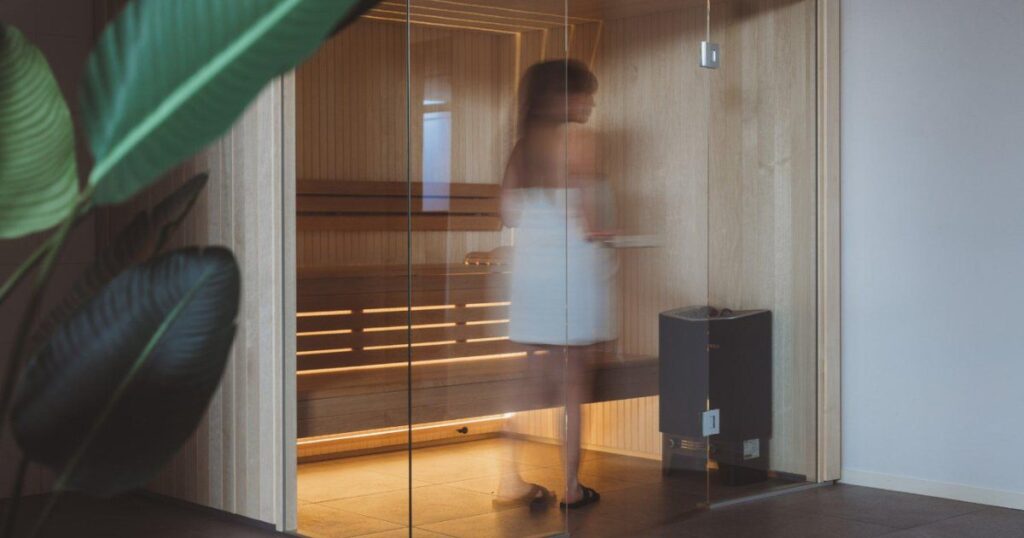

Most sauna buying advice is written by people selling saunas, and it shows. This guide covers what the evidence actually supports, how to size a heater, why the upper bench matters more than the floor area, and the safety details that never make the brochure.
This is a research guide built from published standards, manufacturer engineering guidance and peer-reviewed studies, with sources named where the claim matters. Tools Soko has not tested the products mentioned, so nothing here is scored. See how we work.
Why you can trust us. Tools Soko may earn a commission from qualifying purchases made through links on this page. It does not affect what we recommend or the price you pay. As an Amazon Associate we earn from qualifying purchases.
The three things sold as saunas
Almost every disappointed sauna buyer bought the wrong one of these three. They are different machines that share a shelf.
| Traditional (Finnish) | Infrared | Steam room | |
|---|---|---|---|
| How it heats you | Heats the air and stones; the room heats you | Emitters warm your body directly | Saturated hot vapour |
| Air temperature | Roughly 70–100°C / 160–210°F | Roughly 45–65°C / 115–150°F | Roughly 40–46°C / 105–115°F |
| Humidity | Low, raised in bursts with water on stones | Ambient | Close to 100% |
| Water on stones | Yes, this is the point | No | Not applicable |
| Preheat | Typically 30–45 min | Typically 10–20 min | Typically 10–20 min |
| Typical supply | Often hardwired, 240V | Often plug-in | Generator plus plumbing |
| Build | Timber room, insulated | Cabin, often flat-pack | Sealed, tanked, tiled |
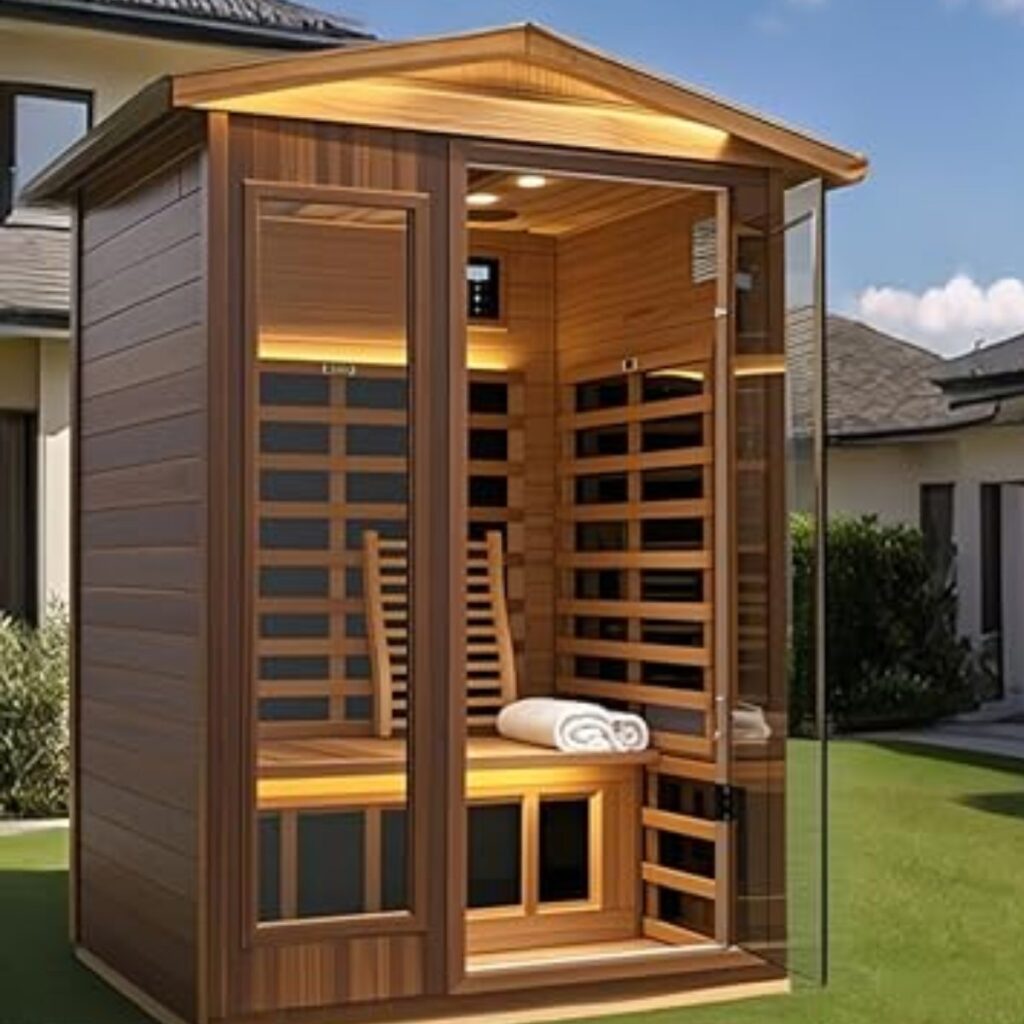
The practical split: a traditional sauna is a building project, an infrared cabin is furniture, and a steam room is plumbing. That distinction predicts your installation cost better than anything on the spec sheet.
What the evidence actually supports
This section exists because the search results for sauna benefits are dominated by claims that do not survive contact with the research. We would rather lose the sale than repeat them.
The strongest evidence is cardiovascular, and it is observational
The most cited work comes from the Kuopio Ischaemic Heart Disease cohort in Finland. Laukkanen and colleagues followed 2,315 middle-aged Finnish men for a median of around 20 years and reported that, compared with one sauna session a week, four to seven sessions a week were associated with roughly half the rate of fatal cardiovascular events and a lower rate of all-cause mortality. Longer sessions showed a similar pattern.
Read the caveats properly, because they matter. This is an observational association, not a demonstrated cause. The cohort was middle-aged Finnish men in a culture where sauna use is routine, so it may not transfer to other populations. And people well enough to sauna four times a week are, on average, people who were already healthier.
What that evidence supports is a modest, honest statement: regular sauna bathing is associated with better cardiovascular outcomes in the populations studied, and the mechanism most often proposed is heat-induced cardiovascular strain resembling light exercise. That is genuinely interesting. It is not a treatment.
The detox claim does not hold up
You will read that sweating is one of the body’s main routes for eliminating toxins and heavy metals, often with an impressive list attached: mercury, lead, cadmium, arsenic, nicotine, prescription drugs.
Sweat is approximately 99% water, with the balance mostly electrolytes plus traces of urea and lactate. Trace metals and some environmental chemicals are genuinely detectable in it. But detection is not elimination: the liver and kidneys do the overwhelming majority of the work, and the share of toxic metals leaving the body through sweat is a very small fraction of the total. Sweating more does not meaningfully change that arithmetic.
So treat detox language as marketing. A sauna is a pleasant, plausibly heart-healthy heat exposure. It is not a filtration system, and a product page that leans on the toxin list is telling you something about the seller.
Claims to be sceptical of
If a listing says a sauna treats or relieves a named medical condition, that is a medical claim a heater manufacturer is not in a position to make. Specifically be wary of copy promising improvement in autoimmune conditions, psoriasis or eczema, healing of scars or keloids, or relief for burns. Applying heat to a burn is bad advice on its face.
Plenty of people find a sauna eases muscle soreness and helps them relax, and there is no reason to be precious about that. Enjoying it is a sufficient reason to own one.
How long to stay in
- Experienced users: 10 to 20 minutes a round is the conventional range.
- Beginners: start at 5 to 10 minutes and build up over several weeks. There is no prize for enduring it.
- Between rounds: cool down properly and rehydrate. Two or three shorter rounds with real cooling in between is the traditional pattern and it is more comfortable than one long stint.
- Get out immediately if you feel dizzy, nauseated, confused, or stop sweating. Those are heat-stress signals, not something to push through.
Two rules that are not negotiable: never use a sauna after drinking alcohol, and never let someone use one alone if they are unwell or have any condition affecting heat tolerance.
Sizing: seat counts are a marketing number
Saunas are sold as one, two, three, four and six seaters. Those figures assume everyone sits upright, shoulder to shoulder, on both benches at once.
In practice people lean, stretch out and put their feet up, so a stated four-seater is a comfortable two. If you want anyone to be able to lie down, you need a bench of at least about 1.8 m or 6 ft, and that single requirement drives the whole cabin size.
| Marketed as | Realistic comfortable use | Typical situation |
|---|---|---|
| 1 seater | One, seated upright | Bathroom corner, apartment, infrared cabin |
| 2–3 seaters | Two seated, or one lying down | The most common domestic choice |
| 4 seaters | Two to three in comfort | Households that use it socially |
| 6 seaters | Four in comfort | Outdoor cabins, guest properties |
The upper bench is the sauna
This is the single most useful thing to understand, and almost no listing explains it.
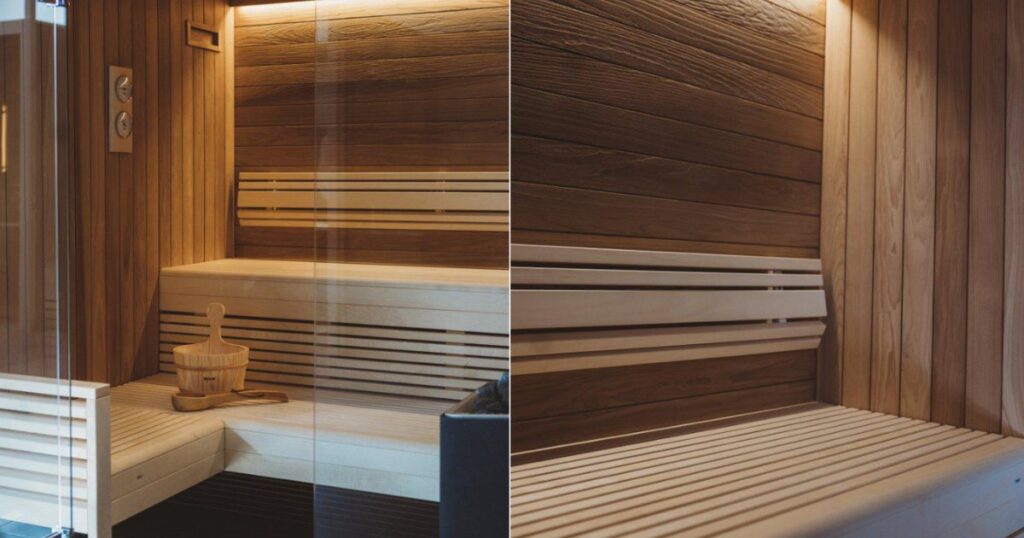
A traditional sauna has a steep vertical temperature gradient. Air at ankle height may be tepid while the top bench is at 90°C. The experience you are buying happens on the upper bench, not on the floor.
The consequence is a design rule worth checking before you buy: the top of the heater stones should sit at roughly upper-bench level, and there needs to be adequate headroom above that bench for the steam to gather around you rather than above you. A cabin with a low ceiling, or a heater mounted well below the benches, will feel weak no matter what its kilowatt rating says.
Heater sizing, and the glass penalty
An undersized heater is the most common technical mistake in this category, and it cannot be fixed later without rewiring.
The rule manufacturers generally work to is roughly 1 kW of heater per 1.3 to 1.5 cubic metres of sauna volume, which is about 1 kW per 45 to 50 cubic feet. Calculate your room volume, divide, and treat the answer as a minimum rather than a target.
Then apply the corrections almost every buyer forgets:
- Glass. A glass door or window is a large uninsulated surface. Manufacturers typically ask you to add an allowance of extra effective volume for each square metre of glass, and a full glass front can push you a whole heater size up.
- Uninsulated or masonry walls. Same problem. A sauna built against a bare concrete or tiled wall behaves like a much bigger room.
- Outdoor siting and cold climates. Published preheat figures are mild-weather figures.
- Stone capacity. More stone mass means a more stable temperature and better steam when you pour, at the cost of longer preheat. It is a genuine specification, not a decorative one.
Give your actual dimensions, glass area and wall build-up to the heater manufacturer and let them confirm the size in writing. They all publish sizing charts and they would rather do this than handle a warranty claim about a room that never gets hot.
Electrical supply: where the budget goes
Small infrared cabins often run on an ordinary socket. Traditional sauna heaters usually do not.
Above roughly 3 kW you are generally into a dedicated circuit, and at 6 to 9 kW you are into a hardwired supply on its own breaker. A 9 kW heater at 240V draws around 37 amps continuously, which is why units at that size commonly specify a 50-amp circuit. That is licensed electrical work, it is usually permitted and inspected, and it is not included in the price of the sauna.
Get an electrician to confirm spare capacity at your panel before you order anything. On a fully loaded board the honest answer can be a service upgrade, which changes the economics of the whole project. Our guide to the tools a professional electrician actually carries gives a sense of who you should be hiring, and heat pump water heaters runs into the same panel-capacity question from another direction.
We are not going to publish wiring instructions, and you should be wary of anyone who does.
Timber: walls and benches are different jobs
Sauna timber has to survive repeated wet-dry cycling at high temperature without warping, weeping resin or burning skin. Different species suit different parts of the room.
| Timber | Character | Best used for |
|---|---|---|
| Western red cedar | Aromatic, dimensionally stable, naturally rot resistant, low conductivity | Walls and cabins, indoor or outdoor |
| Hemlock | Economical, pale, low odour, less rot resistant | Walls of indoor cabins and most infrared units |
| Nordic spruce | The traditional Finnish choice, knotty character | Walls and ceilings |
| Aspen, alder, basswood | Very low resin, low odour, stays cooler to touch | Benches and backrests |
| Thermally modified timber | Heat treated for stability and moisture resistance | Outdoor cabins and benches |
The point buyers miss: bench timber matters more than wall timber, because you sit on it at 80°C or more. Low-resin, low-conductivity species like aspen and alder stay tolerable to bare skin. A resinous or dense bench can weep sap and is genuinely uncomfortable. Check what the benches are made of, not just the headline wood species.
One more thing that is not optional: never seal, varnish or paint the interior. Sauna timber is left bare or treated only with a paraffin-based sauna oil. Conventional finishes off-gas and blister at these temperatures.
Ventilation, drainage and the door
Three details that are safety items rather than comfort features.
Ventilation. A sauna needs air movement, conventionally an inlet low near the heater and an outlet high on the opposite side, so fresh air is drawn across the stones and stale air leaves. Follow the heater manufacturer’s arrangement exactly. Poor ventilation makes a sauna feel stifling and stale rather than hot, and it is the usual reason a technically correct build feels wrong.
The door. A sauna door opens outward and must never lock or latch in a way that could trap someone. If a person faints against it, the door has to give. Treat any product that fails this as disqualified, whatever else it offers.
Water. A wet sauna generates water and it has to go somewhere. Indoors that means a floor that tolerates moisture and, ideally, a drain. Outdoors it means siting so run-off drains away from the base rather than pooling under it.
Indoor, outdoor or portable
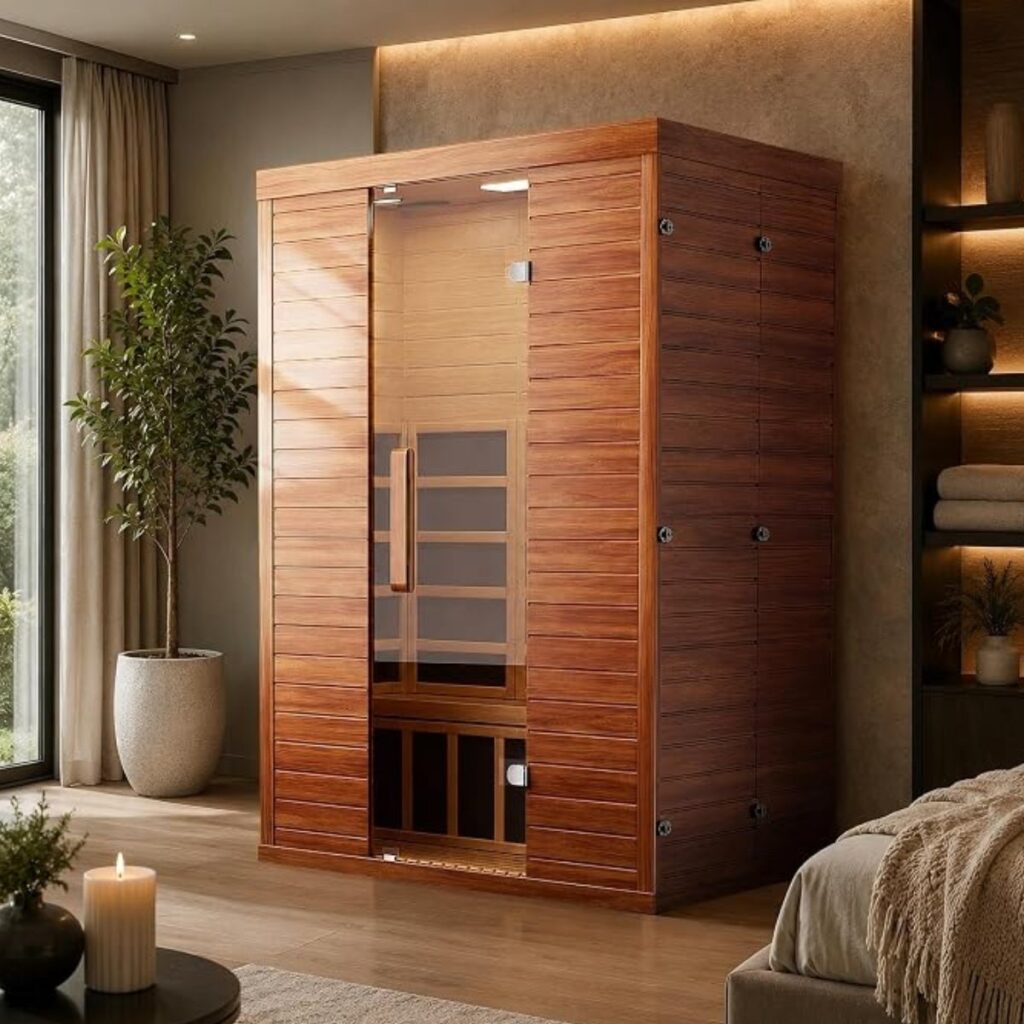
Indoor is cheaper to run and easier to use in winter, which is when you will actually want it. It needs the space, the moisture tolerance and the electrical supply, and a spare room or a large bathroom is the usual home.
Outdoor solves the space problem and adds a base, weatherproofing, an outdoor-rated electrical run that is often trenched, and a walk through the cold at both ends. Barrel and cube cabins dominate here.
Portable units, meaning the tent and blanket style with a steam generator, are a different proposition and worth being straight about. They are cheap, they need no installation, and they do produce heat and sweating. What they do not produce is the environment of a sauna room, because your head is outside the enclosure and the operating temperature is far lower. As an affordable way to sit in heat, they work. As a substitute for a sauna, they do not.
Running cost and maintenance
Work out running cost yourself, because tariffs vary too much for anyone else’s figure to be useful. A 6 kW heater at full draw uses 6 kWh an hour, a 9 kW heater 9 kWh. Neither runs flat out once up to temperature, so a session with preheat lands somewhere below the headline figure. Multiply by your own rate.
Maintenance is light but not zero. Ventilate and dry the room after use rather than shutting it up wet. Wash benches with water and a mild cleaner, never a solvent. Restack the stones periodically, because they degrade and settle, and replace them when they start crumbling: packed or broken stones choke airflow through the heater and shorten the element’s life.
Who should be cautious
Heat stress is real and it is not equally safe for everyone. Speak to a healthcare professional before regular sauna use if you are pregnant, have a heart or circulatory condition, have low or high blood pressure, or take medication affecting heat tolerance, blood pressure or hydration. The same applies to anyone recovering from illness or surgery.
Children tolerate heat differently from adults and should never use a sauna unsupervised. We are a tools publication rather than a medical one, and nothing here is medical advice.
Buying checklist
- Room volume calculated, and heater size confirmed in writing by the manufacturer
- Glass area and wall build-up declared in that sizing calculation
- Electrician’s confirmation of spare panel capacity, in writing, before ordering
- Permit and inspection requirements checked locally
- Bench length checked against whether anyone wants to lie down
- Heater stone level relative to upper bench height
- Bench timber species confirmed separately from wall species
- Ventilation arrangement per the heater manufacturer
- Door opens outward and cannot latch shut
- Floor moisture tolerance and drainage
- Delivery route measured at its narrowest point
- Warranty terms, and whether the heater is covered separately from the cabin
- Replacement stone and element availability
Fitting out a sauna afterwards raises its own question of what survives the heat. We looked at one example in our Almost Heaven Bluetooth sauna speaker review.
Frequently asked questions
How long should you stay in a sauna?
Ten to twenty minutes a round suits most experienced users. Beginners should start at five to ten minutes and build up over weeks. Two or three shorter rounds with proper cooling and rehydration between them is more comfortable, and more traditional, than one long session. Leave immediately if you feel dizzy, nauseated or stop sweating.
Is it safe to use a sauna every day?
For most healthy adults who hydrate and keep sessions moderate, daily use is generally considered reasonable, and the Finnish cohort research associated more frequent use with better cardiovascular outcomes rather than worse. That is an association in a specific population, not a prescription. If you are pregnant, have a cardiovascular condition or take medication affecting blood pressure or hydration, ask a healthcare professional first.
Does a sauna detox your body?
Not in the way the marketing suggests. Sweat is around 99% water plus electrolytes, and although trace metals and some chemicals are detectable in it, the liver and kidneys handle the overwhelming majority of elimination. The fraction leaving through sweat is very small. Enjoy a sauna for the heat and the relaxation, and treat toxin lists on product pages as a warning sign about the seller.
What is the difference between a sauna and a steam room?
A sauna uses dry heat at roughly 70 to 100°C, with humidity raised in short bursts by pouring water over hot stones. A steam room runs much cooler, around 40 to 46°C, at close to 100% humidity. A sauna is a timber room with a heater; a steam room is a sealed, tanked and tiled enclosure with a steam generator, which makes it the more involved installation of the two.
Can I install a sauna inside my house?
Yes, and indoors is the easier place to use one through winter. You need adequate space and headroom, a floor and wall build-up that tolerates moisture, ventilation as specified by the heater manufacturer, and the right electrical supply. Small infrared cabins often plug in; traditional heaters above about 3 kW usually need a dedicated or hardwired circuit.
What size heater do I need?
Start from roughly 1 kW per 1.3 to 1.5 cubic metres of room volume, about 1 kW per 45 to 50 cubic feet, then add capacity for glass area and any uninsulated or masonry surfaces. Give your real dimensions and glass area to the heater manufacturer and have them confirm the size in writing, because an undersized heater cannot be fixed without rewiring.
Are portable saunas any good?
They work on their own terms. Tent and blanket style units need no installation, cost far less, and do produce heat and sweating. They do not reproduce a sauna room, because your head sits outside the enclosure and the operating temperature is much lower. Judge them as an affordable heat session rather than as a small sauna and you will not be disappointed.
Traditional or infrared for a home sauna?
Traditional heats the air and stones to 70 to 100°C and lets you pour water for steam, which is the experience most people mean by sauna. Infrared warms the body directly at 45 to 65°C, preheats faster and frequently runs on a standard plug-in circuit. If the hardwired supply is your obstacle, infrared is the honest alternative rather than a compromise on a traditional build you cannot power.
Sources: Laukkanen T, Khan H, Zaccardi F, Laukkanen JA, Association Between Sauna Bathing and Fatal Cardiovascular and All-Cause Mortality Events, JAMA Internal Medicine, 2015; and Cardiovascular and Other Health Benefits of Sauna Bathing: A Review of the Evidence, Mayo Clinic Proceedings, 2018. Sizing and installation guidance follows heater manufacturers’ published engineering data; confirm figures for your specific room and product before ordering.
Planning the wider project? Our guide to choosing a supplier for work like this and our retailer verification checklist cover the buying side.