

What this guide is based on. Manufacturer product information and published specifications. We have not put these tools through a comparison, so nothing is scored and no performance claim here is presented as measured. How we work sets out where that line sits.
Most people painting a room own one roller and one brush. That covers flat colour on flat walls, which is most of the job and none of the interesting part.
Here is what each category does, and which pieces are worth owning before you have a specific job for them.
Faux finishing tools exist for everything after that. Marbling, rag rolling, woodgrain on a steel door, a metallic wall that shifts as you walk past it. The techniques are old and the skills are learnable. What changed is that most of them now have a purpose-made tool, which takes out a lot of the guesswork that used to keep this work inside the trade.
Why you can trust us. Tools Soko earns a commission when you buy through links on this page. It never changes what we recommend, and it never changes the price you pay.
Detail brushes
The mini brushes in this category come in plastic nylon, brass and stainless steel, and they are built for detail and limited-access work rather than for laying on paint.
Reach for them when a standard brush is simply too big: cutting into a moulding profile, working stain out of a carved edge, lifting glaze from a corner before it sets. The metal-filament versions are for texture and abrasion, which is a different job from anything a wall brush does.
Not a first purchase. A very fast purchase the first time a job stops you.
Rollers and roller covers
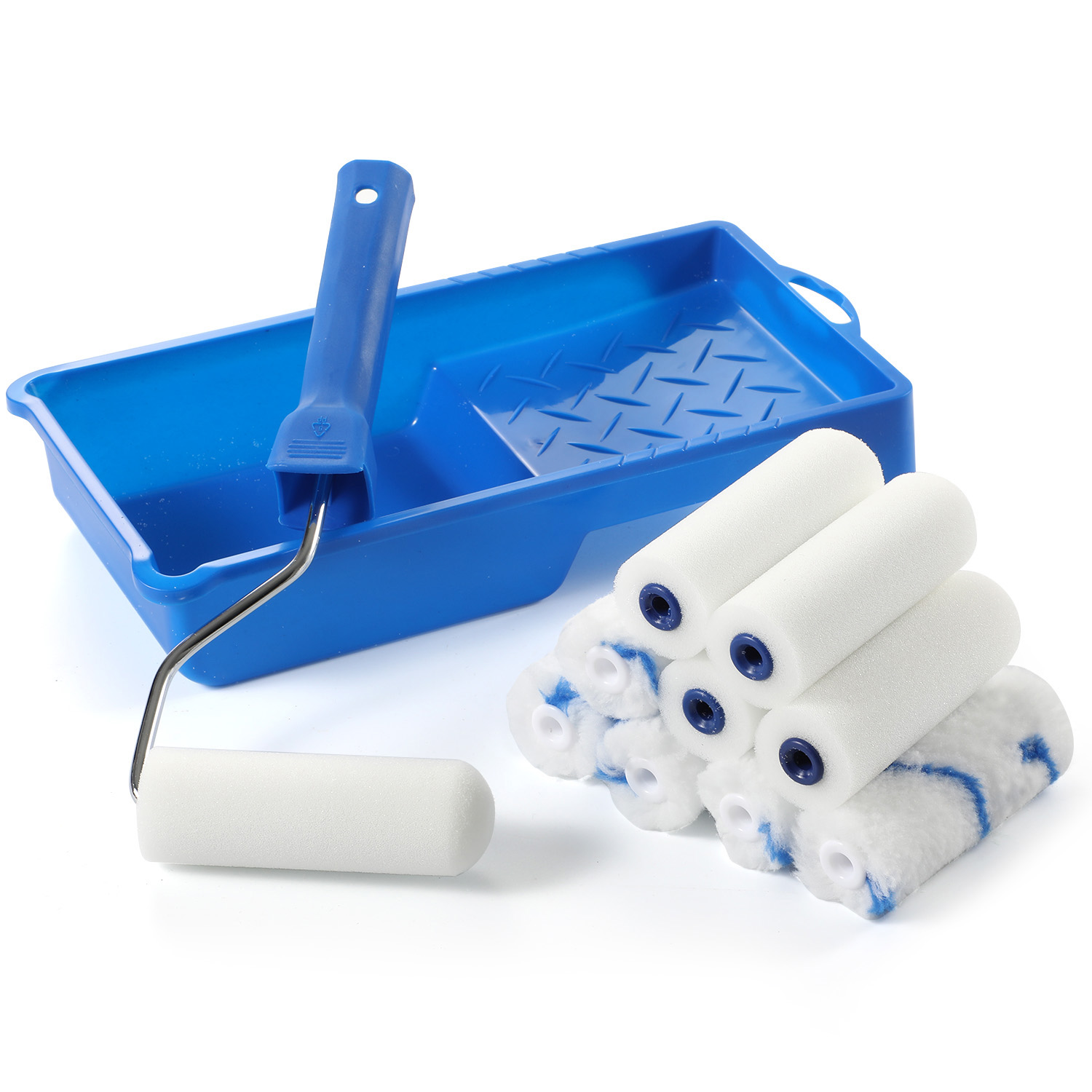
| Roller | Size | What it is for |
|---|---|---|
| Metallic paint roller | Not stated | Rolling metallic paint |
| Sea sponge roller | 6 in | Texture coats |
| Whizzflock roller | 13 in x 4 in | Smooth finish, enamels and varnishes |
| Mini roller and handle | 6 in cover, 24 in handle | Tight spots, flat paints |
| Faux rag roller | 9 in | Rag rolling effects |
Metallic paint roller
This one does something an ordinary cover cannot: it orients the metallic particles in the paint as it rolls. Metallic finishes fail when the flake lies in different directions across a wall, and the eye reads that as patchiness rather than shimmer. The manufacturer also says it helps eliminate lap marks.
If you are already paying for metallic paint, this is a poor place to economise.
Sea sponge roller
A 6 inch natural sponge cover that applies texture coats quickly. A hand sponge gives more control and more variation; the roller gives speed and consistency across a large area. Most sponged finishes end up using both, the roller to cover ground and the hand sponge to break up any rhythm the roller leaves behind.
Whizzflock roller
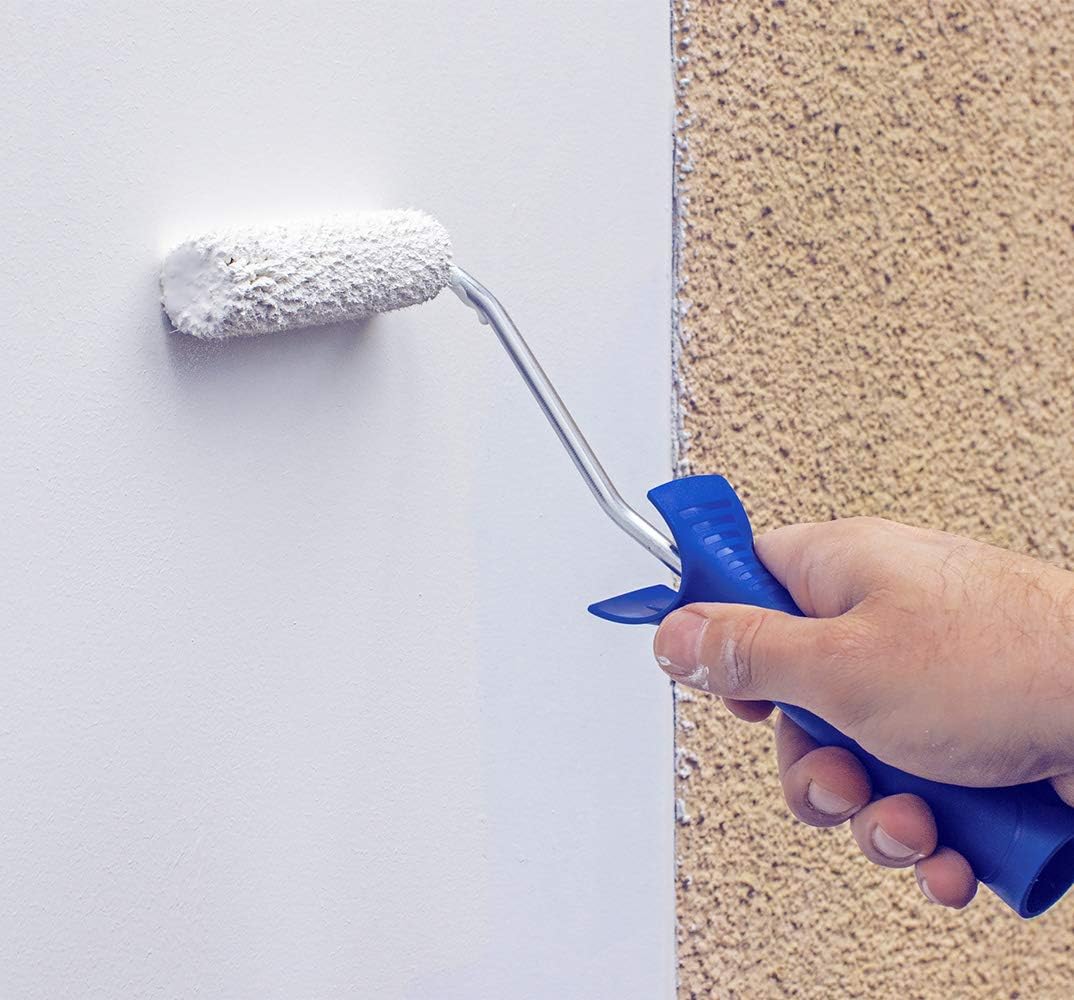
The odd one on this list, because it is not a faux tool at all. It is a flocked, ultra-low-density sponge aimed at the smoothest finish available from a roller, listed as excellent with enamels, varnishes and epoxies, with high pick-up and delivery, and as typically covering in one pass.
Painting cabinet doors, trim, or anything where roller stipple would ruin the job? This is the interesting entry in the whole category.
Mini roller and handle
A 1/2 inch nap, 100% polyamide cover for flat paints, on a 24 inch handle, with a self-contained bearing system and low splatter. The long handle on a small cover is the entire point: behind radiators, above cupboards, down the side of a fitted wardrobe.
Faux rag roller
A Purdy Symphony 9 inch cotton rag roller, lint-free, for rag rolling effects. Rag rolling by hand is tiring across a full wall and hard to keep even from one end to the other. This is what makes the technique practical for a whole room rather than a single feature panel.
Two figures in the source that do not add up. The Whizzflock is listed as 13 in x 4 in, but its handle is also given as 13 inches, so which dimension belongs to the cover is unclear. The mini roller is listed as 6 in x 24 in while being described as a small roller for tight spots, which reads as a 6 inch cover on a 24 inch handle. Confirm the cover size with the retailer before ordering, especially if you are matching an existing frame.
Natural sea sponge
The grass sea sponge is a 6 inch natural sponge, listed as working with both latex and oil-based paint, and as helping achieve a marble finish when used with oil glazes. It is also listed for wallpapering and for cleanup, which matters more than it sounds: it means the tool earns its keep between decorative jobs instead of sitting in a drawer.
Natural sponge is doing real work here. A synthetic kitchen sponge has a regular cell structure, and regularity is exactly what betrays a faked stone finish. Sea sponge is irregular, which is why it reads as mineral rather than as pattern.
Wood graining tools
The Old Masters woodgraining tool works by dragging and rocking through wet stain or glaze, rearranging it into patterns that resemble grain. The manufacturer lists it for metal, plastic, painted surfaces and Masonite, with filing cabinets, kitchen cabinets, doors, panelling, dressers and desks among the examples, and says one tool produces many different patterns.
The appeal is easy to see. A steel door or a run of laminate cabinets is a surface you cannot re-veneer and would rather not replace.
One claim worth reading carefully
The manufacturer says the tool needs no special skills and gives professional results every time.
The mechanism supports the first half. Rocking a rubber former through wet glaze is not a difficult motion, and the tool generates the pattern for you. What it cannot do is manage your timing. Because it works the glaze while that glaze is still open, your working window is set by the product and the conditions, and in a warm dry room that window closes faster than the tin suggests.
Our advice, not the manufacturer’s: grain a scrap board first. Not because the tool is hard, but because the first pass teaches you how fast your glaze is setting in the room you are actually standing in.
What to buy first
Equipping from nothing, with no specific finish in mind:
- A natural sea sponge. Cheapest route to a convincing finish, works across the widest range of effects, and doubles as a cleanup tool.
- The mini roller with the long handle. The least glamorous item here and the one that comes out on every job, decorative or not.
- The Whizzflock, if any part of the project involves trim, doors or cabinetry.
- A couple of detail brushes, once you have hit the first corner a wall brush cannot reach.
The metallic roller, the rag roller and the graining tool are technique-specific. Buy each one when you have committed to that finish, because none of them does anything else.
Who might want something else
Plenty of jobs do not need any of this.
- Repainting a room in one colour. A decent standard roller and a good brush will beat any specialist cover here, and cost a fraction.
- Spraying. If you already own a sprayer and the job is cabinets or doors, a sprayer will out-finish the Whizzflock and be faster over any real quantity.
- Genuine timber you can strip. Real wood that can be sanded and stained will always look better than grained paint. Graining tools are for the surfaces where that option is gone.
- Anyone on a hard deadline. Every technique here needs practice passes and glaze that has to stay open while you work it. None of it is a way to finish a room faster.
What the source does not tell us
No prices. No brand for most items beyond Purdy and Old Masters. No nap length except on the mini roller, and no coverage figures anywhere.
There is also nothing on durability, or how many jobs a natural sponge survives before it starts shedding. For a consumable, that is the number that actually decides value, and it is the one question worth putting to a supplier before a bulk order.
Tools Soko verdict
What this category does well. It turns techniques that used to depend on a decorator’s hand into something repeatable. The sponge and the rag roller in particular remove most of the reason to hire out a feature wall.
Who it suits. Painters adding decorative work to what they already offer, and DIY renovators with a surface they cannot replace: a steel door, a laminate kitchen, a wall that needs to stop looking flat.
What to weigh first. Most of these are single-purpose. Two of them, the sea sponge and the long-handled mini roller, will be used constantly. The rest sit in a box until a specific finish calls for them, so buy against a decided project rather than against the idea of one.
Worth investigating further? Yes, on the two general-purpose items, which are cheap enough that the decision barely deserves the name. For the technique-specific tools, decide on the finish first. And note that we are working from manufacturer information here, not from testing, so treat the claims above as claims until someone has run them.
Where to buy
Faux finishing tools sit in the decorating aisle rather than the power tool aisle, and the specialist covers are more often stocked by trade paint merchants than by general hardware shops. Ask for the nap length and the cover size in writing if you are ordering to fit a frame you already own.
Frequently asked questions
Can I use an ordinary roller for metallic paint?
You can, and it will put the paint on the wall. What you lose is particle orientation, which is what makes a metallic finish read as consistent rather than blotchy across a large area.
Is natural sea sponge really better than synthetic?
For decorative work, yes, for one specific reason: irregular cell structure. Synthetic sponge repeats, and the eye picks up repetition immediately in a finish that is meant to look like stone.
Will the graining tool work on a metal door?
The manufacturer lists metal among its surfaces, along with plastic, painted objects and Masonite. The requirement is a smooth flat surface that paint adheres to properly, so preparation and primer decide the result as much as the tool does.
Do I need all five rollers?
No. Three are technique-specific and only come out for that technique. The other two are general-purpose tools that happen to be shelved in this category.
Does heat affect these techniques?
It affects any technique that works a wet glaze, which covers sponging, rag rolling and graining. A warm dry room shortens the window in which the glaze can still be moved. This is our observation rather than a manufacturer statement, and it is the main argument for a practice board.
Where to go next
For how we separate manufacturer claims from measured results, read how we work. If you are buying tools in Kenya and want to avoid counterfeits and grey imports, our guide to buying power tools in Nairobi covers the same ground for the hardware side of a renovation.
For the powered end of exterior work, our outdoor power equipment guide covers pressure washers and the rest of the category.
For the everyday painting kit that comes before any decorative finish — roller frame, nap, brushes and tray — see the painting section of our guide to the 20 tools every homeowner should own.