
Four of these five categories now sell mainly as cordless tools, which means the most expensive decision you make is not which mower you buy. It is whose battery you agree to keep buying.
This article is built from published manufacturer specifications, technical documentation and the reported experience of people who own the equipment. Nothing here has been tested by Tools Soko and nothing carries a score. See how we work.
This is an orientation piece, not a round-up. It maps five outdoor power categories, explains the specification that actually decides each one, and says where the money goes. None of the machines named here has been on the Tools Soko bench, so nothing is scored and nothing is ranked. Where we point you at a category rather than a product, that is deliberate.
Why you can trust us. Tools Soko earns a commission when you buy through links on this page. It never changes what we recommend, and it never changes the price you pay. As an Amazon Associate we earn from qualifying purchases.
Outdoor power equipment is bought badly more often than any other tool category, and the reason is structural. Most people buy one machine at a time, years apart, reacting to whatever just broke or whatever the yard has outgrown. Each purchase looks sensible on its own. Five years later the shed holds four batteries that fit nothing else and a mower sized for a garden nobody has any more.
The decision that outranks all the others
Mowers, trimmers, chippers and pressure washers have all moved toward cordless, and the brands driving it — EGO, Greenworks, Ryobi, DeWalt — sell batteries that only fit their own tools. That is the point of them.
Which means your second cordless purchase in this space is not really a purchase. It is a consequence. Buy an EGO 56V mower and the EGO trimmer is now several hundred dollars cheaper than any rival, because you already own the expensive part. That is worth something real if the platform suits you, and it is a trap if it does not.
So decide the platform first, deliberately, before the mower forces it on you by accident. We worked through how to make that call in our guide to choosing a battery platform, and what the packs cost you over time in battery care that doubles pack life. Both apply directly here.
One exception worth naming. Pruning shears have no battery, no platform and no lock-in, which is exactly why they are the category where buying properly once actually works.
1. Lawn mowers and tractors
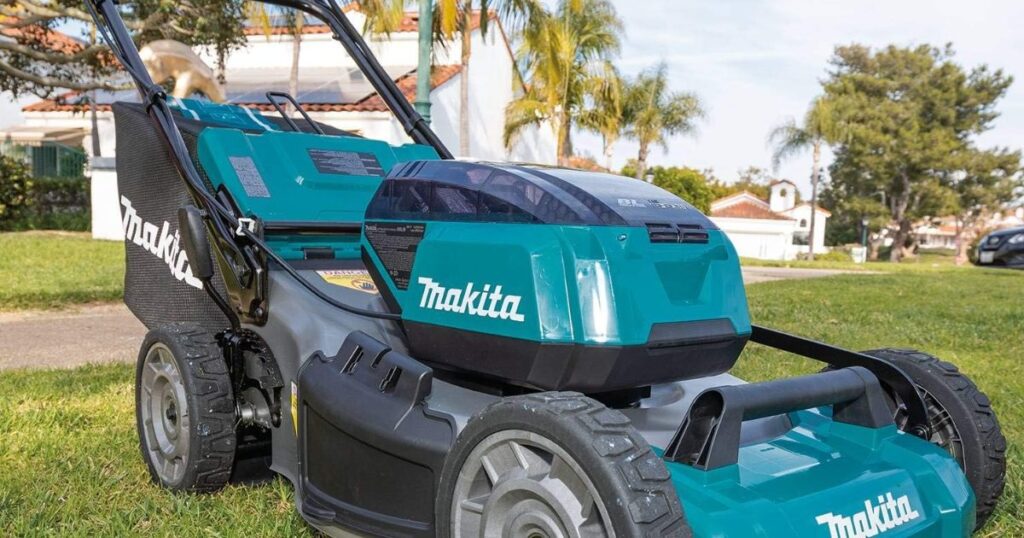
Everything in this category is decided by one number you already know: how much grass you actually cut. Not the size of the property. The size of the lawn.
| Lawn size | What suits it | Rough spend |
|---|---|---|
| Under ½ acre | Push or self-propelled | $200–$600 |
| ½ to 3 acres | Riding mower or lawn tractor | $1,500–$3,500 |
| 3+ acres, open | Lawn tractor, wider deck | $2,500–$4,000 |
| Complex, many obstacles | Zero-turn | $3,000–$5,000+ |
| Small, flat, fenced | Robot mower | $800–$3,000 |
The interesting shift is at the top. Zero-turns used to be a commercial purchase, bought by people mowing for money. Homeowners are now choosing them over conventional tractors, and the reason is not speed, it is obstacles. A zero-turn pivots on the spot, so a yard full of trees, beds and awkward corners stops requiring a three-point turn every thirty seconds. On genuinely open ground, a tractor with a wider deck does the same work for less money.
Robot mowers are the other genuine change, and they are worth being clear about. A robot does not cut your lawn once a week. It cuts a little every day, which produces a consistently short lawn and clippings fine enough to leave. That suits some people enormously and irritates others, and it has almost nothing in common with how a conventional mower is used.
Where people overspend: deck width. A wider deck cuts faster and fits through fewer gates, and gate width is the constraint nobody measures until the machine is delivered.
2. String trimmers
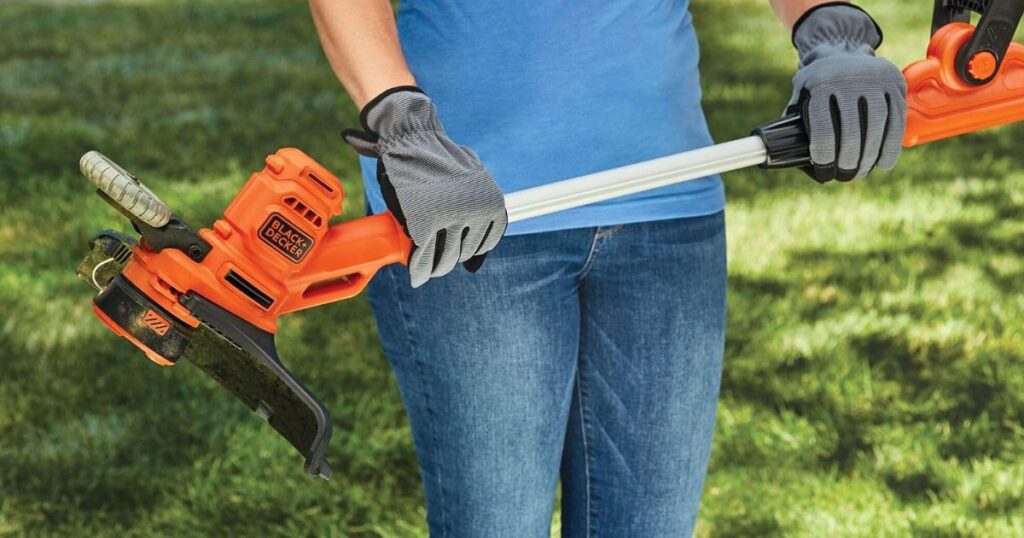
A mower cuts the field. A trimmer cuts the edges, and the edges are what people actually see. It is the tool that decides whether a lawn looks maintained or merely cut.
Two specifications separate trimmers, and neither is the one on the front of the box.
Straight shaft or curved
A curved shaft is lighter, shorter and more comfortable for someone of average height trimming a suburban lawn. A straight shaft reaches under decks, hedges and fence rails, is easier to keep level, and is what every professional uses. It also takes brush cutter and multi-head attachments, which a curved shaft mostly does not.
If you are tall, or you have anything to reach under, buy straight. Otherwise curved is genuinely more pleasant and there is no shame in it.
How the line feeds
Bump feed advances line when you tap the head on the ground: reliable, cheap, and it means bending. Auto-feed advances line on its own, which is convenient until it feeds line you did not want and burns through spools. Fixed line means fitting a new piece each time, which is slow but almost never jams.
Line jams are the single most common complaint in this category, well ahead of power. Read reviews for that specifically, not for runtime.
The attachment argument. Multi-head systems let one powerhead run a trimmer, an edger, a pole saw, a hedge trimmer and a cultivator. Where the yard needs three of those, it is real money saved and one battery instead of three. Where it needs one, it is a heavier trimmer that cost more.
3. Pruning shears, parts and accessories
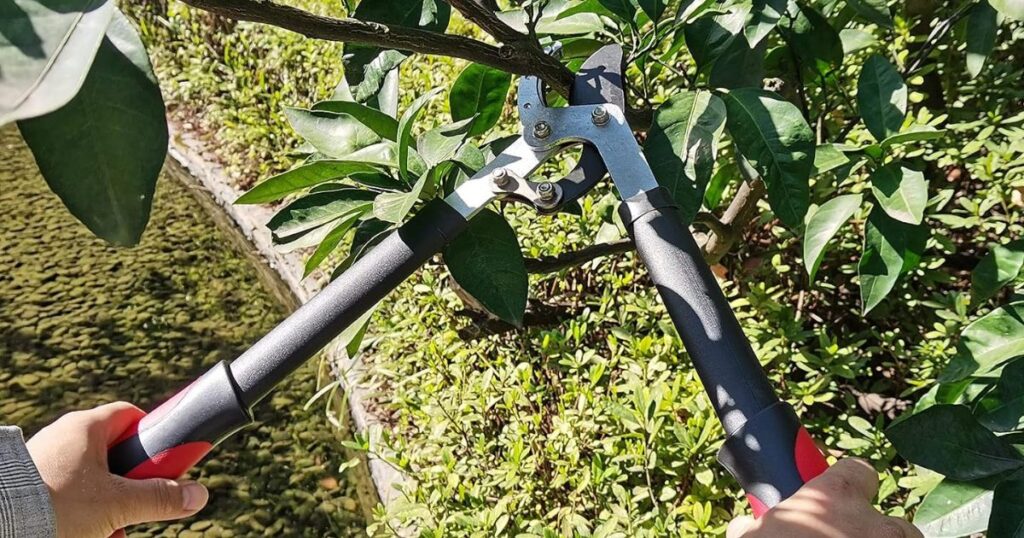
The cheapest category here, and the only one where buying the expensive option is straightforwardly correct.
Pruners are not scissors. They are engineered to sever living wood without crushing the tissue around the cut, because a crushed stem is an open wound that a plant closes slowly and an infection enters quickly. That is the whole design problem, and it is why the blade geometry matters.
| Type | How it cuts | Use it for |
|---|---|---|
| Bypass | Two curved blades pass like scissors | Living stems and green wood. The default |
| Anvil | One blade closes onto a flat plate | Dead wood only. Crushes live stems |
| Ratcheting | Cuts in stages, each squeeze advancing | Thick stems, or limited grip strength |
| Electric | Motorised blade, trigger operated | High volume, orchards, accessibility |
One tool the table leaves out. Loppers are the same bypass geometry on two long handles, and the extra length is leverage — they take stems a hand pruner would stall on. The rule worth keeping: if you find yourself squeezing a pruner with both hands, you needed loppers, and forcing it is how blades get sprung.
Then the part almost nobody weighs at purchase: whether the tool can be rebuilt.
Premium secateurs from Felco and ARS sell replacement blades, springs and locking mechanisms as ordinary stock items. A spring is the first thing to go, usually within a couple of seasons of real use, and on a rebuildable tool that is a few dollars and five minutes. On a sealed $15 pruner it is a bin.
Run that over ten years and the expensive pruner is the cheap one, which is a genuinely unusual thing to be able to say about a garden tool. Add a sharpener and keep the blade honed; a sharp cheap pruner outperforms a blunt expensive one every time.
4. Wood chippers, shredders and mulchers
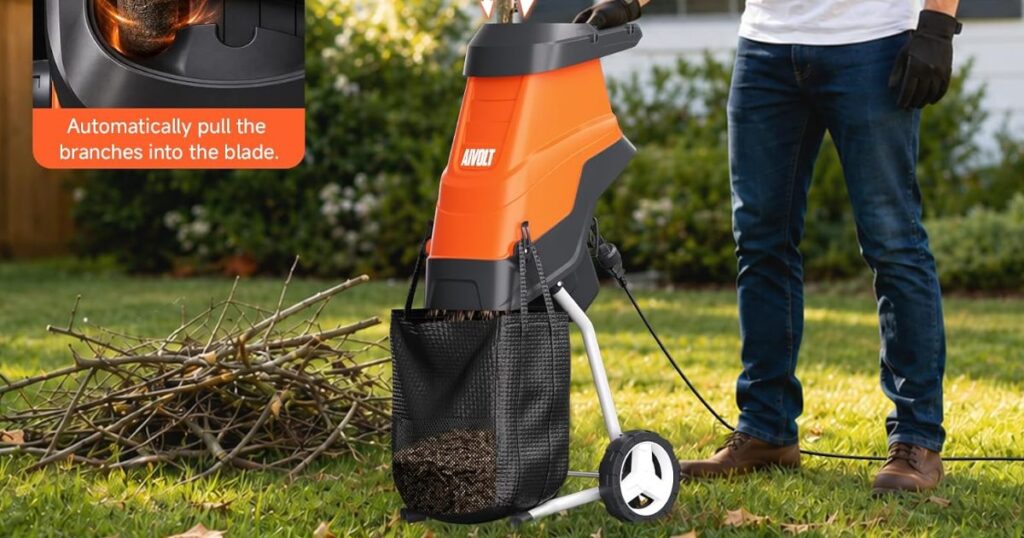
The category with the widest gap between what people buy and what they need.
One specification governs everything: maximum branch diameter. It sets the price, the power source and the machine class, and it is the figure to fix before looking at anything else.
| Capacity | Machine | Rough spend | Who it is for |
|---|---|---|---|
| Up to 1.75 in | Electric shredder | $100–$200 | Leaves, twigs, prunings |
| 1.5–3 in | Gas 3-in-1 | $300–$800 | Active homeowner, mature trees |
| 4–6 in | Prosumer gas | $600–$1,500 | Acreage, small landscapers |
| 8 in+ | Towable or PTO | $1,500–$5,000+ | Arborists, tree services |
Be honest about the top of that range. Most residential yard waste is leaves, hedge clippings and prunings under an inch and a half, which a $150 electric shredder handles quietly and without a fuel can. The gas 3-in-1 machines are bought on the strength of the two or three thick branches a year that a bow saw would deal with in ten minutes.
The mechanism matters less than the marketing suggests, but it is worth knowing. Drum machines feed aggressively and throw high volume, which is why forestry and biomass work uses them. Disc machines produce a more uniform chip. Impeller and blade shredders are built for soft material and will bog in anything woody.
On safety, briefly and without drama. Chippers pull material in on purpose. That is the mechanism working, and it does not distinguish between a branch and a sleeve. No loose clothing, no gloves with cuffs that can catch, eye and ear protection every time, and the push stick used rather than a hand. Our guide to jobsite PPE people actually wear covers what stays on.
If the job is felling and bucking rather than processing debris, a saw is the tool and the chipper comes afterwards. We looked at the corded end of that in our Black+Decker CS1500 review.
5. Pressure washers
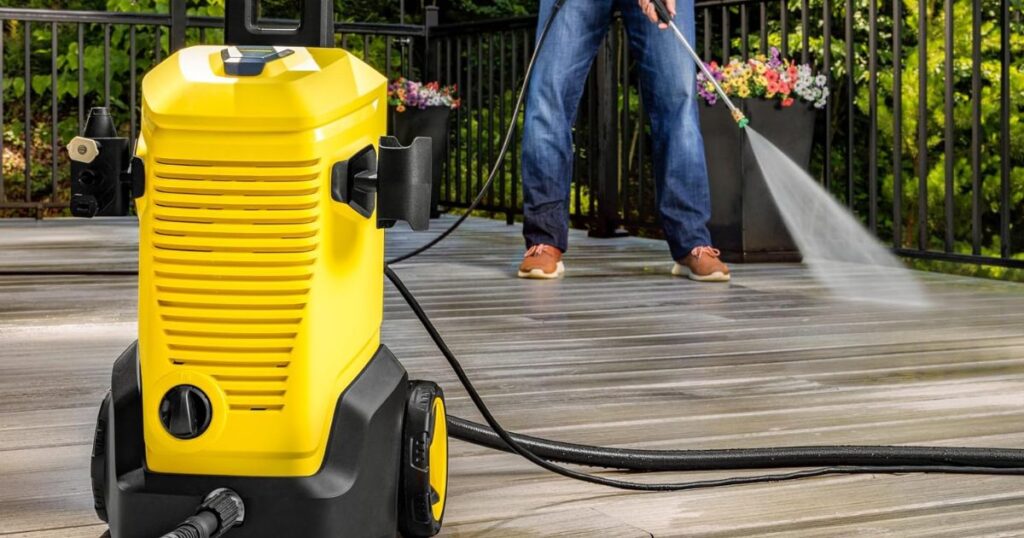
The most misunderstood specification in outdoor power equipment is PSI, because it is the only one most listings shout about.
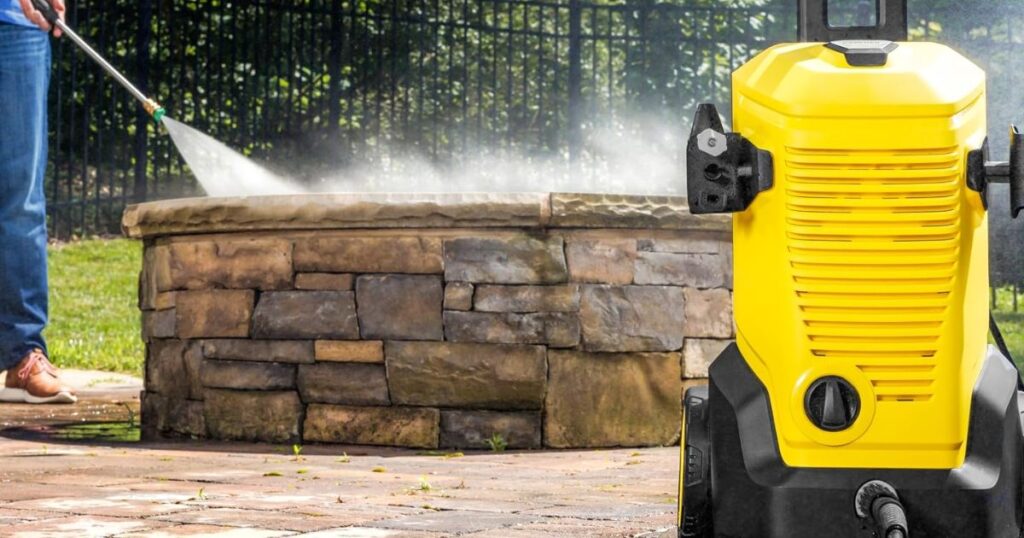
PSI is force. GPM is how much water carries that force onto the surface and flushes the dirt away. A machine with high PSI and low flow blasts a narrow stripe and leaves you standing there. Multiply them and you get cleaning units, which is the figure that actually predicts how long a driveway takes.
| PSI | Suits | Typical power source |
|---|---|---|
| 1,200–1,900 | Cars, patio furniture, light siding | Electric or battery |
| 2,000–2,800 | Decks, fences, driveways | Electric or gas |
| 3,000+ | Concrete, paint stripping, equipment | Gas |
Nozzles are the other half, and they work on the same logic as airless spray tips: the angle is the trade between force and coverage. 0° is a pencil jet that will damage most surfaces and should almost never be fitted. 15° strips. 25° is the general-purpose choice. 40° is for delicate surfaces and rinsing. The black soap nozzle drops pressure deliberately so detergent can be drawn in.
If that framing sounds familiar, it is the same physics we worked through in our VEVOR airless paint sprayer review — pressure atomises, orifice size and fan angle decide what happens to the surface. Worth reading alongside if you are buying either.
Two practical notes. A brushless motor is worth paying for in a corded unit: quieter, longer-lived and materially more efficient. And a surface cleaner attachment does more for driveway cleaning speed than another 500 PSI, because it keeps the nozzles at a constant height and stops the striping that makes amateur work obvious.
Cordless pressure washers are the fast-growing corner and they deserve an honest framing. They are excellent for washing a car in a car park and poor at cleaning a driveway. Judge them on that, not on the marketing.
When to buy, which is not when you want to
Every category here peaks in spring, when the winter mess becomes visible and everyone decides at once. Peak demand is not when anything is cheap.
Chippers get a second peak in autumn with leaf and brush clearing. Pressure washers hold through summer on car washing. The quiet window across all five is winter, when this equipment sells mainly as gifts and clearance, and when you have time to research rather than buying whatever is in stock on the first warm Saturday.
What we have and have not tested
Nothing in these five categories has been through the Tools Soko bench, and this article does not pretend otherwise. What it does is set out the specification that governs each category and the price band each segment occupies, so a listing stops being a wall of adjectives.
Where we have run a machine in adjacent ground, we have said so and linked it. Our STIHL MH 610 tiller review is the closest thing here to a full write-up on garden machinery, and how we work explains what a score from us means and why most of these pages do not carry one.
Frequently asked questions
Is battery powerful enough to replace gas outdoors?
For mowers up to about half an acre, trimmers, and light shredding, yes, and the noise and maintenance savings are real. For sustained heavy work — large acreage, thick brush, chipping several inches of hardwood — gas still holds a clear advantage, mostly on run time rather than raw output.
What is the difference between PSI and GPM?
PSI is the force the water hits with. GPM is how much water arrives per minute to carry that force and flush debris away. Multiply the two for cleaning units, which predicts real cleaning speed better than either figure alone.
Bypass or anvil pruners?
Bypass for anything alive. The two curved blades pass each other and sever cleanly. Anvil pruners close a blade onto a flat plate, which crushes living stems and leaves a wound that heals badly. Keep anvil pruners for dead wood.
Do I need a chipper or would a shredder do?
Count what you actually generate. If it is leaves, hedge clippings and prunings under an inch and a half, an electric shredder at $100 to $200 covers it. Chippers earn their money on branches thicker than that, in volume. Most homeowners buy more machine than their debris justifies.
Zero-turn or lawn tractor?
Obstacles decide it, not acreage. A zero-turn pivots on the spot, so trees, beds and tight corners stop costing you a turn each time. On open ground with few obstructions, a tractor with a wider deck does the same work for less money.
Straight or curved shaft on a string trimmer?
Straight if you are tall, need to reach under decks or hedges, or want multi-head attachments. Curved is lighter and more comfortable for general suburban trimming. Straight shafts are what professionals use, largely for reach and attachment support.
When is the cheapest time to buy outdoor power equipment?
Winter. Every category here peaks in spring when demand is highest and discounting is lowest. Winter is when this equipment sells as gifts and clearance stock, and when you have time to choose rather than buying whatever is on the shelf.