
What this guide is based on. Manufacturer specifications and published performance figures. We have not had a heat pump water heater on the bench, so nothing here is scored and no efficiency figure is presented as measured by us. How we work sets out where that line sits.
Water heating is usually the second biggest electrical load in a house, behind cooking. In a home running an electric geyser, it is often the single line on the bill that never moves, no matter what else you switch off.
A heat pump water heater attacks that load from a different angle. Instead of turning electricity into heat, it uses electricity to move heat that already exists in the air around it. That distinction is the whole argument, and it is why the efficiency figures look implausible at first glance.
Why you can trust us. Tools Soko earns a commission when you buy through links on this page. It never changes what we recommend, and it never changes the price you pay.
What is a heat pump water heater?
A tank of water with a heat pump bolted to it. The pump uses electricity to draw warmth out of the surrounding air and push it into the water, in the same way a fridge draws warmth out of its interior and dumps it into your kitchen.
Because it is relocating heat rather than generating it, the output can exceed the input. That is the part that confuses people, and it is not a marketing trick.
The efficiency figures, and what they mean
| Type | Efficiency | What that means |
|---|---|---|
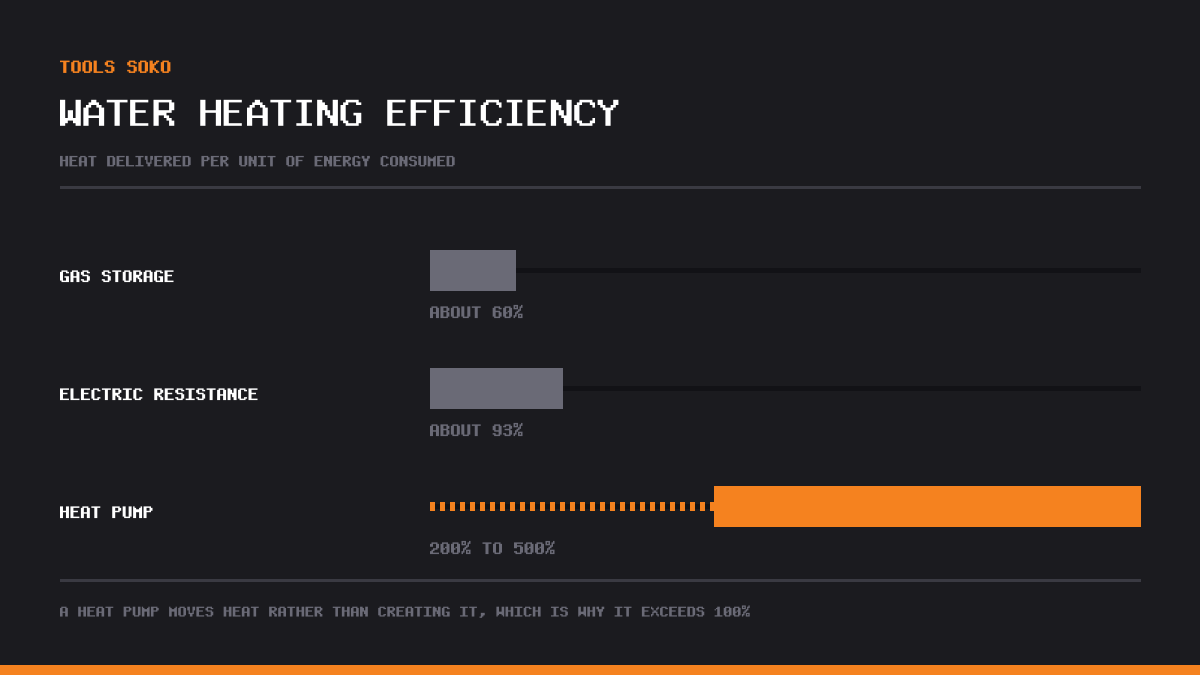
| Gas storage | About 60% | Most of the fuel’s energy reaches the water; the rest goes up the flue |
| Electric resistance | About 93% | Nearly all the electricity becomes heat, but no more than all of it |
| Heat pump | 200% to 500% | Two to five units of heat into the water per unit of electricity drawn |
An electric element can never beat 100%, because it is converting energy. A heat pump is not converting anything, so the ceiling does not apply.
Manufacturers often express this as Coefficient of Performance, or COP, rather than a percentage. A COP of 3 and an efficiency of 300% are the same statement: three units of heat delivered for every unit consumed.
Our note, not the manufacturer’s: that 200% to 500% is a range for a reason. The pump is harvesting heat from ambient air, so the colder the air, the less there is to harvest and the lower the COP falls. Any single headline COP is quoted at a specific air temperature. Ask which one. In most of Kenya the ambient conditions sit toward the favourable end of that range for most of the year, which is a genuine advantage over the same unit installed in a European winter.
How it works
The mechanism is an air conditioner running backwards. Four stages, repeating until the thermostat is satisfied:
- Absorption. A refrigerant draws warmth out of the surrounding air.
- Compression. That heat is compressed, which raises its temperature to something useful.
- Transfer. The hot refrigerant gives up its heat to the water in the tank.
- Repeat. The refrigerant cools and goes round again until the set temperature is reached.
One consequence worth knowing before you site the unit: because it is stripping heat out of the air, it returns that air cooler and drier than it found it. Indoors, that is either a small bonus or a small nuisance depending on the room.
Electrical requirements
A heat pump water heater needs a 30 amp, 240 volt circuit. That is the same supply most electric water heaters already run on.
| Replacing | Circuit |
|---|---|
| Electric geyser or an older heat pump | Existing circuit will most likely work |
| Gas, LPG or oil-fired heater | A new circuit will probably need running |
Worth clarifying for readers here: most international guidance on this treats 240V as a special high-voltage circuit, because domestic supply in North America is 120V. Kenyan mains is already 240V, so the voltage is not the obstacle. The number to check is the 30 amp rating, and whether your consumer unit and the cable to the heater position can carry it. Get an electrician to confirm the existing run rather than assuming, particularly in older housing where the geyser circuit may have been sized for a smaller element.
Monobloc or split?
Two layouts, and the right one is decided by your building rather than your budget.
| Monobloc | Split | |
|---|---|---|
| Layout | Everything in one integrated unit | Pump outdoors, tank indoors |
| Suits | Apartments, small to mid-sized homes | Larger homes, premium installations |
| Installation | Minimal pipework, indoor or outdoor | More involved, refrigerant lines between units |
| Noise | Low | Compressor noise moves outside |
Monobloc
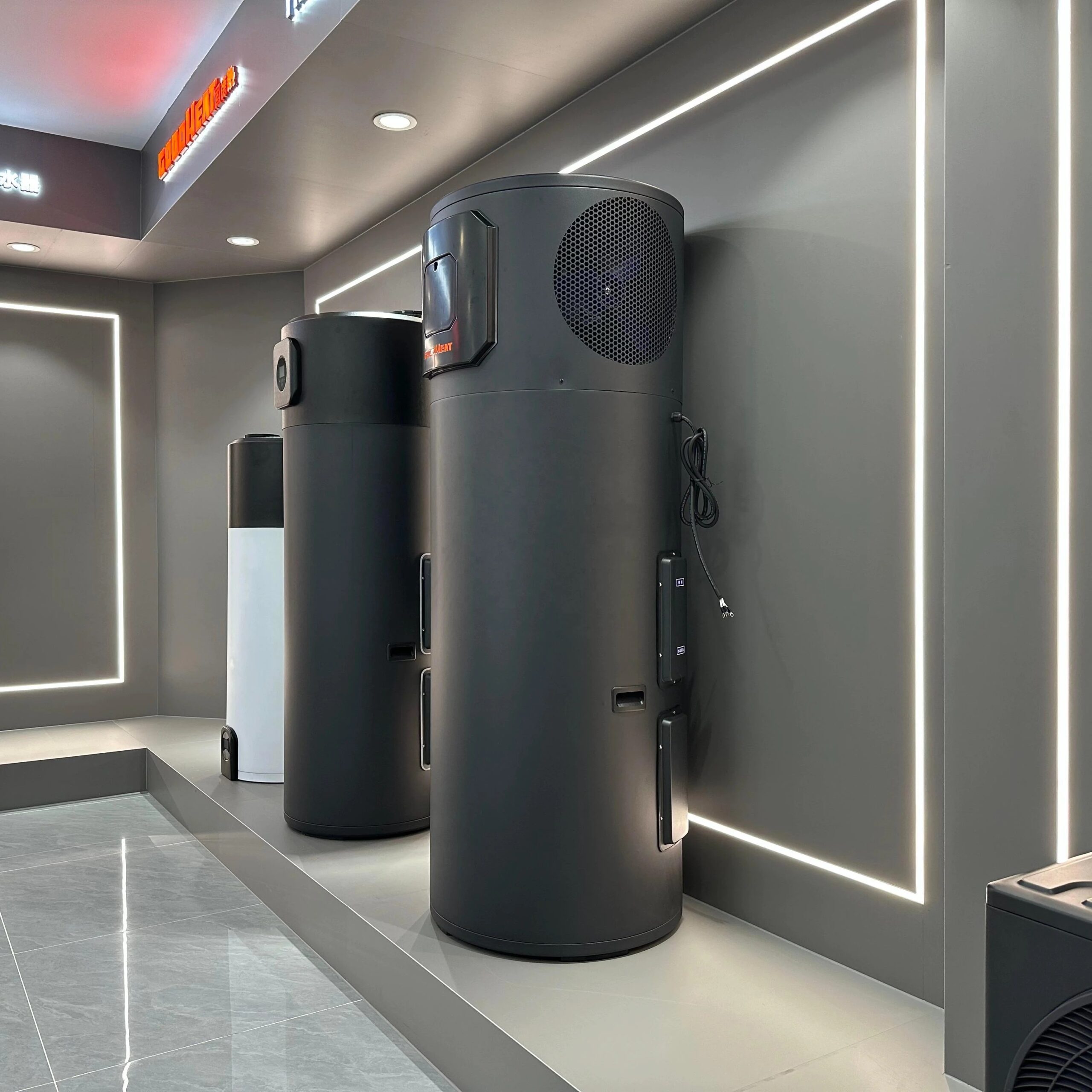
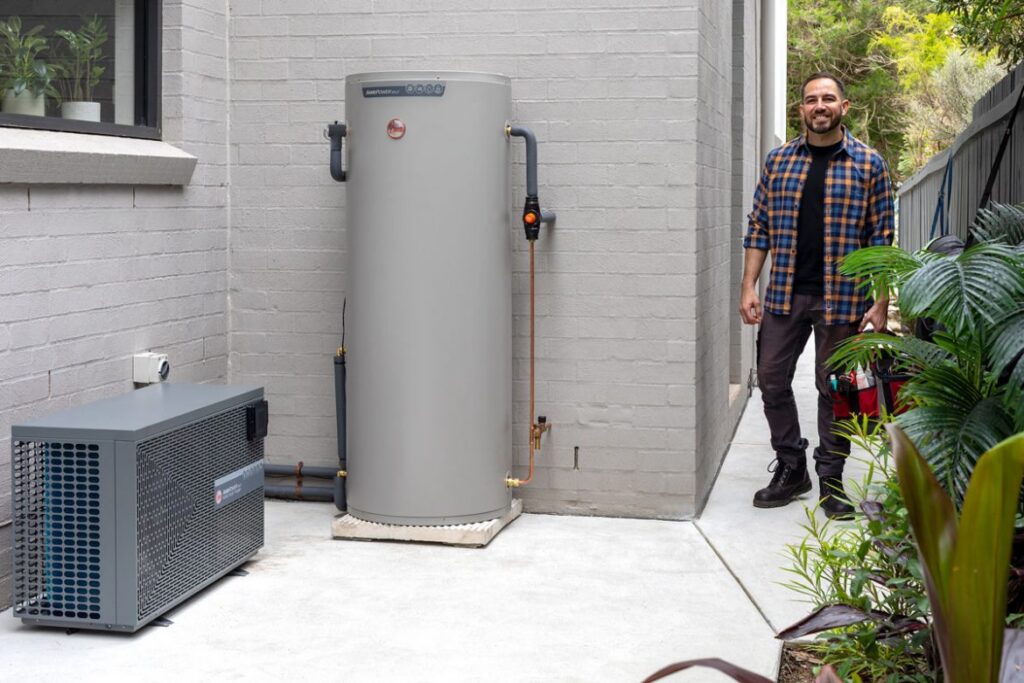
A self-contained unit housing every component in one body. The manufacturers position these for apartments and small to mid-sized homes, and for installations where running pipework between two locations is awkward or expensive.
The practical appeal is that it is closest to a like-for-like swap. One unit, one position, minimal plumbing changes.
Split
The tank stays inside and the heat pump goes outside. Three claims are made for this arrangement:
- Savings. Up to three times less electricity than a conventional resistance heater.
- Recovery. Faster reheating between draws, by holding water at a higher storage temperature.
- Climate tolerance. Continues working at extreme outdoor temperatures, depending on the refrigerant used.
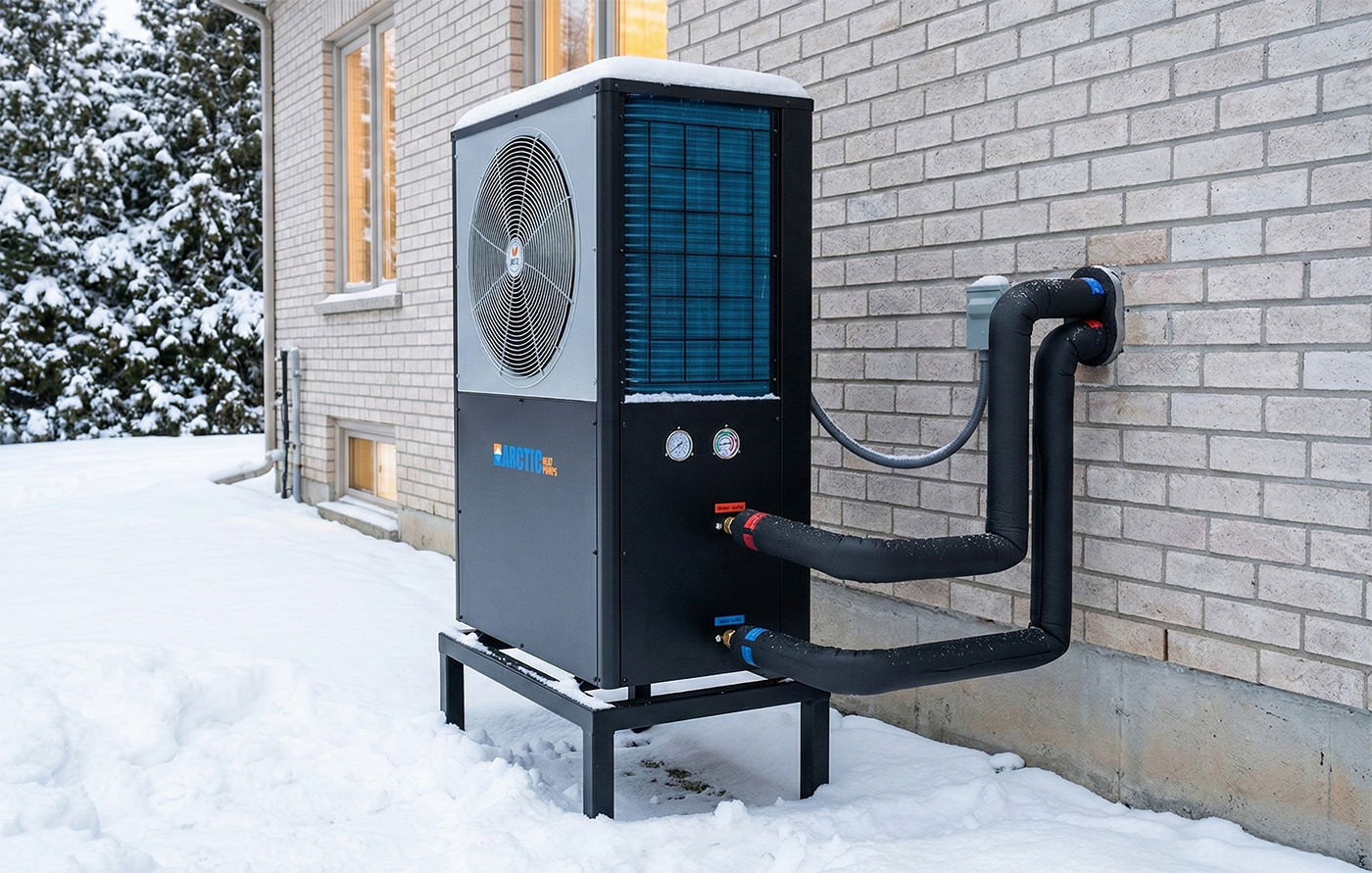
Note the qualifier on that last one. Cold-weather capability is a function of refrigerant choice, so it is a per-model question rather than a property of split systems generally. If a supplier claims it, ask which refrigerant and down to what temperature.
Putting the compressor outdoors also solves the noise question rather than reducing it. That matters more than the specification sheets suggest if the alternative position is next to a bedroom wall.
Brands sold in Kenya
These six are available in the Kenyan market:
- Jaquar
- Sanden Eco Plus
- Davis & Shirtliff
- Rheem Platinum
- Stiebel Eltron
- Bosch Greentronic
This is a list, not a ranking. We have not tested any of these units, compared their COP figures under matched conditions, or assessed their after-sales support. Calling any of them the best would be a claim we cannot support. Treat this as a starting point for quotes, and judge the shortlist on the questions in the next section.
What to consider before buying
Ask for the COP and the temperature it was measured at. A COP quoted at 25°C ambient tells you very little about performance on a cold highland morning in Limuru or Nyahururu. One number without its conditions is not a specification.
Check the circuit before you commit. Thirty amps at 240V is a substantial load. An electrician should confirm the existing run rather than the supplier assuming it.
Decide where the noise goes. A compressor runs for hours to heat a tank. Monobloc keeps it wherever the tank sits; split moves it outdoors. This is the decision people regret most often.
Establish who services it locally. A sealed refrigerant system is not a geyser element you can swap yourself. Before buying, find out where the nearest authorised technician is and whether parts for that model are stocked in the country. On a unit meant to last a decade, that answer matters more than a few points of COP.
Think about the space. The unit cools and dries the air it draws from. In a small enclosed cupboard that reduces its own performance, so ventilation is part of the installation rather than an afterthought.
What we cannot tell you
The available information does not give us prices, tank capacities, published COP figures for any individual model, noise ratings in decibels, recovery rates, warranty terms, or which of these brands has functioning service coverage outside Nairobi.
Those are supplier questions. How straight an answer you get to the service one is itself informative.
Tools Soko verdict
What the technology does well. It attacks the largest fixed electrical load in most homes with a mechanism that is genuinely different in kind, not just a more efficient version of the same thing. A minimum of 200% against 93% for a resistance element is not a marginal gain.
Who it suits. Households currently running an electric geyser, particularly where the existing 30A circuit can be reused and there is a sensible position with decent airflow. Kenya’s ambient temperatures work in its favour for most of the year.
What to weigh first. The installation, not the unit. Circuit capacity, where the compressor noise ends up, ventilation, and whether anyone within reach can service it. A well-chosen unit installed badly will underperform a modest one installed properly.
Worth investigating further? Yes, if you are replacing an electric geyser and intend to stay in the property long enough for running-cost savings to repay a higher purchase price. Get two quotes, ask every supplier for COP with its test temperature, and confirm service coverage before you compare prices. And note that we are working from manufacturer material here rather than from testing, so treat the performance claims as claims until someone has measured them.
Frequently asked questions
How can efficiency be over 100%?
Because nothing is being converted. An electric element turns electricity into heat and cannot produce more heat than the electricity it consumed. A heat pump spends electricity operating a pump that relocates heat already present in the air, so the heat delivered is not limited by the electricity used.
What is COP?
Coefficient of Performance: heat energy delivered divided by energy consumed. COP 3 means three units out for one unit in, which is the same as 300% efficiency. Always ask what ambient temperature the figure was measured at.
Can I use my existing geyser circuit?
Most likely, if you are replacing an electric water heater, since these units want 30 amps at 240V and that is the usual geyser supply. If you are coming off gas or LPG there may be no suitable circuit at that position at all. Have an electrician confirm it rather than assuming.
Monobloc or split for an apartment?
Monobloc, in most cases. It is a single unit with minimal pipework, which suits tight spaces and installations where you cannot run refrigerant lines to an outdoor position. Split makes more sense in a larger home where the compressor can be sited outside.
Does it work at night or in cold weather?
Yes, but less efficiently. The COP falls as ambient air gets colder, because there is less heat available to move. How far it falls, and at what point a backup element takes over, is a per-model question tied to the refrigerant. Ask the supplier for figures at the lowest temperature your location actually sees.
Where to go next
If you are buying equipment in Kenya and want to avoid counterfeits, grey imports and warranties that turn out to be unenforceable, our guide to buying power tools in Nairobi covers the same ground for the hardware side of a renovation. For how we separate manufacturer claims from measured results, read how we work.