
What this review is based on. STIHL’s published specifications and product information, plus current retail pricing in Kenya. Tools Soko has not handled an MH 610, so no scores are given and nothing here is claimed as a measured result. How we work explains how every article is built.
I grew up in the countryside, in a family that farmed. When the rains came, tilling was not a decision anyone debated. We were up before light, walking behind an ox plough, trying to turn ground before the weather closed in. I still remember those mornings more clearly than most things from that time.
That routine is not unique to Kenya. Anyone who has farmed a smallholding anywhere recognises it: a narrow window of workable soil, more ground than hands, and weather that does not negotiate.
The work has not changed. The equipment has. A pair of oxen and a single furrow have given way to machines one person can walk behind.
The trade is worth being clear-eyed about. An ox plough costs almost nothing to run and needs no fuel. What it costs is time and people, and both have become harder to find. A petrol tiller reverses that: you spend money on fuel and maintenance, and you buy back the days.
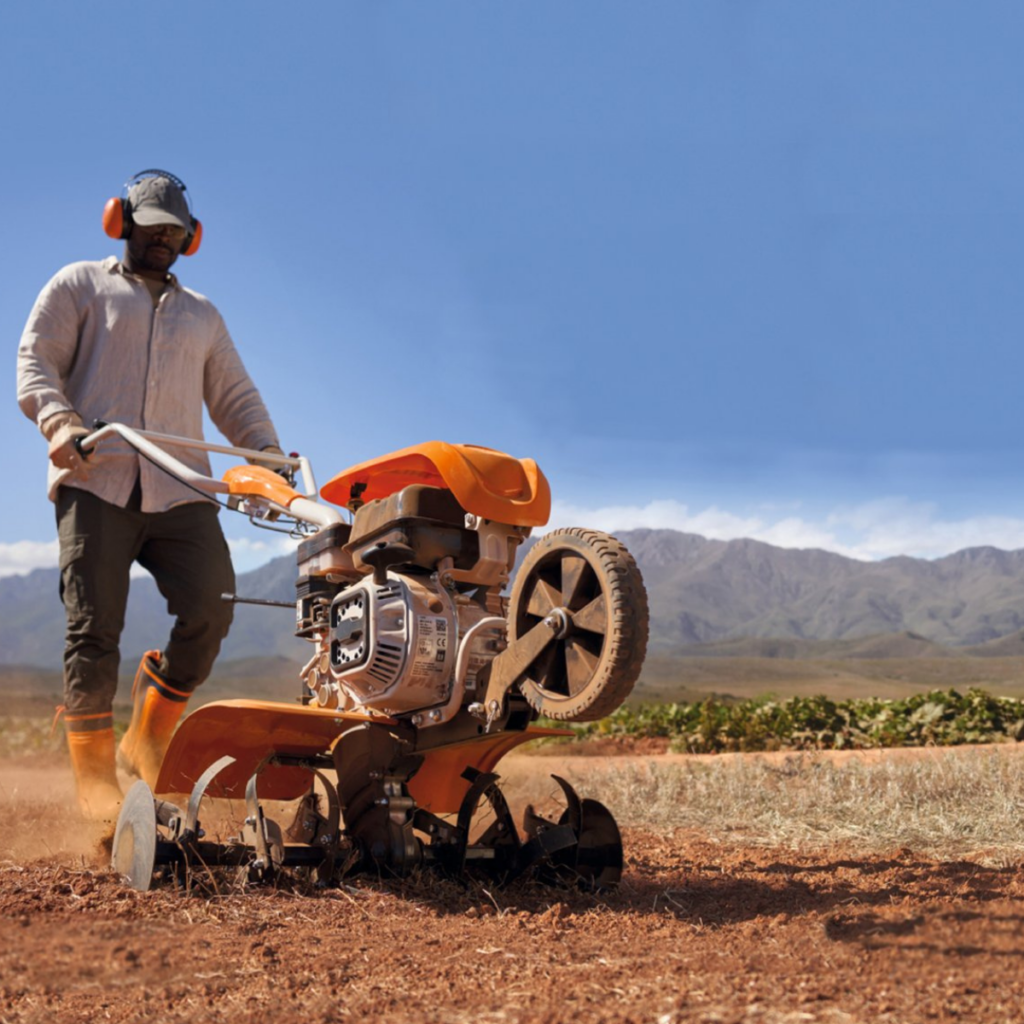
The STIHL MH 610 sits at the heavier end of that trade.
What is the STIHL MH 610?
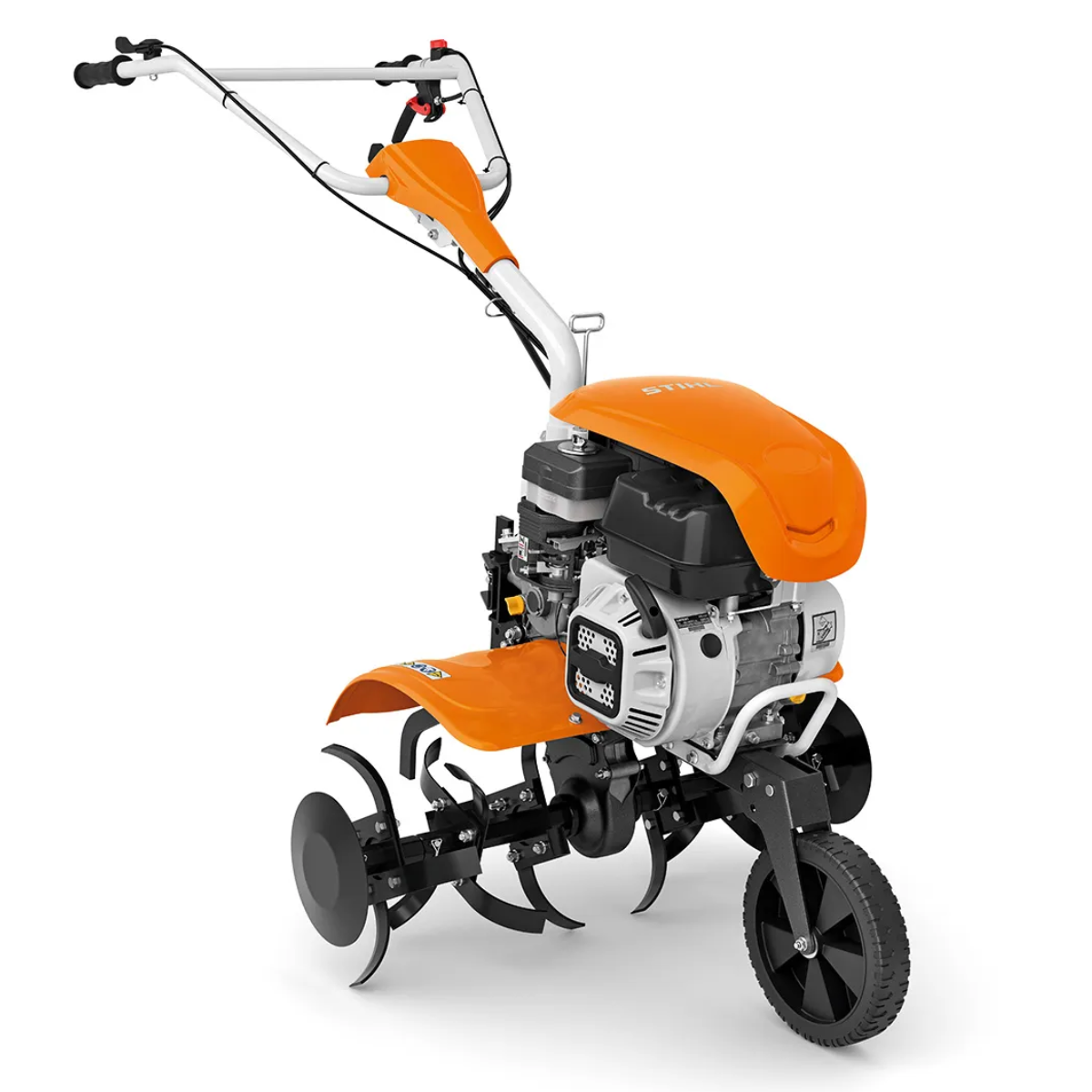
A petrol-powered walk-behind tiller, sometimes called a rotary cultivator, built around STIHL’s EHC 600 engine. Petrol here means gasoline; STIHL uses the British term across its international range.
STIHL is a family-owned German manufacturer, founded a century ago and best known for chainsaws and outdoor power equipment. The MH 610 is positioned for breaking up solid ground and turning over large plots, and for regular working use rather than occasional garden jobs.
STIHL MH 610 specifications
| Specification | Figure |
|---|---|
| Engine | STIHL EHC 600 |
| Displacement | 212 cm³ (212 cc) |
| Power | 4.4 kW (6.0 bhp) |
| Working width | See the note below (adjustable) |
| Reduced working width | 56 cm (22 in) with the hoe extension removed |
| Tilling set diameter | 31 cm (12.2 in) |
| Fuel tank | 3.6 l (0.95 US gal) |
| Weight | 62 kg (137 lb) |
| Gears | 2 forward, 1 reverse |
| Price, Kenya | KSh 89,086.61 incl. VAT |
A note on the working width
STIHL’s own material gives this figure three different ways: 78 cm, 79 cm and 80 cm (roughly 30.7 to 31.5 inches). We are not going to quietly pick one and present it as fact.
The difference is small in the field but it matters if you are planning row spacing or working to a fixed bed width. Verify against current STIHL documentation for your market before relying on it, and if the exact figure affects your layout, ask the dealer to confirm it in writing.
What it costs
In Kenya the MH 610 retails at KSh 89,086.61 including VAT. At roughly KSh 129 to the US dollar in August 2026, that is about US$690.
Treat the dollar figure as orientation rather than a price. STIHL sells through authorised dealers and pricing varies significantly between markets according to import duty, local taxes and dealer margin, so the number on the shelf where you are will differ. Check locally before budgeting.
What stands out
Adjustable working width
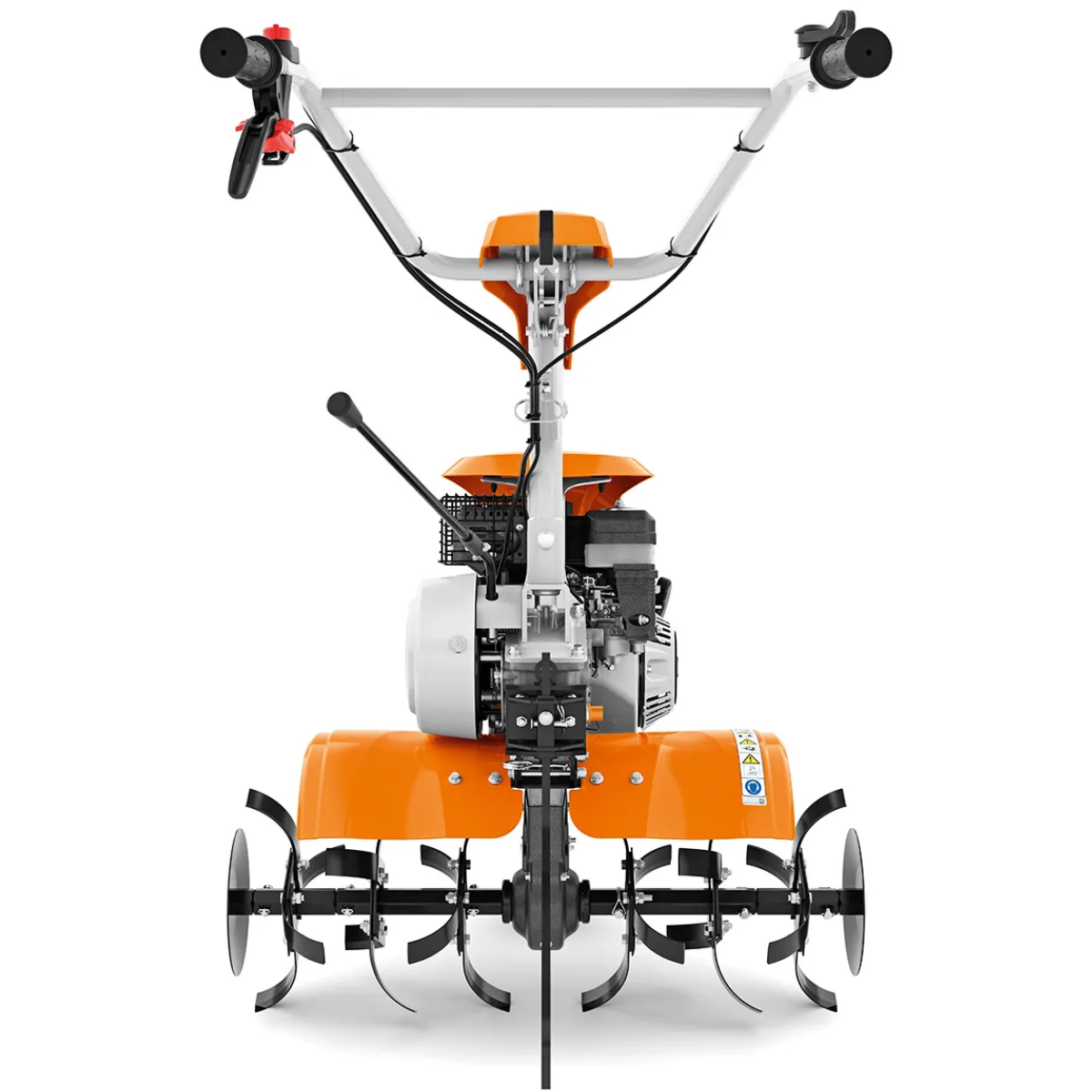
The hoe set divides, letting you drop the cut to 56 cm by removing the extension. Full width for open ground, narrow for getting between established rows without tearing up what is already planted.
That is one machine covering both land preparation and mid-season cultivation, which is the difference between a tool that works twice a year and one that earns its storage space.
Two forward gears and reverse
Reverse is the one that matters. A 62 kg machine that has buried its tines in heavy soil is not something you drag out by hand. Gear choice lets you match ground speed to how hard the soil is fighting back, rather than forcing one pace through everything.
Swivelling brake spur
The spur drags behind the machine and controls how deep the blades bite. Press down on the handlebars and the tines dig in; ease off and the machine moves forward. On a walk-behind tiller this is the main depth control, and learning to feel it is most of learning to use the machine.
The available information does not tell us the depth range it covers. That is worth asking a dealer directly.
Central height adjustment and folding handlebar
The handlebar sets to the operator rather than the other way round. Over a full morning that is the difference between a sore back and a finished field, and it matters more the taller or shorter you are than average.
It also folds, which is what makes a machine this size storable in a normal shed.
Foldable transport wheels
Fold down to wheel the machine to where it is needed, fold up out of the way to work. Without them you would be dragging 62 kg across a yard, and that is the kind of daily friction that decides whether a machine gets used or left in the corner.
Protective side panels
The panels shield plants either side of the cut. Combined with the 56 cm setting, this is what makes cultivating between growing crops a realistic proposition rather than a gamble on your own steering.
Who is it for?
The specifications point at people cultivating larger plots on a repeating schedule:
- Smallholder and commercial growers preparing ground each season
- Landowners managing areas too large for a hand hoe and too small to justify a tractor
- Growers cultivating between established rows, using the 56 cm setting
- Anyone working ground that has gone hard, where a lighter tiller skates across the surface instead of biting
The weight is doing real work here. Mass is what keeps tines in dense soil rather than bouncing over it, which is why a heavier machine is not simply a worse version of a light one.
Who might want something else?
- Small kitchen gardens and raised beds. This is more machine than a few beds need, and heavier to store and manoeuvre than the job warrants.
- Anyone loading it alone, regularly. At 62 kg it is a two-person lift into a vehicle.
- Anyone without reliable fuel access or secure, dry storage. A petrol machine you cannot fuel or store safely is a liability.
What to consider before buying
The 62 kg. It buys ground performance and costs portability. Fine if the machine lives where it works, a real constraint if it moves between plots.
Running costs. Petrol, oil, filters, plugs and blade sharpening. Modest per session, real across a season, and worth costing honestly against an ox plough that eats grass or a tractor you hire by the acre.
Storage. The handlebar folds, but this still needs dry, secure, ventilated space away from where people sleep or cook.
Service and parts. A petrol engine needs servicing to stay reliable. Before buying, find out where your nearest authorised STIHL service point is and whether MH 610 parts are stocked in your country. For a machine you intend to keep a decade, that answer matters more than anything in the specification table. If you are buying in Kenya, our guide to buying power tools in Nairobi covers counterfeits, grey imports and which warranties are honoured locally.
What we cannot tell you. The available information does not give us working depth, noise or vibration figures, service intervals, or fuel consumption per hour. Those are dealer questions, and how straight an answer you get tells you something useful about the dealer.
Tools Soko verdict
On paper the MH 610 is a working machine rather than a garden accessory. A 212 cm³ engine, 62 kg of mass and a dividable hoe set describe something built for repeated seasonal use on ground that resists.
What it does well, based on the specifications. It turns dense soil across wide areas, then narrows to 56 cm to work between rows. Reverse gear and folding wheels address the practical problem of moving a heavy machine around a working site. None of this reads as marketing invention; these are the features of a machine designed by people who have used one.
What to weigh first. The weight, the fuel and maintenance commitment, and a working-width figure the manufacturer states three different ways.
Is it worth investigating further? Yes, if you are cultivating larger plots regularly and currently doing it by hand or hiring a tractor each season. At KSh 89,086.61 in Kenya, roughly US$690, it is priced as a serious purchase rather than an impulse one, and it should be treated that way. Ask a dealer for the working depth, the service interval and the confirmed working width. If those answers hold up, the case for this machine is strong.
Where to buy
STIHL sells through authorised dealers rather than general retail, which is deliberate: the dealer network is also the service network. Buying from an authorised dealer is what makes the warranty and the parts supply real, and it is the single biggest protection against the counterfeit and grey-import machines that circulate in several markets.
Ask for the price including VAT, confirmation of the working width, and the warranty terms in writing before you pay.
Frequently asked questions
Can the MH 610 work between growing crops?
Yes. Removing the hoe extension reduces the working width to 56 cm, and the side panels shield plants either side of the cut. That combination is what the narrow setting exists for.
How deep does it till?
The available information does not specify a depth range. Depth is controlled by the swivelling brake spur and by how much weight you put through the handlebars, so ask a dealer for the figures rather than assuming.
Is 62 kg too heavy for one person?
Not to operate. The transport wheels handle moving it across ground, and in use the weight works in your favour by keeping the tines in the soil. Loading it into a vehicle is a two-person job.
Is a petrol tiller worth it over an ox plough or hired tractor?
They are different economics rather than better and worse. A plough costs time and labour, a hired tractor costs cash each season with no asset at the end, and a tiller costs capital up front plus fuel and maintenance. If labour is your constraint, mechanisation pays. If cash is, it may not, and there is no shame in that arithmetic.
Why is the working width listed as 78, 79 and 80 cm?
Because STIHL’s own published material uses all three figures in different places. We have flagged it rather than picking one. Confirm the figure for your market with a dealer if row spacing matters to your layout.
Why you can trust us. Tools Soko earns a commission when you buy through links on this page. It never changes what we recommend, and it never changes the price you pay.
Where to go next
For the wider question of how much machine to buy and why the platform matters more than the tool, read our power tool buying guide. Everything else in this category sits in garden tools, and if you want to know why this review carries no score, how we work explains where the line sits between analysis and measurement.
Specifications and product information sourced from STIHL’s published material. Kenyan retail price observed August 2026. Currency conversion at approximately KSh 129 to the US dollar; rates move, so treat the dollar figure as orientation only.
The tiller sits inside a wider category. Our outdoor power equipment guide maps mowers, trimmers, pruners, chippers and pressure washers, and the specification that decides each one.